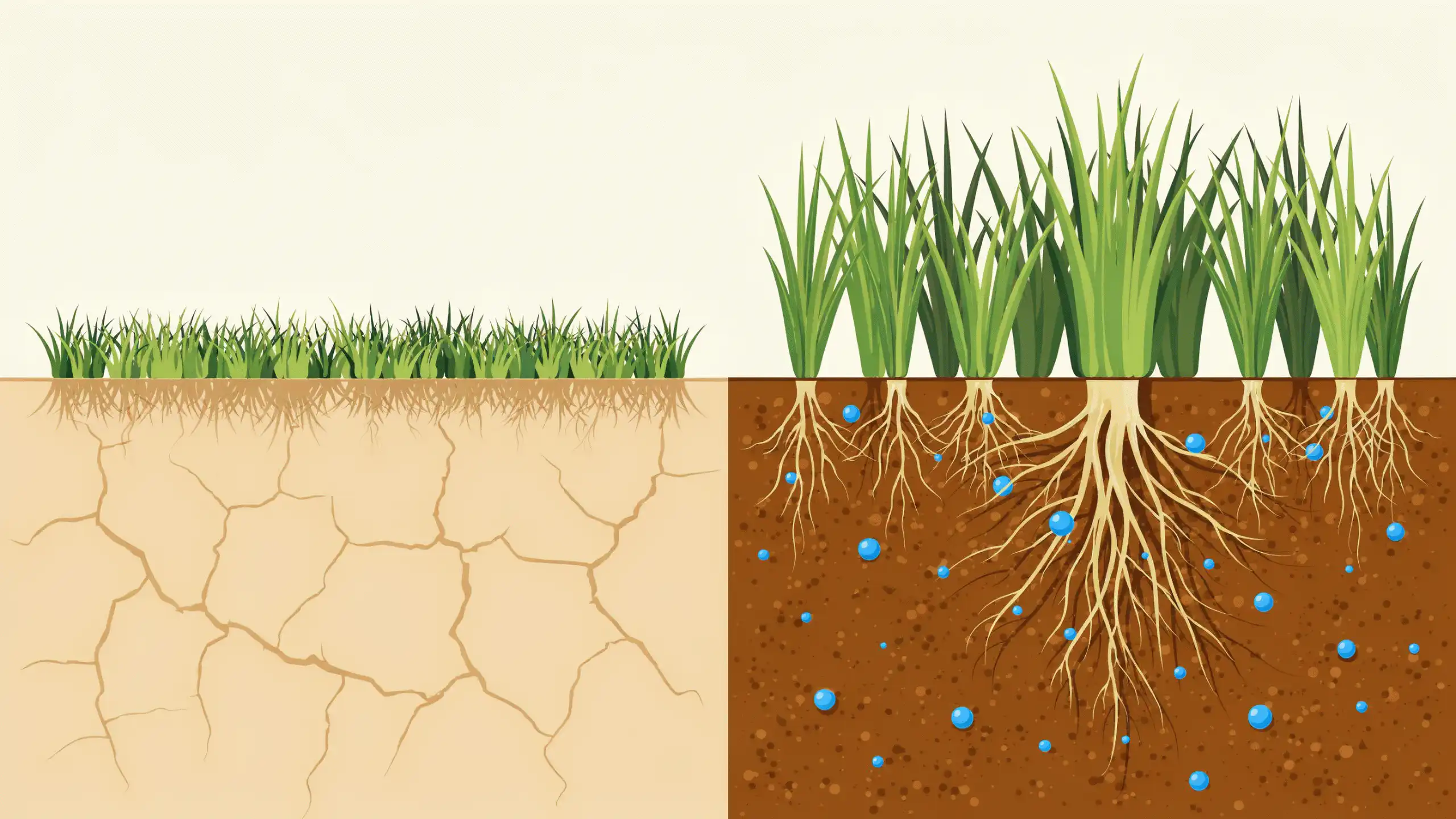

Spend less on lawn care by mowing at the top of your grass’s recommended height, leaving the clippings where they fall, and watering deeply once or twice a week instead of daily. A lawn kept that way needs less water and fertilizer, and the work is simple enough to do yourself.
Mowing short and watering a little every day both keep grass roots shallow, so the lawn dries out faster, lets more weeds sprout, and costs more to keep green.
Grass kept tall grows longer roots that handle drought better, and its shade keeps weed seeds from sprouting, University of Minnesota Extension says. Virginia Tech’s extension service says deep, infrequent soakings keep the root system healthy too.
Clippings left on the lawn feed it about as much as one fertilizer application a year.
Mow at the top of your grass type’s recommended height, 3 inches or more for most Midwest lawns, and never cut more than a third of the blade at once. Water about an inch a week, rain included, in one or two soakings, or three on the sandiest soils. Do it early in the morning, when the least water is lost to evaporation and wind. Where grass keeps thinning, reseed with a grass suited to your region, or replace that patch with mulch, ground cover, or native plants that need no mowing.
Feed the lawn once or twice a year instead of a four-step program’s four rounds. The main feeding goes in September for cool-weather grasses like fescue and in late May or early June for warm-weather ones like zoysia, though bermudagrass needs more feedings. To loosen packed soil, split a core aerator rental with a neighbor. Angi puts a day’s rental at $80 to $120, or $40 to $60 each plus your labor, against $75 to $250 to hire a pro.
Angi’s mower price guide puts a weekly mowing service at about $45 a visit on average, so a season of visits from May through October costs about $1,170. Buying a $240 electric push mower, Angi’s average, and mowing yourself instead of paying that $1,170 leaves you about $930 ahead the first year, before charging, tune-ups, and your time.
Before your next mow, raise the cutting height. Then set five empty tuna cans across your sprinkler’s reach, time how long they take to collect an inch, and water that long each week.


Subscribe and we'll send you 101 Essential Money Tips to get you started.
The 101 money moves that matter most, from the foundations to protecting what you’ve built.
Advertiser Disclosure: Many or all of the offers that appear on this site are from companies that compensate us, and some companies pay for sponsored content. That compensation may influence which products we cover and where and how they appear on a page, including the order in which they appear. We do not include every company or offer available in the marketplace.