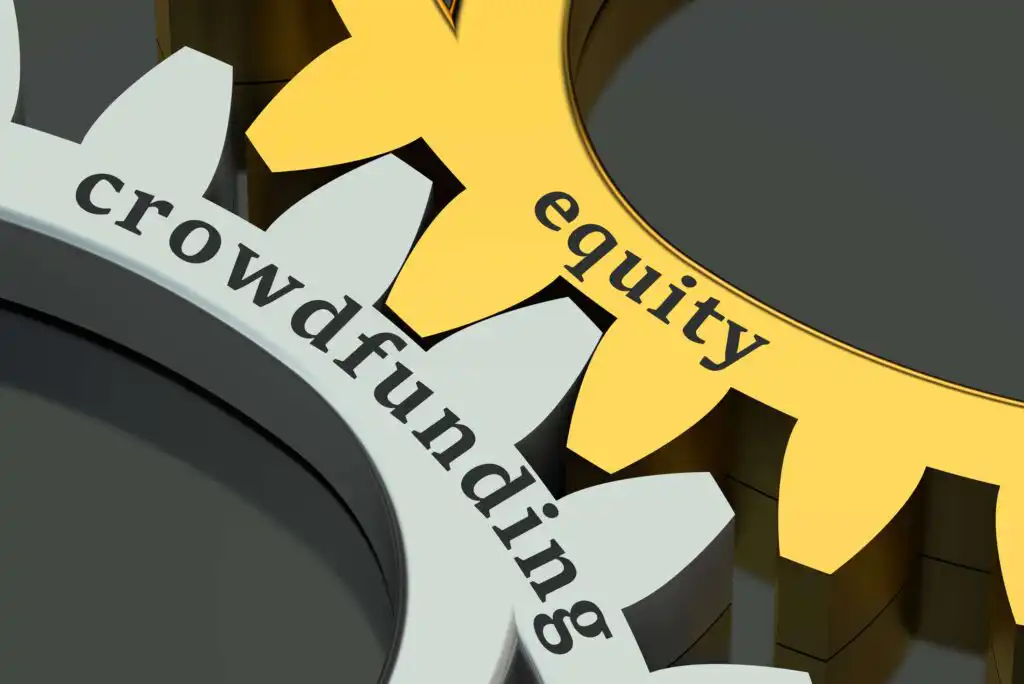


Equity crowdfunding lets you sell a stake in your business to your own customers, raising up to $5 million in 12 months through an SEC-registered crowdfunding portal. Before you launch, budget for the portal’s fee, financial statements that anyone can read, and the yearly reports you’ll owe your new investors.
Your customers don’t need to be wealthy to invest, so regulars and fans can become backers with a reason to send you business. Unlike backers of a preorder campaign, they get a financial stake, not a product.
The catch is raising the money in public, often from hundreds of investors. Under the SEC’s Regulation Crowdfunding rules, your offering statement, called Form C, goes into a public SEC database with your financial statements. After the raise, you owe annual reports, filed there within 120 days of your fiscal year’s end and posted on your website, though they need no accountant’s review.
What you sell decides what you give up:
- Common shares, sold at a valuation, the price you put on the whole company. If it’s worth $4 million once the money is in, a $400,000 raise gives investors 10%, and at $2 million it gives them 20%.
- A SAFE, or simple agreement for future equity, which becomes shares only after an event named in its terms, like a later funding round or the company’s sale, so it fits startups planning to raise again.
- A revenue-sharing note, which repays investors a set share of your sales until they’ve received an agreed amount, such as twice what they put in. You keep full ownership but owe the money.
Pick a portal, such as Wefunder or StartEngine, and price the raise. Wefunder keeps 7.9% of what you raise plus up to $1,000 a year, and StartEngine estimates the accountant’s review and legal paperwork at $4,000 to $10,000. You need that review to raise more than $124,000 and an audit above $618,000, though a first crowdfunding raise can use a review up to $1,235,000.
Say a neighborhood brewery raises $400,000 from 1,100 customers, most investing a few hundred dollars, to open a second taproom. On Wefunder it pays $31,600 and needs a review, not an audit. The SEC lets you test interest before you file if you say no money is being accepted and no one is committed, so poll your customers before you hire an accountant.

Subscribe and we'll send you 101 Essential Money Tips to get you started.
The 101 money moves that matter most, from the foundations to protecting what you’ve built.
Advertiser Disclosure: Many or all of the offers that appear on this site are from companies that compensate us, and some companies pay for sponsored content. That compensation may influence which products we cover and where and how they appear on a page, including the order in which they appear. We do not include every company or offer available in the marketplace.