
A home workout plan needs no trainer or paid app. Federal exercise guidelines call for at least 150 minutes of brisk walking or other moderate cardio a week, plus strength work on two or more days. Put each session on your calendar, train with body weight and household items, and add reps or minutes every week or two.
The 150 minutes and the two strength days come from the Department of Health and Human Services’ Physical Activity Guidelines for Americans. They tell you how much exercise is enough, which is part of what a trainer or a paid app charges for.
A walk counts as brisk at 2.5 miles per hour or faster, and 75 minutes of vigorous activity like running meets the cardio target on its own. For strength work, the guidelines say to do each move until one more repetition would be hard, and a single set of 8 to 12 repetitions per move is effective.
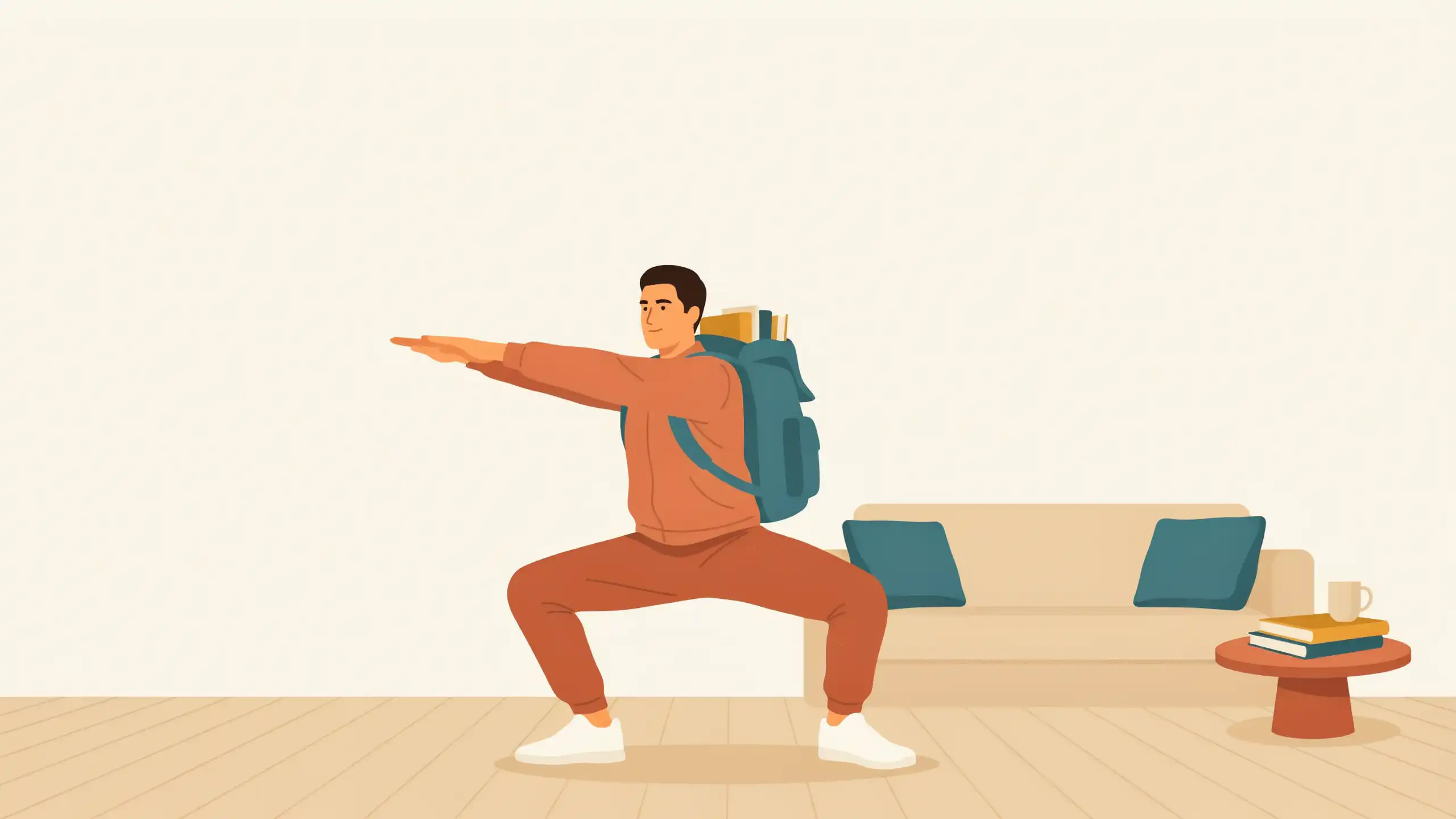
Five moves cover every major muscle group: squats and lunges for your legs and hips, push-ups for your chest, shoulders, and arms, rows for your back, and a plank for your core. Do push-ups against a kitchen counter until you can do 8 from the floor. For rows, bend forward and pull a gallon jug of water or a backpack loaded with books toward your ribs, and wear the backpack for squats once body-weight squats feel easy.
For cardio, pick what you’ll keep doing, whether that’s brisk walks, runs, or a free workout video. Then give every session a day and a time, as you would an appointment. A 40-year-old could do 25-minute strength sessions on Monday, Wednesday, and Friday and 50-minute brisk walks on Tuesday, Thursday, and Saturday. That’s 150 minutes of cardio and three strength days, with Sunday off, at no cost.
Write down the repetitions for each move and the minutes of each cardio session, in a notebook, a free app, or the printable plan from the federal Move Your Way activity planner. Every week or two, add two repetitions, a second set, more weight in the backpack, or five minutes of cardio, since the guidelines call for raising activity gradually over weeks to months.
If you’ve been inactive, start smaller, with 10-minute walks and one strength day a week, and build to the full plan over several weeks.

Subscribe and we'll send you 101 Essential Money Tips to get you started.
The 101 money moves that matter most, from the foundations to protecting what you’ve built.
Advertiser Disclosure: Many or all of the offers that appear on this site are from companies that compensate us, and some companies pay for sponsored content. That compensation may influence which products we cover and where and how they appear on a page, including the order in which they appear. We do not include every company or offer available in the marketplace.