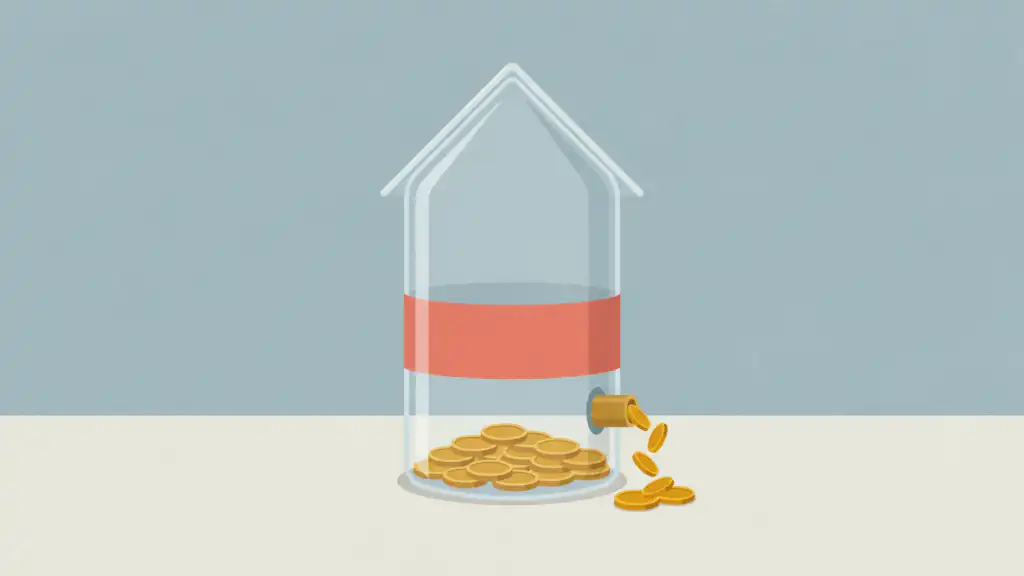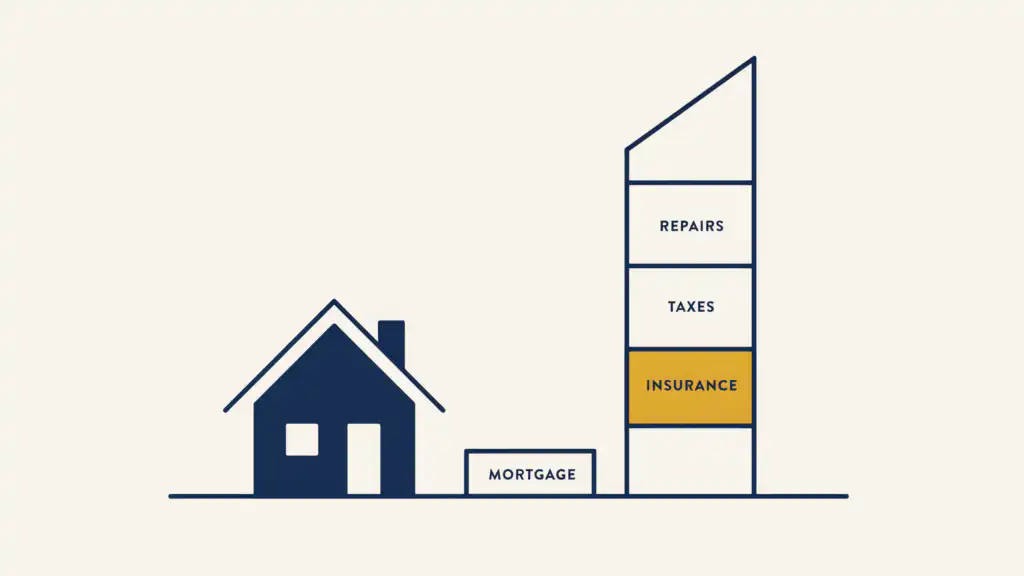

A mortgage approval shows the most you can borrow, not how much house you can afford. Base your price range on the full monthly payment, which adds property taxes, homeowners insurance, homeowners association dues, and mortgage insurance to the loan payment. Keep that payment near 28% of your gross income so upkeep and savings still fit.
Lenders often approve much more than that. They go by your debt-to-income ratio, your monthly debt payments as a share of gross income, and Fannie Mae’s rules let that share reach 50%, the new mortgage included.
Take a couple earning $120,000 a year, or $10,000 a month, with no other debts. Assume 10% down, a 7% rate on a 30-year fixed loan, property taxes and homeowners insurance at 1.5% of the price a year, and mortgage insurance at $50 a month per $100,000 borrowed.
Even a lender that caps their debts at 43% of income would approve a $4,300 payment, enough for about a $560,000 home. Holding the full payment near $2,800, or 28%, points them to homes around $365,000, nearly $200,000 below the $560,000 approval.
Price your own payment for the town you’re shopping in.
- Multiply the price by the local property tax rate, posted on the county or city website. The seller’s bill can understate yours where a sale resets the assessment.
- Get a homeowners insurance quote for the address, since premiums vary by ZIP code.
- Take any homeowners association dues from the listing.
- With less than 20% down, add mortgage insurance, which Freddie Mac puts at $30 to $70 a month per $100,000 borrowed.
Next, run a budget test. Add what the home costs beyond the payment, starting with upkeep, which Fannie Mae puts at 1% of its value a year for a newer house and up to 4% for one over 30 years old. Your take-home pay still has to cover retirement contributions and emergency savings.
Then stress-test the number. For three to six months before you buy, save the difference between your rent and the new payment plus upkeep, as a trial run. Rates can rise before you lock one in, so price the payment at a rate one percentage point higher, which lifts the couple’s $2,800 to about $3,030. Last, count how many months of payments your emergency fund covers if a paycheck stops.
The highest price that passes both tests is your ceiling, whatever the approval letter says.
To price the payment at a rate a lender will offer you, compare the best mortgage lenders.


Subscribe and we'll send you 101 Essential Money Tips to get you started.
The 101 money moves that matter most, from the foundations to protecting what you’ve built.
Advertiser Disclosure: Many or all of the offers that appear on this site are from companies that compensate us, and some companies pay for sponsored content. That compensation may influence which products we cover and where and how they appear on a page, including the order in which they appear. We do not include every company or offer available in the marketplace.