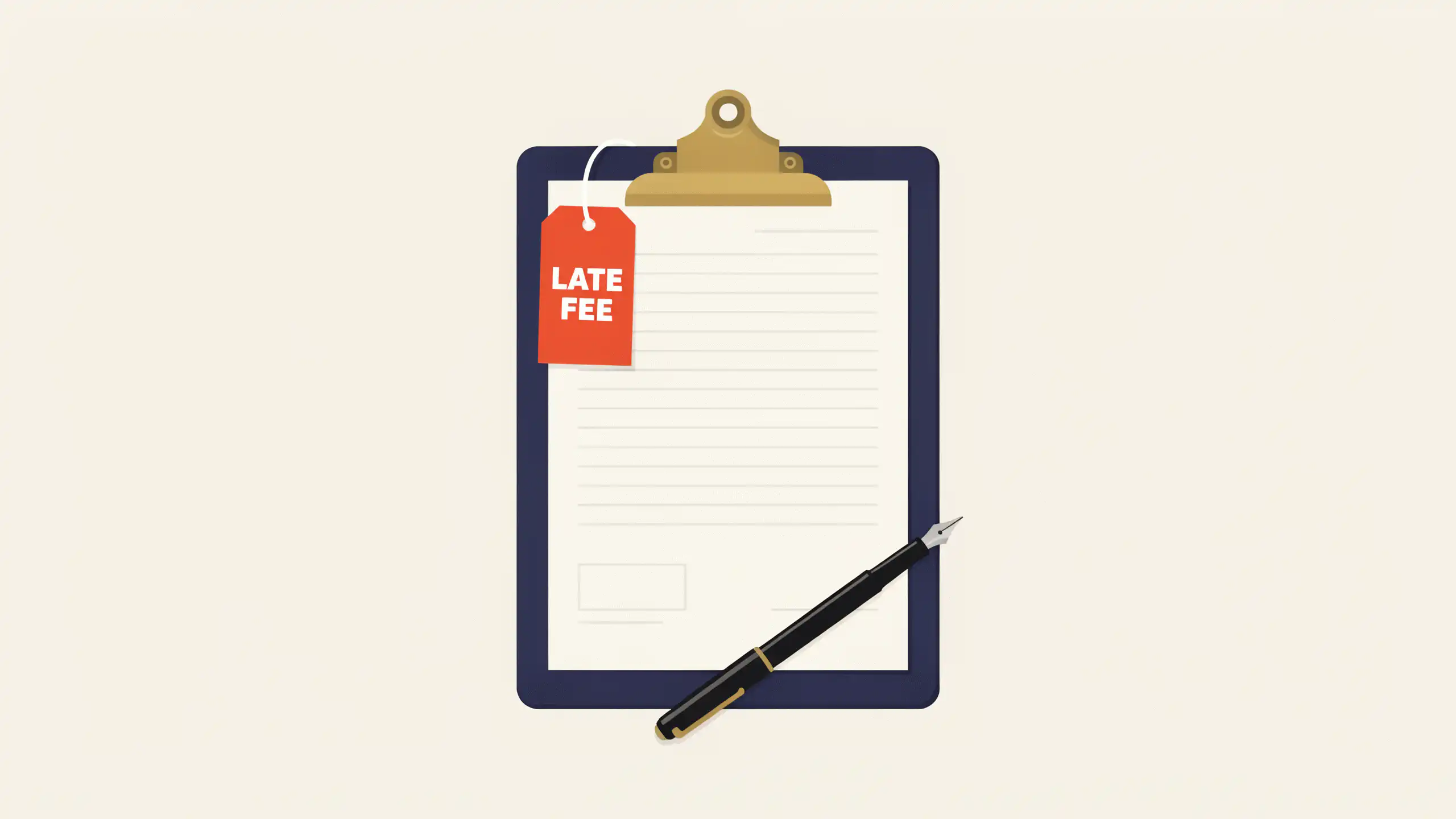

Write a late fee into your contract or terms before the work starts, keep it within what your state allows, and print it on every invoice. Customers who agreed to it up front have a reason to pay on time. A fee that first appears on an overdue invoice was never part of the deal.
A late fee is a contract term, like your rate, so a customer owes it only if they accepted it along with the job. Without that agreement, you can charge only what your state’s law allows, and under Texas law that’s 6% a year on the unpaid amount, starting 30 days after the due date.
Say an IT consultant’s terms add 1.5% a month to any balance unpaid 30 days after the invoice date. A client who pays her $6,000 invoice on day 60 owes $90 more, and one who pays by day 30 owes nothing extra. That $90 is a reason to pay by day 30, but only for clients who agreed to it when they hired her.
Charge a flat amount or a monthly percentage like hers. At 1.5% a month, hers comes to 18% a year, so look up your state’s usury law, the statute that caps interest, before you print a rate. Caps differ by state, and some protect only household customers, not businesses. Keep a flat fee in proportion to the bill, since courts won’t enforce a preset charge meant to punish.
Then apply the fee to every customer on the same schedule. Remind each one of the fee date a few days ahead. If you bill through QuickBooks Online or FreshBooks, turn on its automatic late fee, which adds the charge to overdue invoices for you. Waive it only once, for a customer with a long record of paying on time, and tell them in writing that the waiver is a one-time courtesy.
An invoice that stays unpaid despite the fee calls for collection steps, from a firm call to small claims court.
Word the clause so nothing is left to argue about, as in “1.5% per month on any balance unpaid 30 days after the invoice date,” which names the rate, when it starts, and what it applies to. Put those exact words in the contract for your next job and on every invoice after it.


Subscribe and we'll send you 101 Essential Money Tips to get you started.
The 101 money moves that matter most, from the foundations to protecting what you’ve built.
Advertiser Disclosure: Many or all of the offers that appear on this site are from companies that compensate us, and some companies pay for sponsored content. That compensation may influence which products we cover and where and how they appear on a page, including the order in which they appear. We do not include every company or offer available in the marketplace.