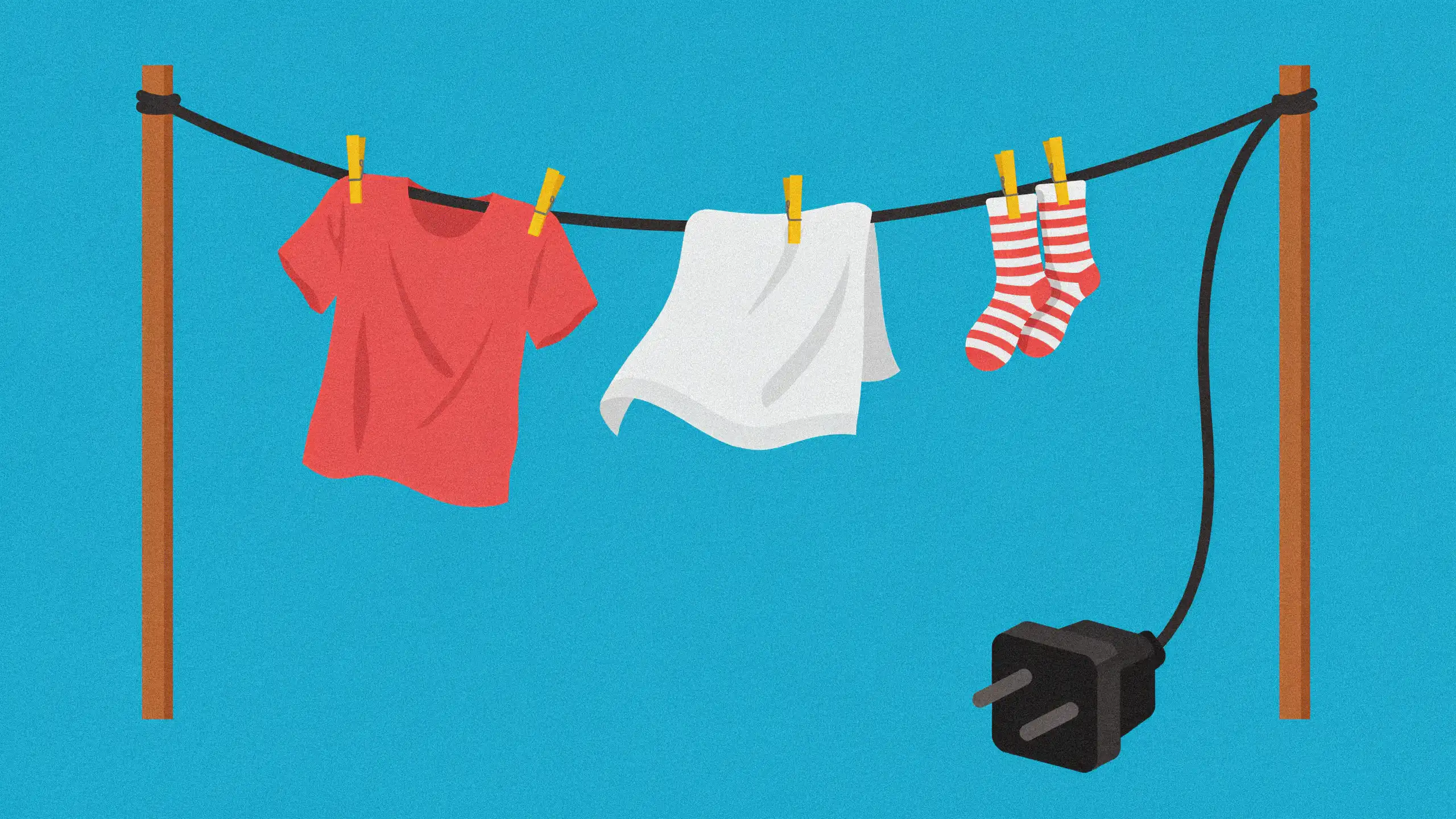

Hang most of your laundry on a folding rack or a line, since an electric dryer costs about 40 cents a load at average U.S. electricity prices. A $30 rack pays for itself after about 75 loads you hang instead, and you can still keep the dryer for towels, sheets, and rainy weeks.
The average electric dryer uses just over 690 kilowatt-hours of electricity a year, a field study the Northwest Energy Efficiency Alliance published in 2026 found. At the average U.S. residential rate of 18.16 cents per kilowatt-hour in August 2026, according to the U.S. Energy Information Administration, that comes to about $125 a year.
The same study found the average household runs 307 full drying cycles a year, so each load costs about 40 cents to dry, and a load you hang costs nothing. A gas dryer costs less to run than an electric one, so hanging its loads saves less.
At 40 cents a load, a couple who wash seven loads a week and hang five of them save $2 a week, or $104 a year, and cut their drying bill by more than 70%. Their $30 folding rack pays for itself in 15 weeks.
You don’t need a yard. A folding rack stands in a corner, a wall-mounted rack folds flat when it’s empty, and shirts dry on hangers hooked over the shower rod. A retractable line can stretch across a tub or a balcony, but check your lease or homeowners association’s rules for a ban on outdoor clotheslines before you hang one outside.
If you hang towels too, take them down while they’re still a little damp, then soften them with 10 minutes in the dryer. Air-drying also spares your clothes the dryer’s heat, which helps them last longer.
For the loads you still dry, clean the lint screen every time and use the moisture-sensor or auto-dry setting instead of a timer, so the dryer stops once the clothes are dry. Run those loads back to back, too, while the drum still holds the last load’s heat.
Hang workout clothes and other lightweight synthetics first, since they dry faster than towels or jeans. At 40 cents a load, every weekly load you hang instead of drying saves about $21 a year.


Subscribe and we'll send you 101 Essential Money Tips to get you started.
The 101 money moves that matter most, from the foundations to protecting what you’ve built.
Advertiser Disclosure: Many or all of the offers that appear on this site are from companies that compensate us, and some companies pay for sponsored content. That compensation may influence which products we cover and where and how they appear on a page, including the order in which they appear. We do not include every company or offer available in the marketplace.