
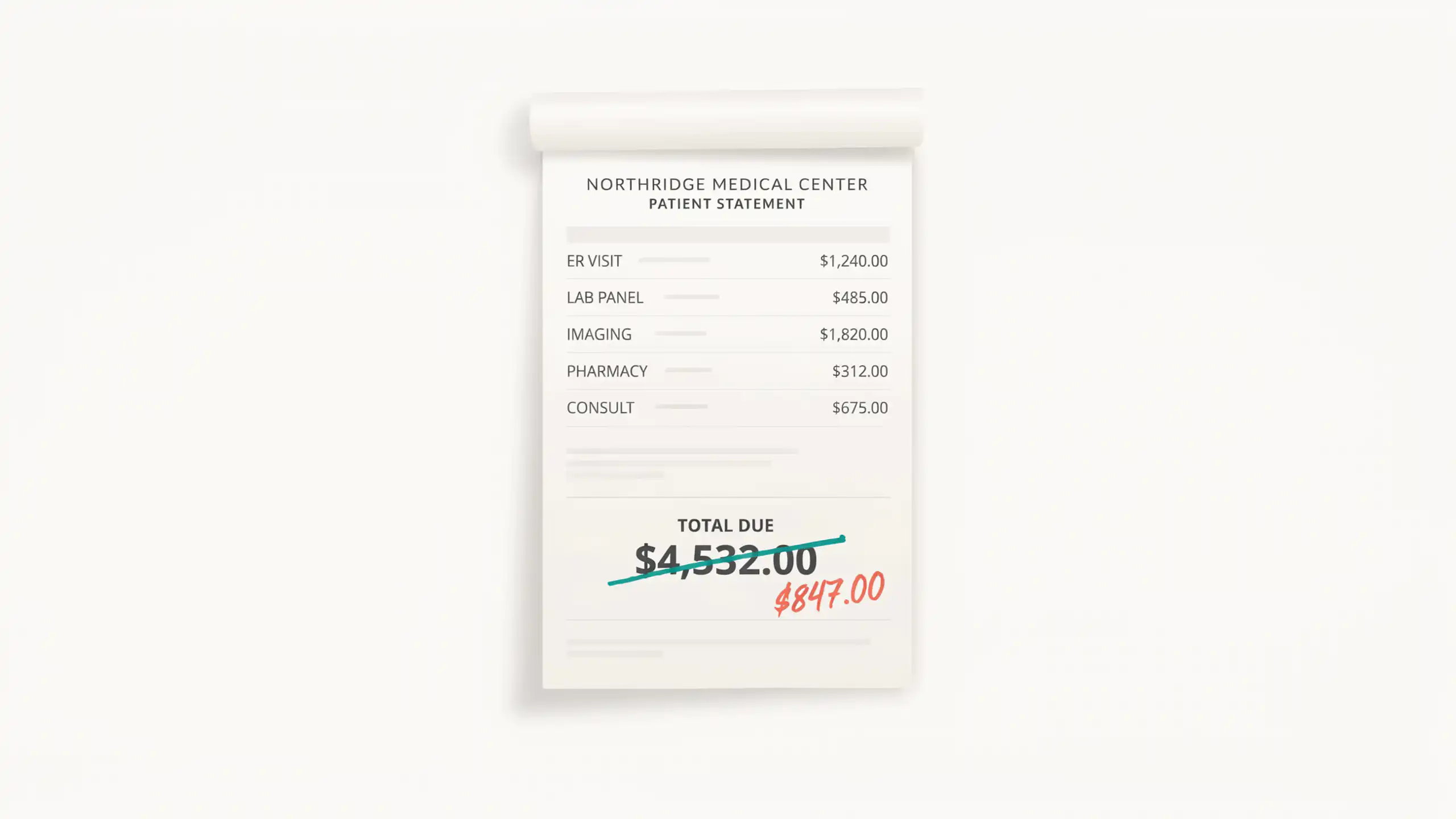

Before you pay a hospital or medical bill, ask for an itemized statement and check every charge against your insurer’s explanation of benefits or, without insurance, the estimate you got beforehand. Then call the billing office and ask for a lower price, financial assistance, or an interest-free payment plan, and get any deal in writing.
Most patients don’t make that call. In a 2023 Commonwealth Fund survey, 45% of insured working-age adults had a bill in the past year for care they expected to be covered, and less than half challenged it, most often because they didn’t know they could.
Asking pays. In LendingTree’s November 2024 survey of people who’ve had medical debt, 93% of those who negotiated a bill had at least some success, and 66% got what they asked for.
Nonprofit hospitals also have obligations. Federal tax rules require them to publish a financial assistance policy, and a patient who qualifies can’t be charged more for emergency or medically necessary care than the hospital generally bills insured patients.
Work the bill in this order:
- Get the itemized bill, and if you’re insured, match every line against your insurer’s explanation of benefits. Dispute duplicate charges and anything you didn’t receive.
- Ask whether you qualify for financial assistance. A nonprofit hospital must accept your application until at least 240 days after its first bill following your discharge.
- If you can pay now, offer a reduced amount as a single lump sum, and don’t pay until the deal is in writing.
- If you need time, ask for an interest-free payment plan before you put the bill on a credit card.
If you were uninsured or paid cash, compare the bill with the good faith estimate you got beforehand. If it runs at least $400 over, you can file a federal dispute within 120 days of receiving it, for a $25 fee.
Treat the first bill as an opening offer, not a final price.

Editorial & Advertiser Disclosure: The editorial content on this page is not provided, commissioned, reviewed, approved, or otherwise endorsed by any advertiser. Opinions expressed here are ours alone, not those of any advertiser. The offers that appear on this site are from companies that compensate us. That compensation may influence which products we cover and where and how they appear on a page – including the order in which they appear – but it does not influence our evaluations, ratings, or opinions. We do not include every company or offer available in the marketplace.
Related: