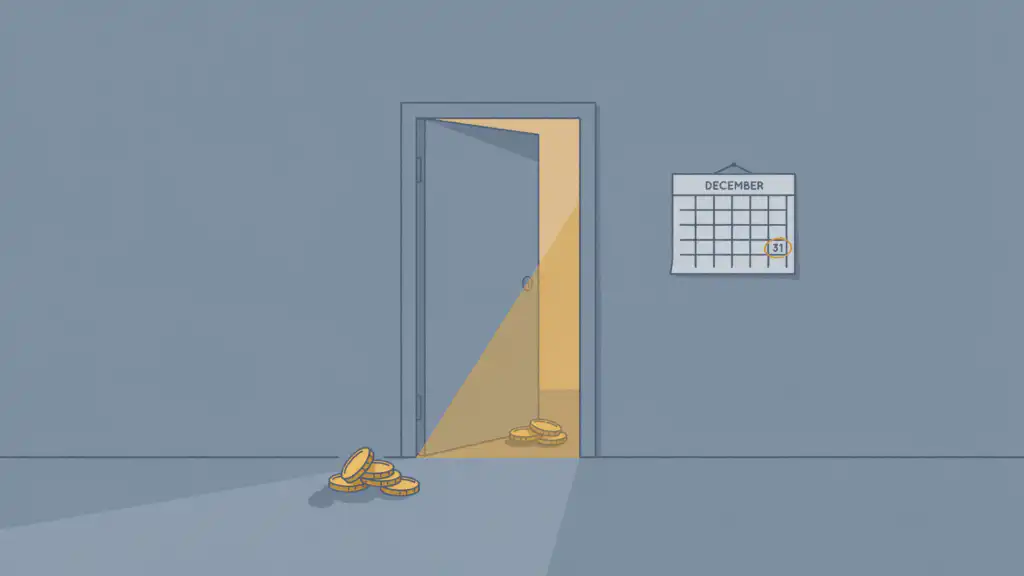

If you were eligible for a health savings account (HSA) last year and didn’t reach the contribution limit, you can still contribute for last year until the tax filing deadline, usually April 15. Tell your HSA provider the deposit is a prior-year contribution, then claim the deduction on last year’s return, even if you don’t itemize.
Unused HSA contribution room doesn’t carry forward, so whatever you leave open for last year is gone once the deadline passes. An extension won’t help, because it buys time to file the return, not to make the deposit.
Between January 1 and that deadline, the account accepts contributions for two tax years, and last year’s closes first. A deposit for last year lowers last year’s taxable income. By our math, someone in the 22% federal bracket who deposits $1,000 in March and designates it for last year cuts last year’s federal income tax by about $220.
Size the deposit first, then file it under the right year.
- Start with last year’s limit for your coverage, self-only or family, from IRS Publication 969. Subtract everything already in for last year, including your employer’s deposits and your own payroll contributions.
- If you weren’t eligible all year, you get one-twelfth of the annual limit for each month you were eligible on the first of the month. The last-month rule is the exception. If you were eligible on December 1, you can contribute the full year’s amount, as long as you stay eligible through December 31 this year. Lose eligibility before then, and the extra becomes taxable income plus a 10% additional tax.
- Mark the deposit for last year when you make it. Providers record the tax year of every deposit made between January and the deadline, and one logged as this year’s won’t count on last year’s return.
- Report it on Form 8889 with last year’s return.
Payroll contributions skip Social Security and Medicare taxes on top of income tax, and a deposit you make yourself gets only the income tax deduction. It still beats letting last year’s room expire.
If your employer offers payroll contributions, use them for this year, and save direct deposits for whatever room last year left open.

Editorial & Advertiser Disclosure: The editorial content on this page is not provided, commissioned, reviewed, approved, or otherwise endorsed by any advertiser. Opinions expressed here are ours alone, not those of any advertiser. The offers that appear on this site are from companies that compensate us. That compensation may influence which products we cover and where and how they appear on a page – including the order in which they appear – but it does not influence our evaluations, ratings, or opinions. We do not include every company or offer available in the marketplace.
Related: