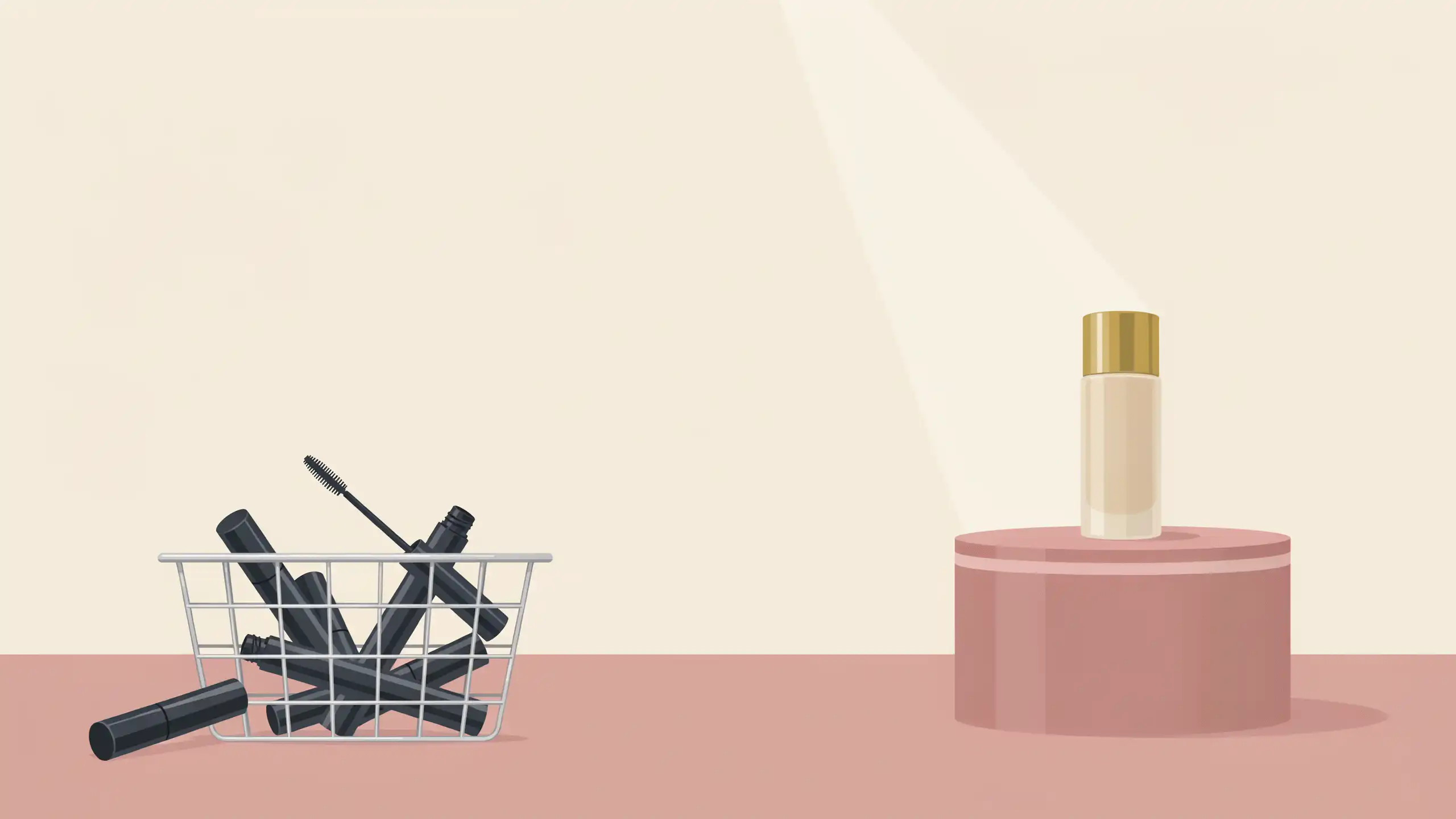

Pay high-end prices only for makeup you wear on your whole face every day, which mostly means foundation, and test it with a free sample before you buy. Start with drugstore mascara, eyeliner, and lip color, since manufacturers usually recommend replacing mascara every few months, whatever you paid for it.
A department-store brand and a drugstore brand can belong to the same company. L’Oréal, which owns both Lancôme and Maybelline New York, spent 32.2% of its 2025 sales on advertising and promotion, about 10 times what went to research and innovation.
So a higher price doesn’t prove a better formula. Pay more only where the difference shows every day and you’ll use the product long enough to get your money’s worth.
Foundation qualifies. It covers your whole face every day, so a shade that’s slightly off is easy to spot, and it usually stays usable longer than eye makeup. The FDA notes that eye-area products tend to go bad faster than other cosmetics, and that manufacturers usually recommend throwing mascara out two to four months after purchase.
That makes mascara the easiest place to save, because you pay any premium again with every new tube. At one tube every three months, a $30 department-store mascara costs $120 a year, against $48 for a $12 drugstore tube. The gap is $72 a year on one product.
Try drugstore eyeliner and lip color first too, and buy them where one that disappoints can go back. Ulta Beauty, which stocks drugstore brands, refunds most new or gently used products returned within 30 days of purchase, so keep the receipt.
For foundation, test before you pay. Sephora stores offer a free shade match with a skin-tone scanner, and you can ask a Beauty Advisor for a free sample of any brand in any shade. Look up dupes too, cheaper products that closely match a pricier one, and read reviews that compare the two side by side.
Wear the sample through a full day and check it in daylight, then buy the bottle only if it still matches.


Subscribe and we'll send you 101 Essential Money Tips to get you started.
The 101 money moves that matter most, from the foundations to protecting what you’ve built.
Advertiser Disclosure: Many or all of the offers that appear on this site are from companies that compensate us, and some companies pay for sponsored content. That compensation may influence which products we cover and where and how they appear on a page, including the order in which they appear. We do not include every company or offer available in the marketplace.