
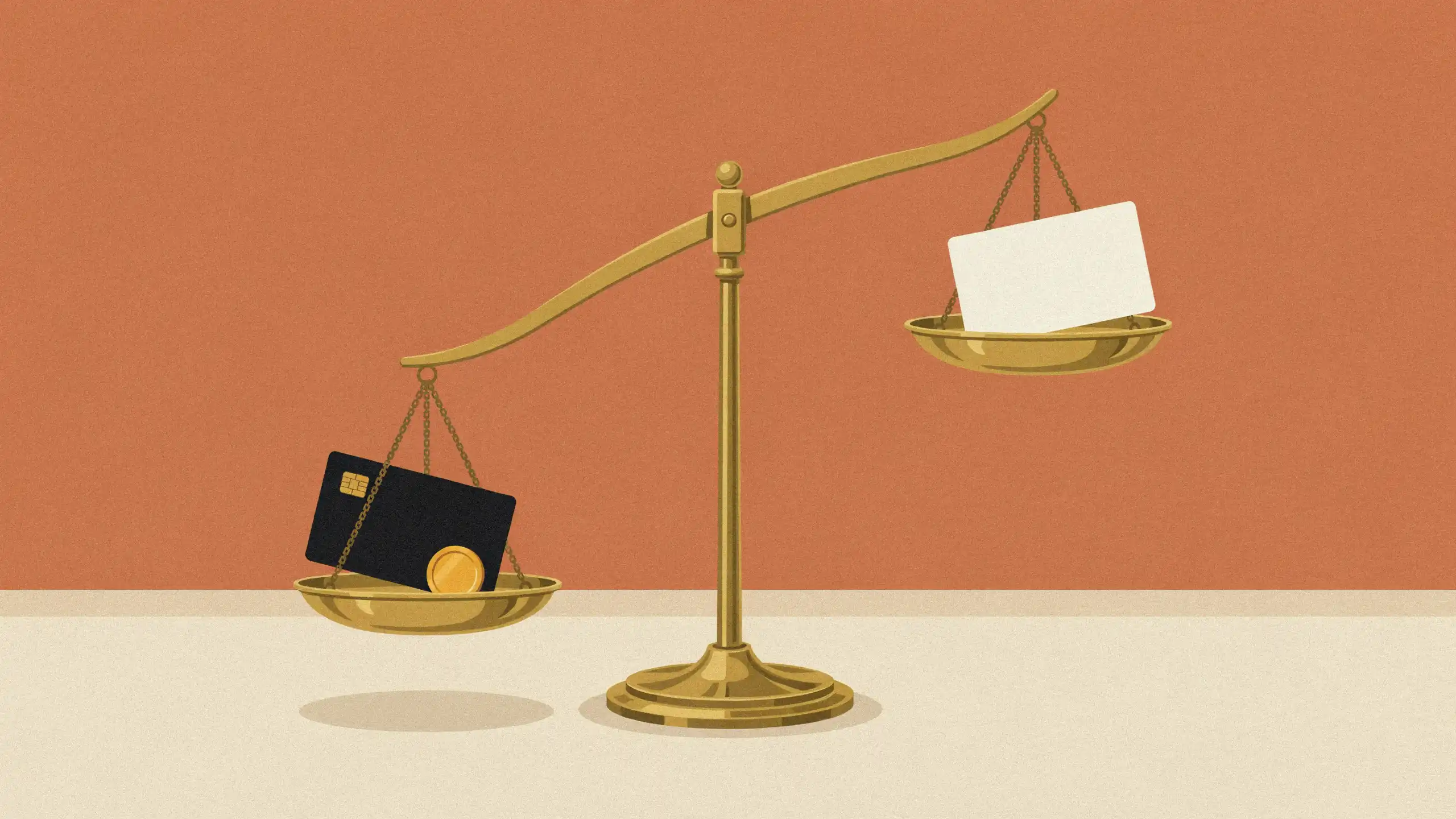

An annual fee card pays off only when the rewards and credits you’d use anyway beat what a no-fee card would earn on the same spending. Before you apply or renew, value each credit at what you’d pay for it in cash, subtract the fee, and see whether the card still comes out ahead.
Issuers sell premium cards on a headline annual value, often several times the fee, that counts every credit at face value. Most of those credits work at a single merchant, pay out in installments over the year, or require a hotel booked through the issuer’s travel site.
A credit saves you money only when it pays for something you’d buy anyway. A $10 monthly credit toward a streaming service you already pay for is worth $120 a year. The same credit toward a service you’d sign up for just to use it is worth nothing, because that spending was never in your budget.
Clearing the fee isn’t enough. Every purchase on the fee card is one a no-fee card would have earned rewards on. Take a $95 card that pays 3% on dining and groceries. On $8,000 a year in those categories, it returns $240, or $145 after the fee. A no-fee card paying a flat 2% earns $160 on the same $8,000, so the fee card trails by $15 before you count a single credit. One $50 credit you’d use anyway puts it $35 ahead.
Run your own numbers in this order:
- Total the spending you’d put on the card in a year, and price its rewards at the cash value you’d redeem them for.
- Add each credit you’d use without changing your habits, at what you’d otherwise pay for the same thing.
- Count lounge access and travel insurance only if you’d use them, at the price of the day pass or policy they’d replace.
- Subtract the fee and compare what’s left with what the best no-fee card for your spending would earn. Some no-fee cards pay a flat 2% on every purchase, so 2% is your floor.
Rerun the math before each renewal, because credits come and go and your spending shifts. If a card you already hold no longer comes out ahead, call the issuer before you close it and ask for an offer to stay or a switch to its no-fee card.

Editorial & Advertiser Disclosure: The editorial content on this page is not provided, commissioned, reviewed, approved, or otherwise endorsed by any advertiser. Opinions expressed here are ours alone, not those of any advertiser. The offers that appear on this site are from companies that compensate us. That compensation may influence which products we cover and where and how they appear on a page – including the order in which they appear – but it does not influence our evaluations, ratings, or opinions. We do not include every company or offer available in the marketplace.
Related: