

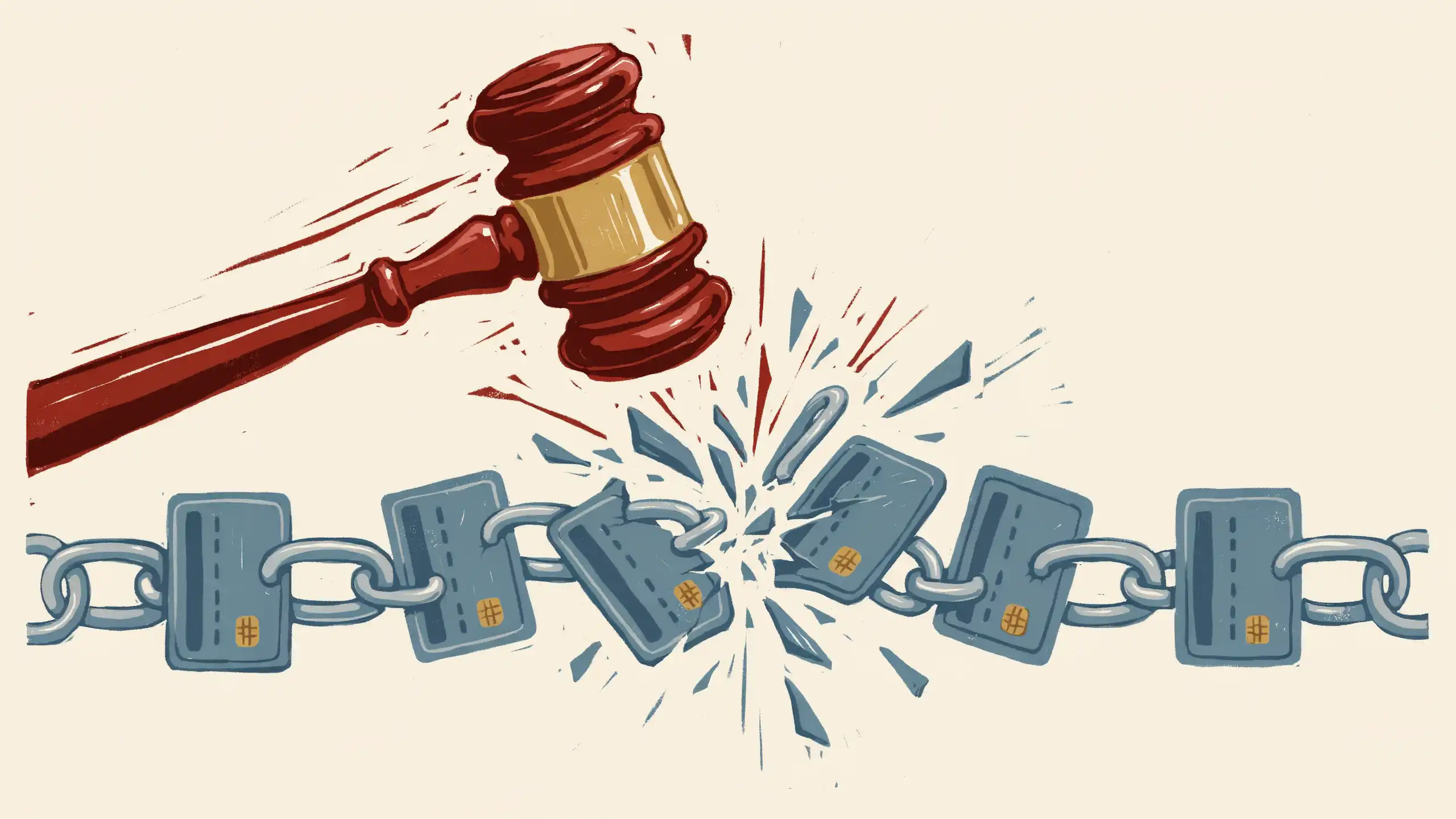

Filing for bankruptcy makes sense when your credit card and medical debt couldn’t be repaid within five years, even on a credit counseling plan. Multiply what you can spare each month by 60. If that falls far short of what you owe, stop cashing out your 401(k) to keep up and talk to a bankruptcy attorney.
Treat bankruptcy as a moral failure and you’ll keep paying long after the math stops working, even if that means emptying a 401(k) or borrowing against your house for debts bankruptcy would have erased.
Filing is a legal tool, not a verdict on your character.
Start with the five-year test. Add up your unsecured debt, the kind not tied to a house or car, like credit cards, medical bills, and personal loans. Subtract essentials like housing, food, utilities, and insurance from your monthly take-home pay, then multiply what’s left by 60, the months in a long credit counseling plan. If that total, which leaves out interest, falls far short of the debt, no repayment plan will close the gap.
Say you owe $60,000, $50,000 of it on credit cards, and can spare $300 a month. Sixty payments total $18,000, under a third of the balance. At typical card rates above 20%, the card interest alone tops $800 a month, nearly three times the payment.
Once the test points to bankruptcy, stop paying with money it protects. Bankruptcy shields 401(k)s fully and IRAs up to a seven-figure cap, so cashing one out spends savings you’d keep, and before age 59½ it usually adds a 10% penalty to the income tax. A home equity loan turns card debt bankruptcy could erase into debt secured by your house.
Don’t file over a balance the test says you can repay, or one made up mostly of debts bankruptcy won’t erase, like child support and recent taxes. If an inheritance or other lump sum is coming, rerun the test with it, since an inheritance you’re entitled to within 180 days after filing can go to creditors.
Recent large charges are a reason to wait a few months. Luxury purchases within 90 days of filing and cash advances within 70 days, above set dollar limits, are presumed to survive the bankruptcy.
Weigh the numbers against filing’s fees and seven to 10 years on your credit report, with a bankruptcy attorney or a nonprofit credit counselor, and decide while your retirement savings are still intact.

Editorial & Advertiser Disclosure: The editorial content on this page is not provided, commissioned, reviewed, approved, or otherwise endorsed by any advertiser. Opinions expressed here are ours alone, not those of any advertiser. The offers that appear on this site are from companies that compensate us. That compensation may influence which products we cover and where and how they appear on a page – including the order in which they appear – but it does not influence our evaluations, ratings, or opinions. We do not include every company or offer available in the marketplace.
Related: