
Build a home gym from two or three pieces that fit the workouts you’ll actually do, not a full set. Resistance bands, a kettlebell, and a jump rope cover strength and cardio for about $75 new. Buy the kettlebell and other weights used, since iron doesn’t wear out.
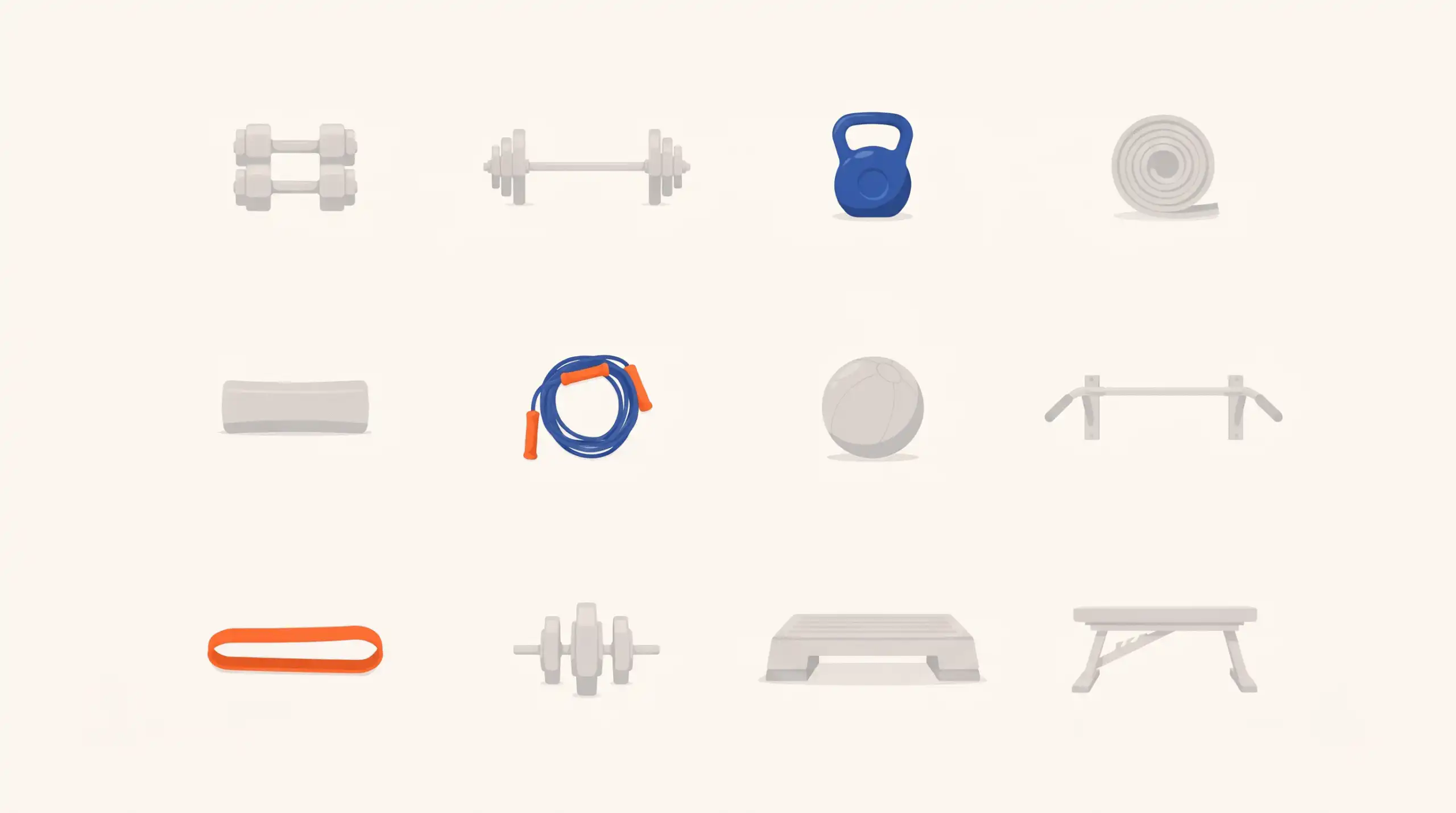
A corner of a room holds a working home gym, and each of the 12 pieces below costs less than $100 new.
Body-weight moves like squats, lunges, and pushups need no equipment, so buy a piece only when it adds something your body weight can’t, such as something to pull against, extra weight, or cardio that fits a small room.
Match the pieces to the workouts you already do, or to the ones in your home workout plan. Bands and a kettlebell start a strength routine, a jump rope or a step covers cardio, and a mat and a foam roller cover yoga, Pilates, and stretching.
Say a beginner pays $45 a month for a gym she rarely uses. Bands, a 20-pound kettlebell, and a basic mat cost about $79 new, less than the $90 she pays for two months of dues. Canceling saves her $540 a year, so she’s $461 ahead after the first year, and all she gives up is machines and heavy weights she rarely used.
For strength
- Resistance bands make squats, lunges, and leg lifts harder, and a set of three loop bands costs about $13. They suit beginners and travelers, since they weigh almost nothing.
- A kettlebell trains your legs, hips, and back with swings and squats, and fast swings double as cardio. A 20-pound one costs about $51 new and suits anyone who wants strength and cardio from one piece.
- Light dumbbells cover presses, curls, rows, and lunges, and they suit beginners who like familiar gym moves. A pair of 6-pounders costs about $20 new and a pair of 10-pounders about $28.
- A suspension trainer anchors over a closed door and turns your body weight into rows, pushups, and lunges you make harder by leaning farther. A set costs about $55 and suits anyone with a sturdy door.
- A doorway pull-up bar trains your back, arms, and grip and costs about $20. It suits anyone working toward a first pull-up, since a band looped over the bar takes some of your weight.
- A medicine ball adds weight to squats, lunges, and core twists, and a 10-pound one costs about $25. It suits anyone who wants harder core work without buying a set of weights.
For cardio
- A jump rope gives you vigorous cardio in a few square feet for about $11 to $16. It suits anyone with room overhead and a floor that can take the pounding, which can rule out an upstairs apartment.
- An adjustable step gives you low-impact cardio and doubles as a low bench for step-ups and for pushups with your hands on the step. It costs about $30 and suits anyone who can’t jump rope where they live.
For floor work & recovery
- A yoga mat cushions floor work, from yoga and Pilates to planks and stretches, and costs about $15 to $25. It suits anyone who exercises on a hard floor.
- A stability ball trains your core and balance, works as a bench for dumbbell presses, and costs about $20. It suits anyone with a corner for a ball up to 30 inches across.
- A foam roller lets you massage tight muscles after runs and lifting days, costs about $15 to $30, and suits anyone who often finishes a workout stiff or sore.
- Sliders go under your hands or feet and turn lunges, mountain climbers, and pushups into harder core work. A pair costs about $10 and suits small, quiet spaces, since nothing leaves the floor.
Buying used and storing it
Kettlebells and dumbbells are the pieces to buy used, since cast iron weighs the same after decades of use. Look for them on Facebook Marketplace, on Craigslist, and at used sporting goods stores such as Play It Again Sports, which buys and sells used fitness gear.
The Play It Again Sports in Novi, Michigan, for one, charges 69 cents a pound for used dumbbells and 99 cents for new hex dumbbells, so a used pair of 10-pounders costs $13.80 there, $6 less than new.
Buy bands new, since a set costs as little as $13 and rubber wears out. Performance Health, which sells TheraBand bands, says to check bands for tears, cracks, and other wear before each use and to replace any that show it.
Most of the kit fits in a closet corner. Bands, a jump rope, sliders, and a suspension trainer share one bin, the mat and roller stand on end, and the weights sit on the floor beside them. A step with its removable feet taken off slides under a bed, which leaves the stability ball as the one piece that needs its own spot.
Buy the two pieces your favorite workout needs, use them for a month, and add a third only when a workout you’ve kept up calls for it.


Subscribe and we'll send you 101 Essential Money Tips to get you started.
The 101 money moves that matter most, from the foundations to protecting what you’ve built.
Advertiser Disclosure: Many or all of the offers that appear on this site are from companies that compensate us, and some companies pay for sponsored content. That compensation may influence which products we cover and where and how they appear on a page, including the order in which they appear. We do not include every company or offer available in the marketplace.