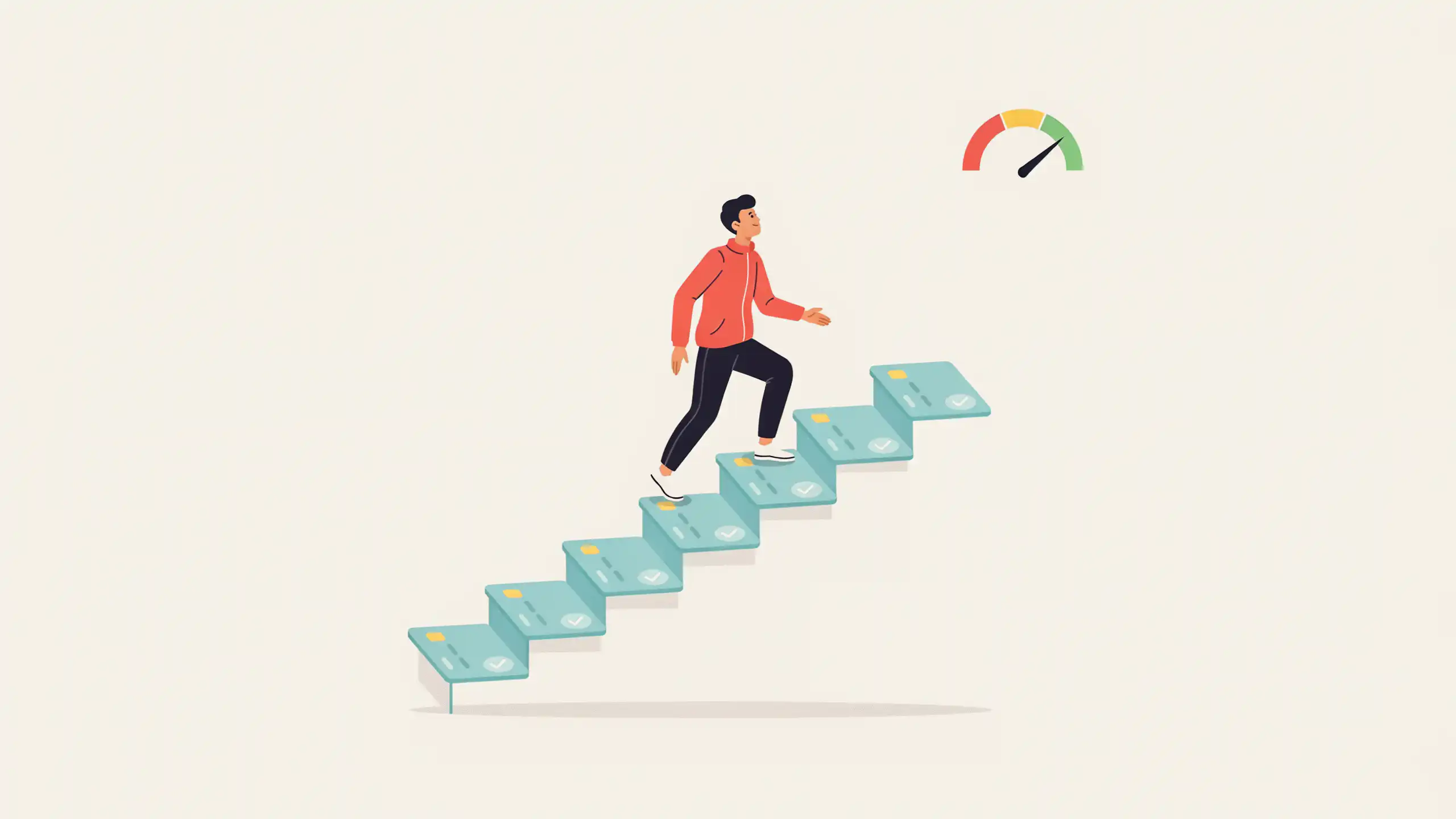

If you’re 18 with income or assets of your own, start building credit with one student, starter, or secured card. Put a single small recurring bill on it and set autopay to pay the full statement balance every month. That builds the on-time payments and low balances that count most in your credit score.
At 18 you likely have no credit history, and FICO can’t score you until an account is at least six months old. The clock starts when your first one opens.
That account doesn’t need to do much. Payment history makes up 35% of a typical FICO score and how much you owe another 30%. Your card issuer sends both to the credit bureaus every month, generally on the day your statement closes. One small charge paid in full puts an on-time payment and a low balance on your record each month, interest-free.
Student cards need no deposit, and some starter cards are made for people new to credit. A secured card takes a refundable deposit that typically becomes your limit. You can also be added to a parent’s card as an authorized user, or take out a credit-builder loan, which holds the money in savings until you’ve repaid it.
Until you turn 21, federal rules require income or assets of your own that cover a card’s minimum payments, or a co-signer who is at least 21. Pay from a part-time job counts. A parent’s income doesn’t, and secured cards follow the same rule.
Once the card is open, stick to these rules:
- Put one small recurring bill on it, such as a streaming subscription, and nothing else.
- Turn on autopay for the full statement balance, so a payment is never late.
- Keep the balance low when the statement closes. A $15 bill on a $500 limit uses 3% of it.
- Apply for one card at a time. FICO’s research finds that several accounts opened close together signal higher risk, especially for someone just starting out.
- After the first statement closes, check your reports from all three credit bureaus, free every week at AnnualCreditReport.com.
Six months in, you’ll have a FICO score backed by on-time payments. Keep that first card open after you move on to better ones, since the length of your credit history makes up 15% of a typical FICO score.

Editorial & Advertiser Disclosure: The editorial content on this page is not provided, commissioned, reviewed, approved, or otherwise endorsed by any advertiser. Opinions expressed here are ours alone, not those of any advertiser. The offers that appear on this site are from companies that compensate us. That compensation may influence which products we cover and where and how they appear on a page – including the order in which they appear – but it does not influence our evaluations, ratings, or opinions. We do not include every company or offer available in the marketplace.
Related: