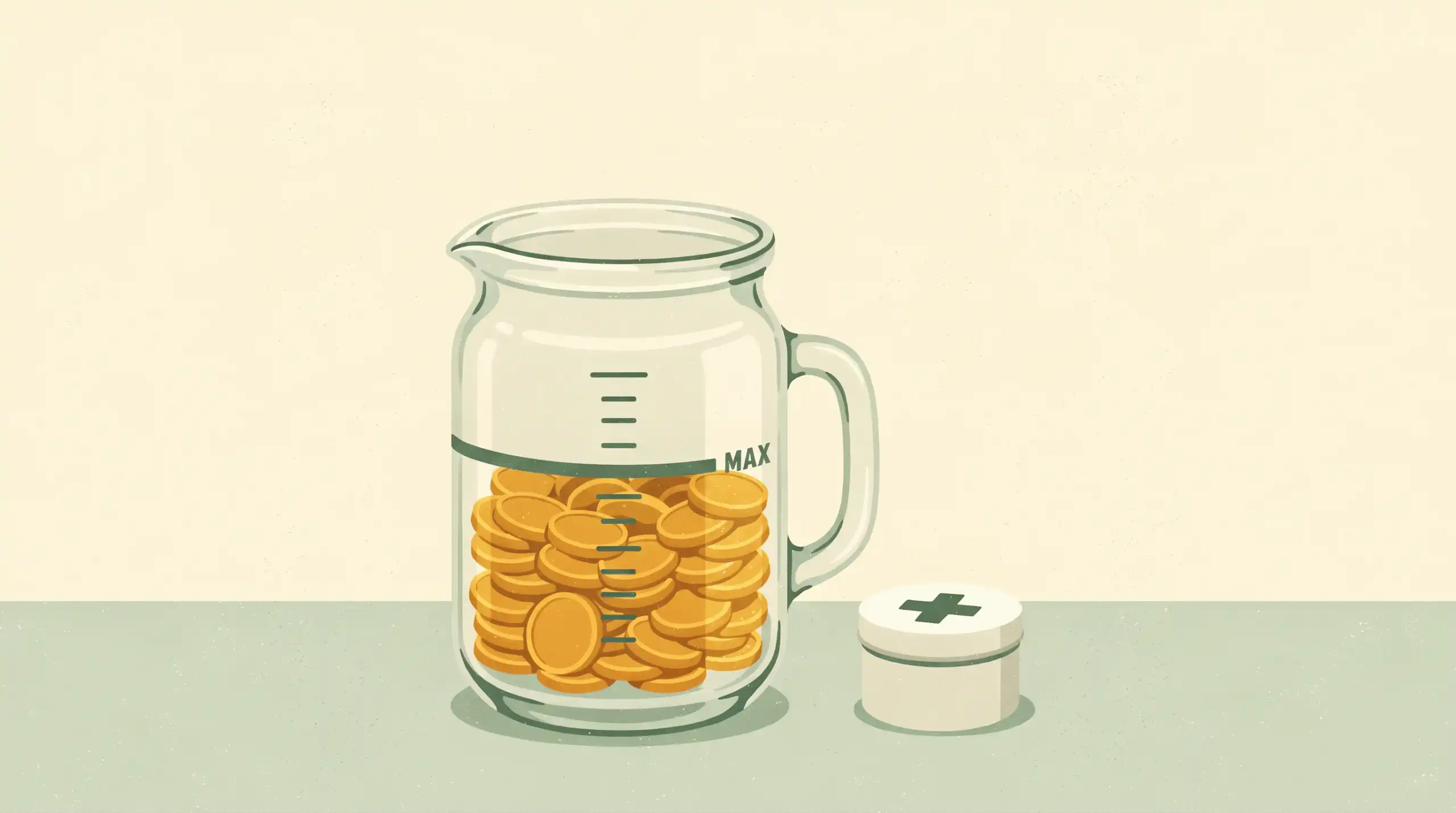

Cancer, critical-illness, and accident policies pay only for the diseases or injuries they list. Before you buy one, compare your health plan’s out-of-pocket maximum with your savings. Then put that premium toward cash that covers the maximum and disability insurance that replaces your paycheck, since neither depends on which illness or injury you get.
These policies sit on the open enrollment menu beside your health plan, and they feel most urgent the week a friend is diagnosed. Their terms are narrower than their names suggest.
Cancer policies pay nothing for a cancer found before you applied, and some make you wait 30 days or more before coverage starts. A shopper’s guide from the National Association of Insurance Commissioners warns that “the odds are against your receiving any benefits.”
Your health plan already caps the bill those policies are sold to cover. For covered in-network care, the most you pay in a plan year is the out-of-pocket maximum, the ceiling on your deductible, copays, and coinsurance combined. Past it, the plan pays 100% of covered care, whatever the diagnosis.
Lost income is the other real risk, and injuries are a small part of it. According to the Council for Disability Income Awareness, injuries cause just 11% of long-term disability claims, while back and joint disorders cause 26% and cancer 15%. An accident policy pays nothing for illness.
Find your out-of-pocket maximum on page one of your plan’s Summary of Benefits and Coverage, where it’s called the out-of-pocket limit, and compare it with your savings. Then put what a narrow policy would cost toward these instead.
- Cash equal to that maximum, kept in a health savings account if your plan qualifies for one or in your emergency fund if not
- Long-term disability insurance, which replaces part of your pay when illness or injury keeps you from working
- Term life insurance, if someone depends on your income
One case favors the narrow policies. On a high-deductible plan with little saved, a payout after a covered diagnosis or injury can pay a deductible you otherwise couldn’t. Savings pay that same deductible for any illness or injury, so building them is still the better fix.
Before you check the box, ask what the policy pays for everything it leaves out. If the answer is nothing, that premium belongs in your savings.

Editorial & Advertiser Disclosure: The editorial content on this page is not provided, commissioned, reviewed, approved, or otherwise endorsed by any advertiser. Opinions expressed here are ours alone, not those of any advertiser. The offers that appear on this site are from companies that compensate us. That compensation may influence which products we cover and where and how they appear on a page – including the order in which they appear – but it does not influence our evaluations, ratings, or opinions. We do not include every company or offer available in the marketplace.
Related: