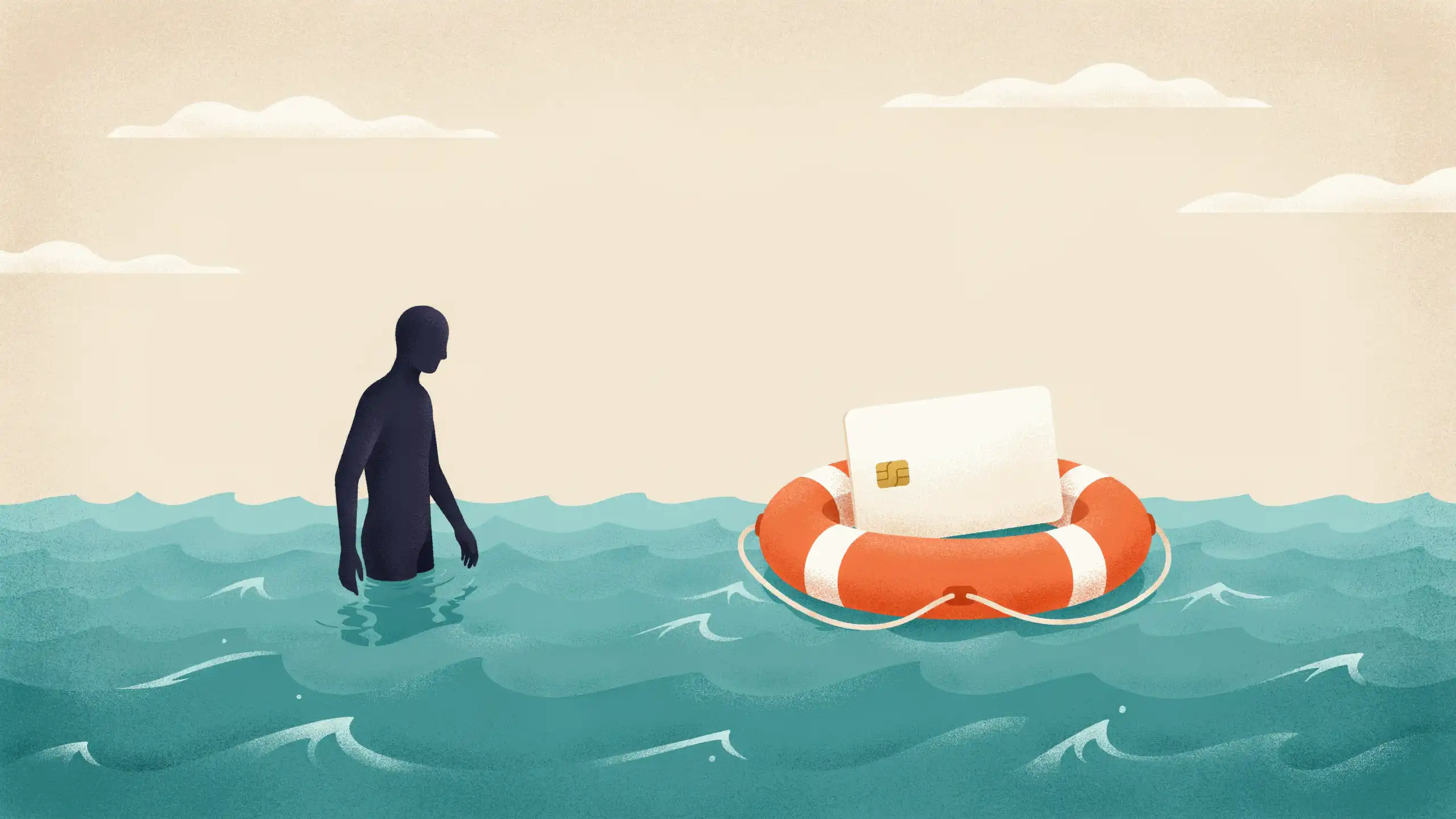

Credit card payment protection charges a monthly fee on your balance for limited help after a layoff, disability, or death. Turn it down, and cancel it if it’s already on your statement. If your income drops, ask your issuer whether you qualify for a hardship program. It’s free, but it usually lowers your payment rather than making it for you.
Issuers that sell it often pitch it when you call to activate a card or reach customer service. Buying it is always optional, and the Consumer Financial Protection Bureau warns that add-ons sold this way can deliver less than buyers expect.
The fee is a set amount for every $100 of your statement balance, so it grows as you owe more. At 89 cents per $100, a $6,000 balance costs $53.40 a month, or $640.80 a year. The charge applies even if you pay your bill in full each month, because it’s figured on the balance your statement shows.
Coverage is narrower than the pitch. After a layoff or disability, plans typically make only your minimum payment, and only for a limited number of months. Credit One Bank’s plan, for one, covers up to six minimum payments while interest keeps building on the balance. If you die, it pays off no more than $10,000. Many plans won’t pay for a job loss in your first 30 days of coverage. Quitting, retiring, or getting fired for misconduct doesn’t qualify, and some plans require you to have worked at least 20 or 30 hours a week.
Look for a monthly charge on your statement named something like credit protection, payment protection, or payment security. If you find one, call the number on your card and cancel it. Plans let you cancel anytime, and some refund the fees if you do it soon after enrolling.
Then save the money instead. At $53.40 a month, you’d build an emergency fund of more than $640 within a year, and it can pay rent and groceries as well as a card bill.
If your income drops, call your issuer before your next due date and ask for a hardship program. It’s free, but the issuer decides who qualifies, and it usually lowers your rate or payment rather than paying the bill for you. If others depend on your paycheck, get quotes for term life or disability insurance.
If you pay for protection, buy the kind that pays you or your family, not your card issuer.

Editorial & Advertiser Disclosure: The editorial content on this page is not provided, commissioned, reviewed, approved, or otherwise endorsed by any advertiser. Opinions expressed here are ours alone, not those of any advertiser. The offers that appear on this site are from companies that compensate us. That compensation may influence which products we cover and where and how they appear on a page – including the order in which they appear – but it does not influence our evaluations, ratings, or opinions. We do not include every company or offer available in the marketplace.
Related: