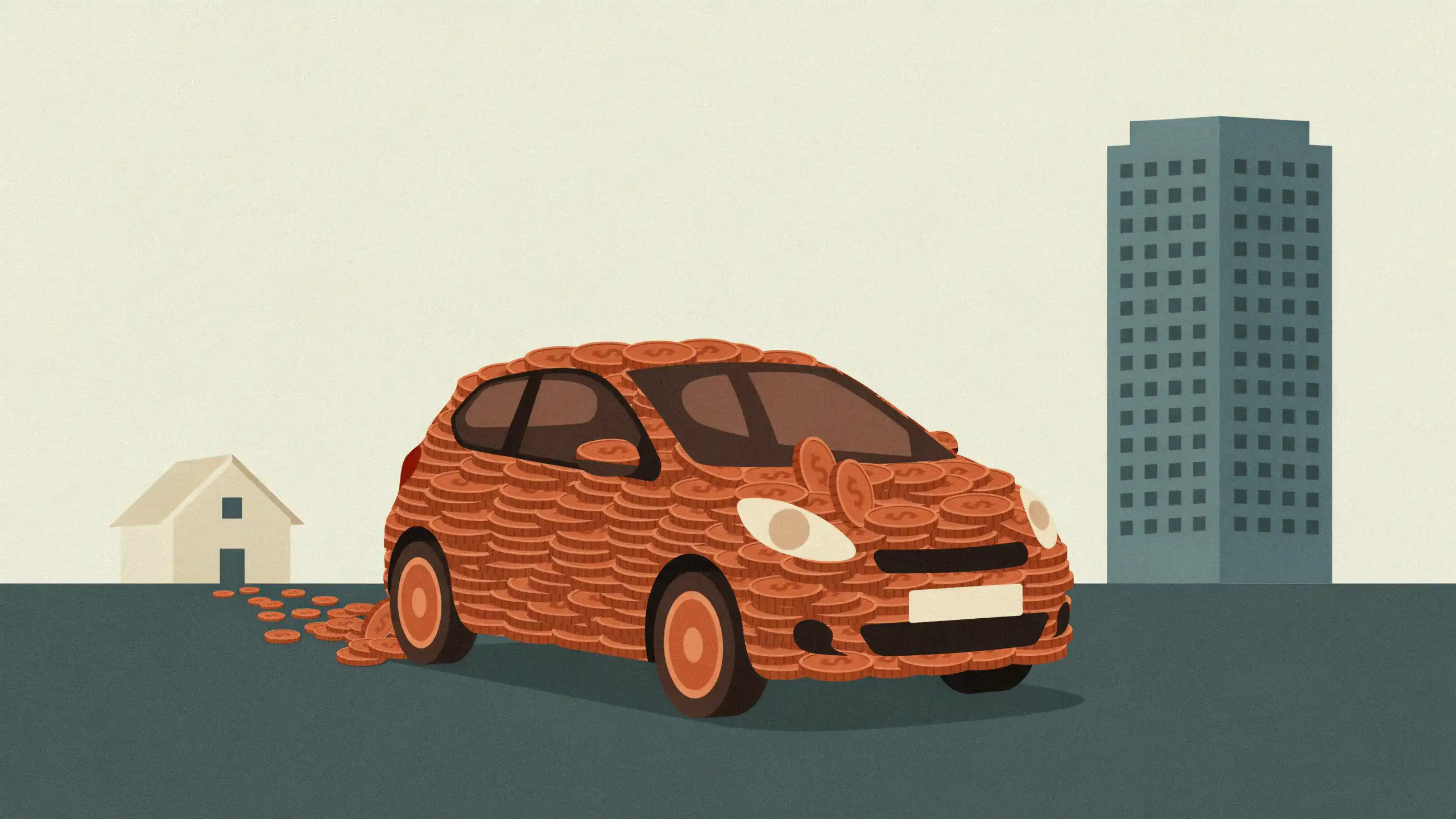

If you drive to work, price each commuting mile at the IRS business mileage rate, which counts what a car costs to own, not just gas. Pay for transit, vanpools, and parking with pretax money through a commuter benefit at work. Then drive fewer days with a carpool or a remote day or two a week.
Gas is the commuting cost you notice. Insurance, repairs, and the value your car loses with each mile never show up at the pump.
The IRS business mileage rate, 76 cents a mile, counts them along with the gas. The IRS sets it from a yearly study of what cars cost to own and drive. It’s an average, and the full cost of owning a car varies by model.
Say you drive 20 miles each way, 230 days a year, and count each mile at 76 cents. That’s 9,200 miles and almost $7,000 a year. If you ride transit, add up a year of fares and parking instead.
Next, pay what you can with pretax money. Under the IRS’s fringe benefit rules, a commuter benefit at work lets you buy transit passes and vanpool rides with up to $340 a month of pretax pay. A separate $340 a month can go to parking at or near work, or where you catch transit, a vanpool, or a carpool. That pay skips federal income tax and the 7.65% Social Security and Medicare tax, so in the 22% federal bracket each dollar of fares or parking costs about 70 cents.
Then cut the trips. Working from home two of your five days takes 40% off those 9,200 miles and brings the cost at 76 cents a mile down from almost $7,000 to about $4,200. Gas and upkeep on the skipped miles stop at once, and a car driven less lasts more years.
On the days you still go in, each of these cuts your driving.
- Alternate driving with a coworker, and you drive only half the days.
- Ask your employer or transit agency about a vanpool.
- Drive or bike to a train or bus, and ride the rest of the way.
Look in your benefits portal for a commuter benefit, along with other workplace perks you may be missing, then ask your manager about working from home a day or two a week.

Subscribe and we'll send you 101 Essential Money Tips to get you started.
The 101 money moves that matter most, from the foundations to protecting what you’ve built.
Advertiser Disclosure: Many or all of the offers that appear on this site are from companies that compensate us, and some companies pay for sponsored content. That compensation may influence which products we cover and where and how they appear on a page, including the order in which they appear. We do not include every company or offer available in the marketplace.