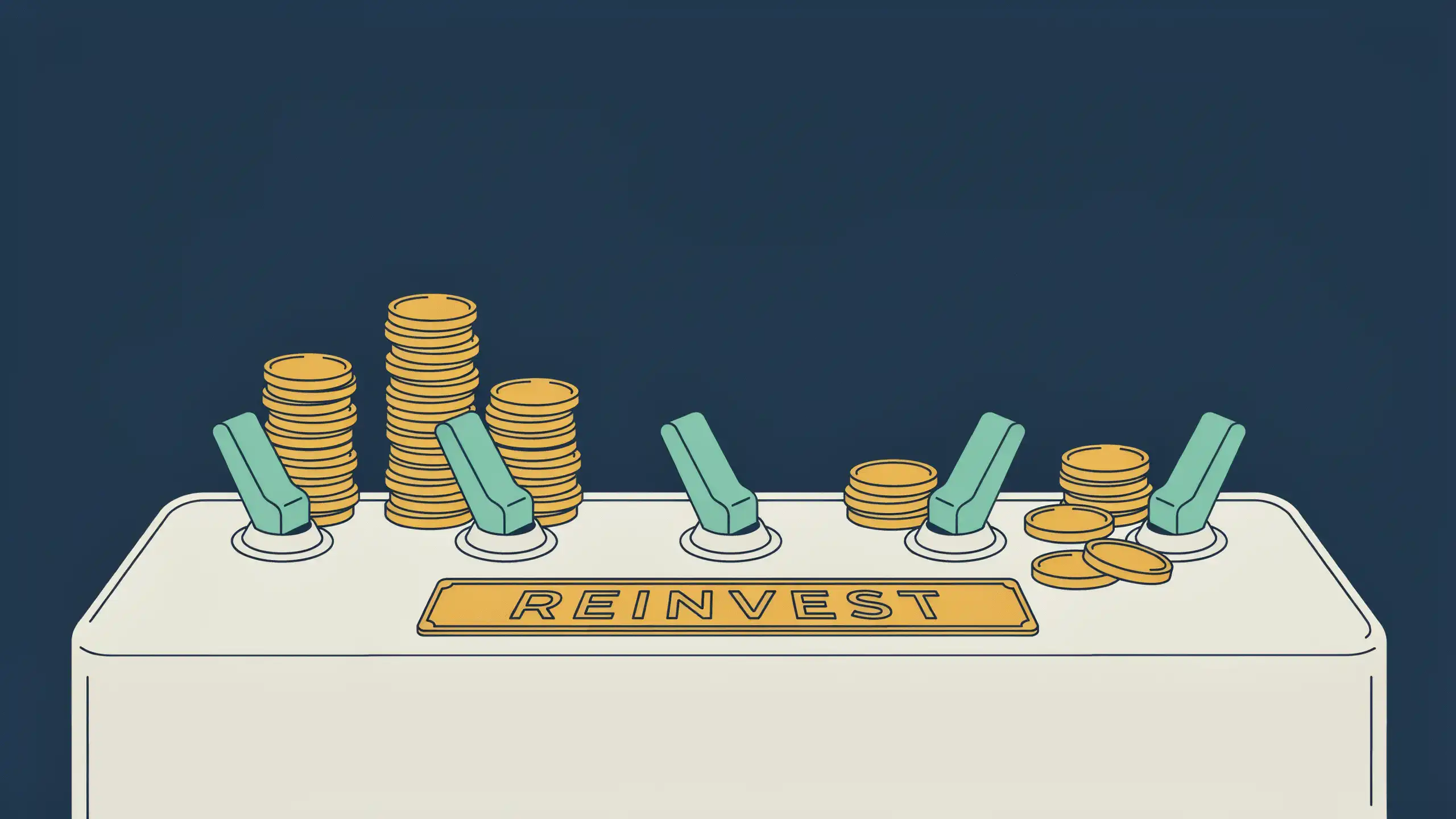

Unless dividend reinvestment is turned on, every dividend paid into your brokerage account or IRA lands as cash instead of buying more shares. Switch it on for each holding you already own, not just as the account default, so the money keeps compounding. Leave it off only for dividends you’re spending or using to rebalance.
Reinvested dividends are most of the stock market’s long-run return. Hartford Funds credits them, and the compounding they set off, with 85% of the S&P 500’s cumulative total return from 1960 through 2025.
In Hartford’s example, $10,000 invested in 1960 grew to about $1.1 million by the end of 2025 on price gains alone. With every dividend reinvested, it reached about $7.6 million.
Defaults vary, and one switch doesn’t always reach everything. At Fidelity, dividends from stocks and exchange-traded funds pay out as cash unless you choose otherwise, while mutual fund dividends reinvest automatically. Fidelity’s account-level setting covers only future purchases, so turning it on changes nothing you already hold.
So check each holding. Schwab, for example, puts a Reinvest column on its Positions page showing Yes or No for every position, and clicking the answer lets you change it. Reinvesting there is free and buys whole or fractional shares. The setting only catches future dividends. For those that already piled up as cash, our tip on idle brokerage cash shows where to move them.
Leave it off in two cases. If you’re retired and living on the dividends, taking them as cash spares you from selling shares to pay the bills. And if you rebalance by steering dividends to whatever is lagging, as our annual rebalancing tip suggests for taxable accounts, they need to arrive as cash.
In a taxable account, reinvesting doesn’t put off the tax. IRS Publication 550 says dividends used to buy more shares still count as income for the year they’re paid, even though you never see the cash. Each reinvested purchase gets its own cost basis, equal to the dividend that bought it. Keep a record of those purchases or confirm your broker tracks them, because leaving reinvested dividends out of your basis means paying tax on the same dollars twice when you sell.
Open your positions page today and switch every holding still set to cash, unless it’s funding your spending or your rebalancing.

Editorial & Advertiser Disclosure: The editorial content on this page is not provided, commissioned, reviewed, approved, or otherwise endorsed by any advertiser. Opinions expressed here are ours alone, not those of any advertiser. The offers that appear on this site are from companies that compensate us. That compensation may influence which products we cover and where and how they appear on a page – including the order in which they appear – but it does not influence our evaluations, ratings, or opinions. We do not include every company or offer available in the marketplace.
Related: