

A winter storm can cut off your heat and power for several days, so prepare before it hits. Stock water, food that needs no cooking, medicine, flashlights, and a charged power bank, choose a safe way to stay warm, and learn how to keep your pipes from freezing.
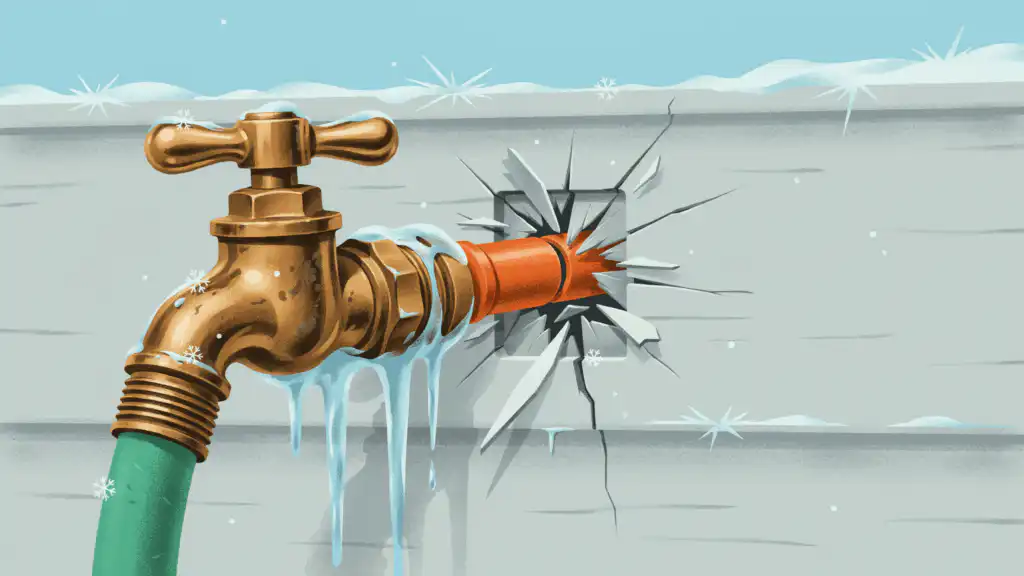
Once the heat is off, the water in your pipes can freeze, expand, and split them.
Homeowners insurance claims for water damage and freezing averaged $15,400 from 2019 through 2023, the Insurance Information Institute reports. The other danger is carbon monoxide, a gas you can’t see or smell, which builds up when you heat with a gas oven or run a grill, camp stove, or generator indoors.
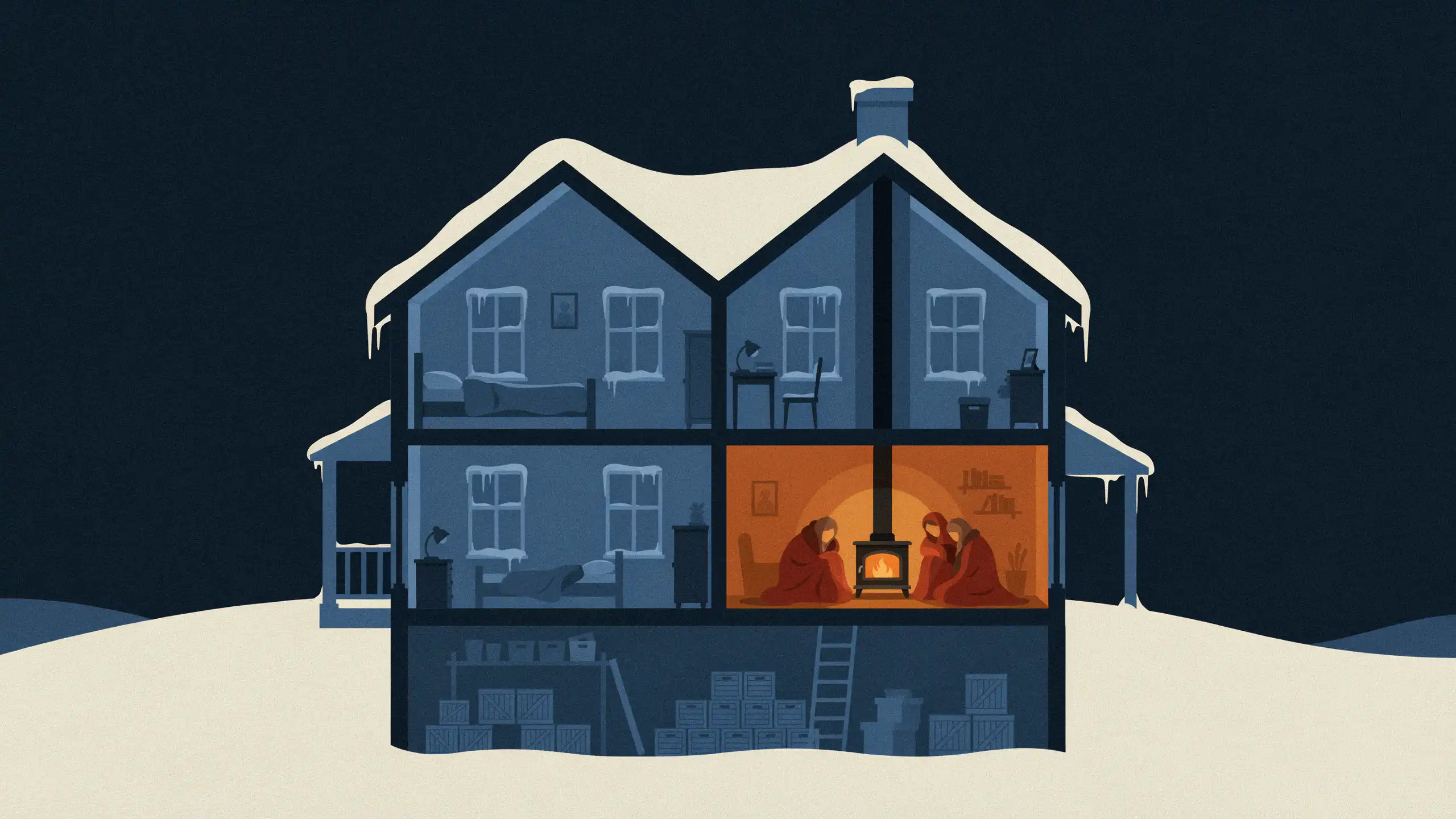
Picture two neighbors without power for three days. One drips the faucets and keeps the family by a wood stove, and no pipes freeze. Next door, a pipe in an outside wall splits and floods the basement.
Before the next storm, take these steps.
- Refill prescriptions early, and store several days of water at a gallon per person per day, food that needs no cooking, flashlights, spare batteries, and a charged power bank for each phone.
- For backup heat, use a fireplace or wood stove that vents outside, or gather everyone under blankets in one room and close off the rest.
- Put a carbon monoxide alarm with a battery or battery backup near every sleeping area, and run a generator only outdoors, 20 feet or more from windows, doors, and vents.
- In a deep freeze, let cold water drip from faucets fed by pipes in unheated spaces or outside walls, and open the cabinet doors under sinks so warm air reaches the pipes.
- If you travel, keep the heat at 55 degrees or higher and add a freeze alarm that texts you over a cell network and has a backup battery, since Wi-Fi goes out with the power.
- Decide where you’d go if the house gets too cold, such as a friend’s home, a library, or a warming center.
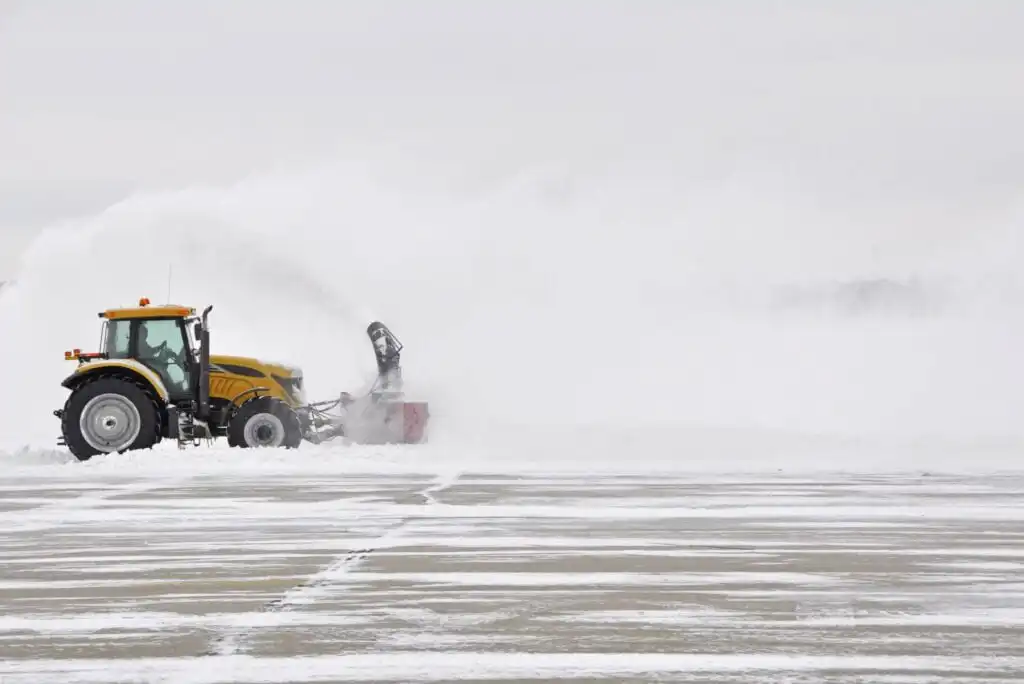
- Push snow instead of lifting it, and take breaks, since shoveling can trigger a heart attack.
Last, find your main water shutoff, the valve that stops water from pouring out of a burst pipe. Look where the water line enters the house, in the basement or crawl space, or next to the water heater.

Subscribe and we'll send you 101 Essential Money Tips to get you started.
The 101 money moves that matter most, from the foundations to protecting what you’ve built.
Advertiser Disclosure: Many or all of the offers that appear on this site are from companies that compensate us, and some companies pay for sponsored content. That compensation may influence which products we cover and where and how they appear on a page, including the order in which they appear. We do not include every company or offer available in the marketplace.