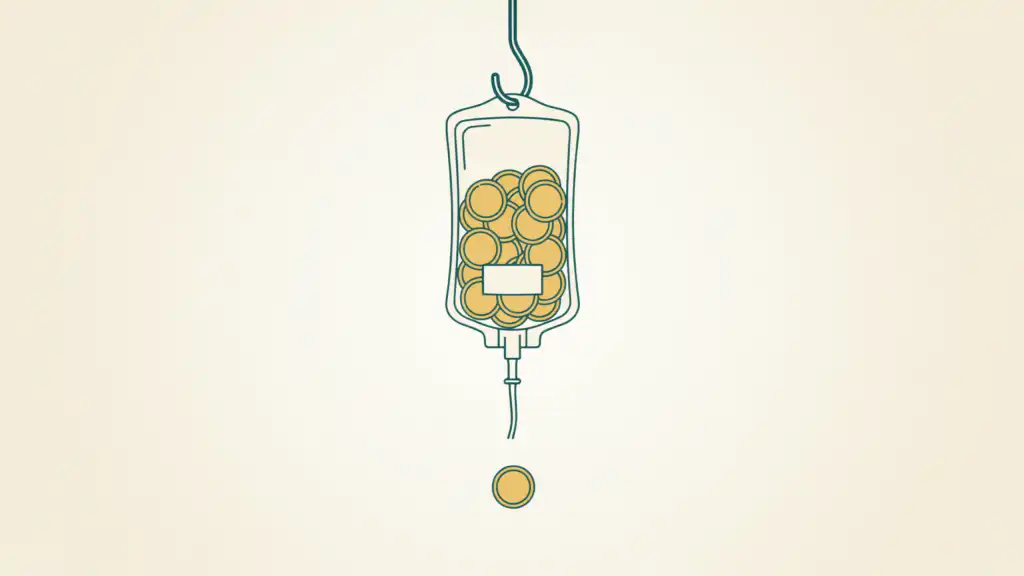

Get ready for a medical emergency while you’re healthy. Keep savings equal to your health plan’s out-of-pocket maximum, and make sure disability coverage would replace part of your paycheck. Then sign a health care proxy and a HIPAA release so someone you trust can talk to your doctors and decide for you.
A heart attack or bad car crash can run up hospital bills while you’re too sick to speak for yourself.
Most health plans cap your share of those bills at an out-of-pocket maximum, the most you pay in a plan year for covered in-network care. It’s on page one of your plan’s Summary of Benefits and Coverage, called the out-of-pocket limit. Save that much.
Say a married couple’s family plan caps their share at $9,000 a year. They keep $9,000 in a health savings account, and each has signed a health care proxy naming the other to make medical decisions. When one has a heart attack, the account pays their share, and the proxy settles who decides. Without one, state law would usually pick the spouse, but a relative could contest that in court.
Keep that money in a health savings account if your plan qualifies, since the balance carries over and withdrawals for qualified medical bills are tax-free. If not, build it into your emergency fund with automatic deposits each payday. If illness keeps you out of work for months, disability insurance through your job or your own policy replaces part of your pay.
Sign your own proxy, also called a health care power of attorney, and a living will, which tells doctors what treatment you’d want if you can’t decide for yourself. One form, an advance directive, usually covers both. Add a HIPAA release, which names who can get your medical information, since some providers want permission in writing. Keep copies, with a list of your medications and doctors, where family can find them.
After a serious diagnosis, ask your insurer whether it offers a case manager, usually a nurse or social worker, to help coordinate your care. Nonprofit hospitals must have a written financial assistance policy, which can mean free or discounted care, so ask for the application before the first bill.
Start with the forms, since they cost little or nothing. CaringInfo posts every state’s advance directive form free, and you don’t need a lawyer. Give copies to the person you name and your doctor.


Subscribe and we'll send you 101 Essential Money Tips to get you started.
The 101 money moves that matter most, from the foundations to protecting what you’ve built.
Advertiser Disclosure: Many or all of the offers that appear on this site are from companies that compensate us, and some companies pay for sponsored content. That compensation may influence which products we cover and where and how they appear on a page, including the order in which they appear. We do not include every company or offer available in the marketplace.