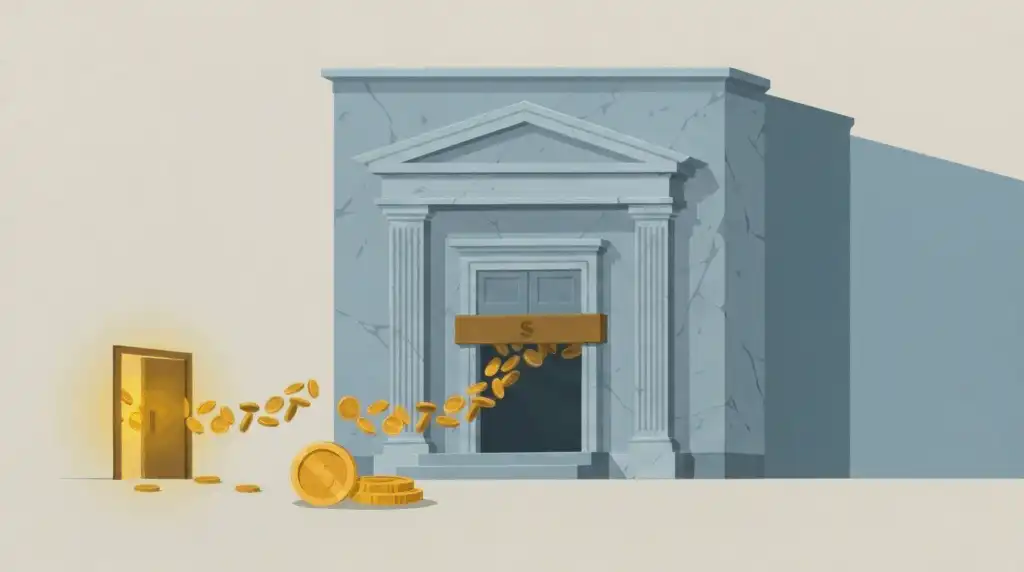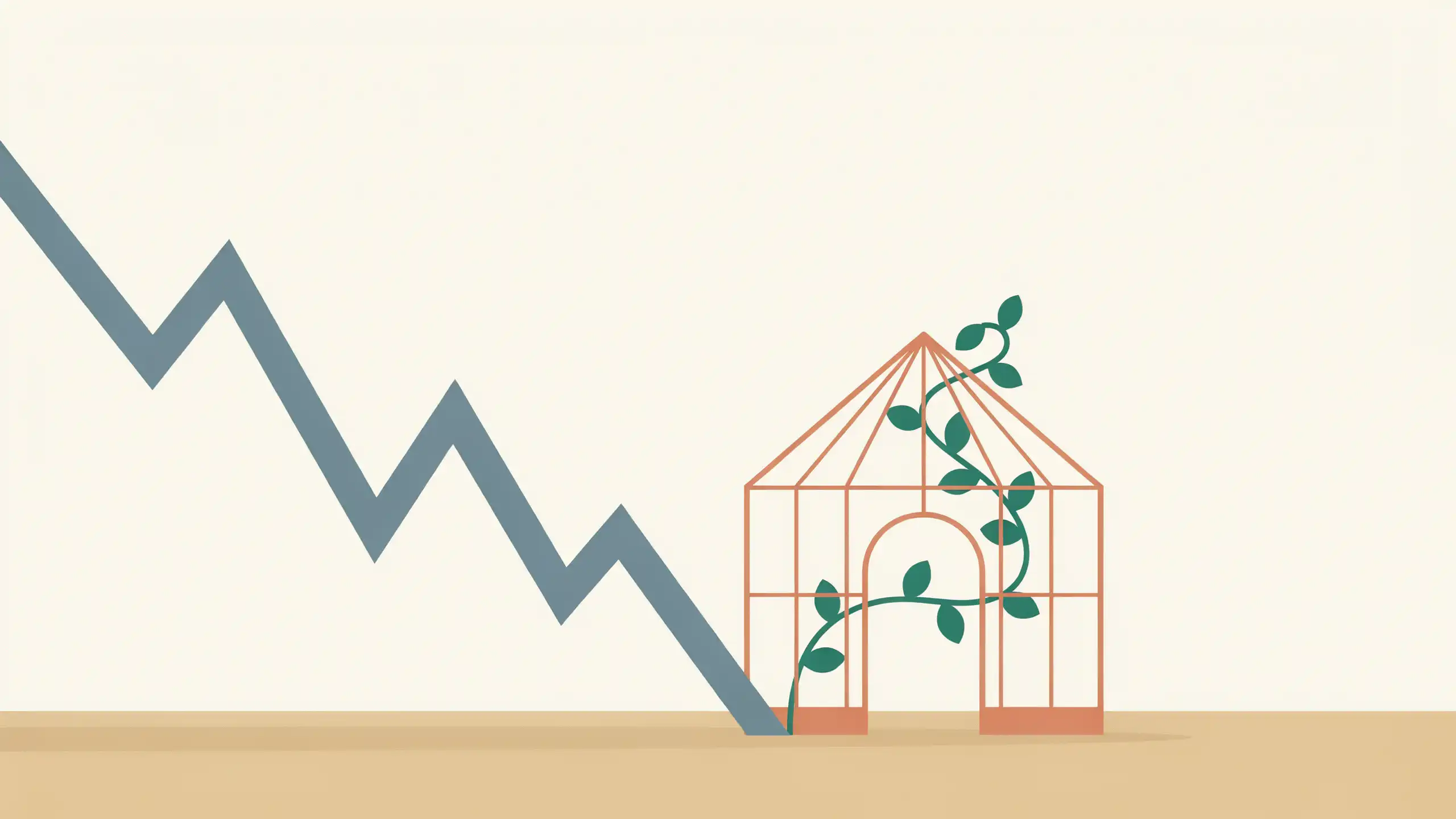

If you expect the same or a higher tax rate in retirement, convert traditional IRA or 401(k) money to a Roth after a market drop. You owe income tax on what the shares are worth the day you convert, so the lower price shrinks the bill, and any rebound grows tax-free inside the Roth.
Say every dollar you convert is taxed at your 22% federal rate, and shares in your traditional IRA worth $50,000 in January fall to $40,000 in a downturn. Converting them after the drop, rather than in January, adds $40,000 to your taxable income instead of $50,000, so the federal tax comes to $8,800 instead of $11,000.
If the shares climb back to $50,000, your Roth holds the same $50,000 a January conversion would have left you, for $2,200 less tax. That $10,000 rebound comes out tax-free after 59½, once five tax years have passed since you first put money in a Roth.
Whether converting pays at all depends on your expected tax rate in retirement, which also decides between a Roth and a traditional IRA. Conversions have no income limit, which is what lets high earners use a backdoor Roth.
With a 401(k), convert inside the plan if it offers that option, or roll the money into a Roth IRA once the plan lets you take it out, such as after you leave the job or reach 59½.
Pay the tax from savings outside the IRA or 401(k), with an estimated tax payment or extra withholding from your paycheck. Tax withheld from the conversion itself never reaches the Roth, and if you’re under 59½, it counts as an early withdrawal, which can cost a 10% penalty.
Convert in pieces, too. A conversion made since 2018 can’t be undone, so if the shares keep falling after you convert, you still owe tax on what they were worth that day. Spread the conversion across a few dates, and stop each year’s total at the top of your current tax bracket, since every dollar past it is taxed at the next rate.
Each conversion also starts its own five-year clock, counted from January 1 of the year you convert, and taking converted money out before it runs out can cost anyone under 59½ a 10% penalty. So convert only money you can leave alone for five years.
For the Roth IRA that receives the converted money, compare the best places to open an IRA.


Subscribe and we'll send you 101 Essential Money Tips to get you started.
The 101 money moves that matter most, from the foundations to protecting what you’ve built.
Advertiser Disclosure: Many or all of the offers that appear on this site are from companies that compensate us, and some companies pay for sponsored content. That compensation may influence which products we cover and where and how they appear on a page, including the order in which they appear. We do not include every company or offer available in the marketplace.