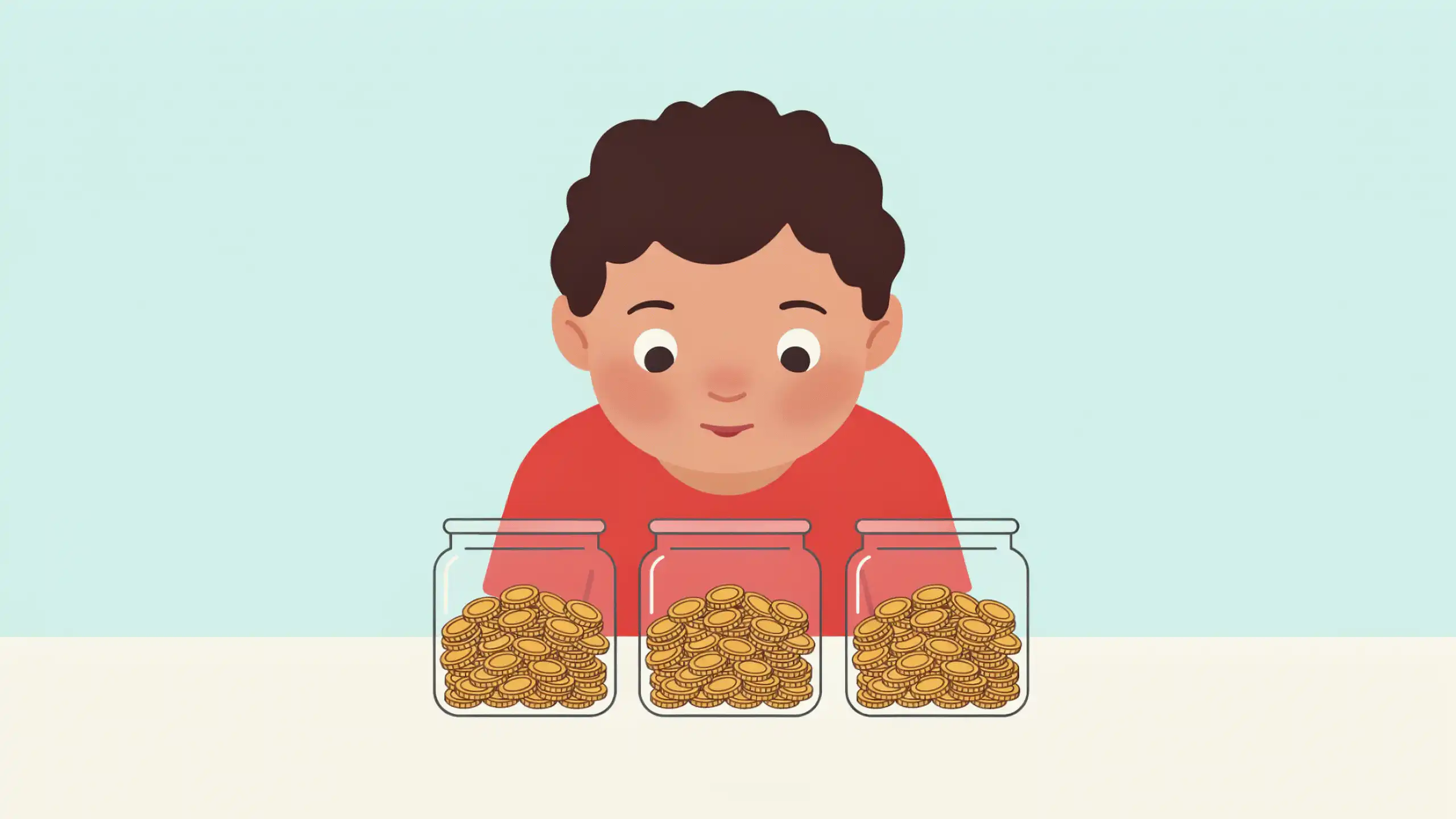

Set up three clear jars with your young child, one each for saving, spending, and giving, and have them split every bit of money they get among the three. A see-through jar lets your child watch their savings grow, something a closed piggy bank never shows them.
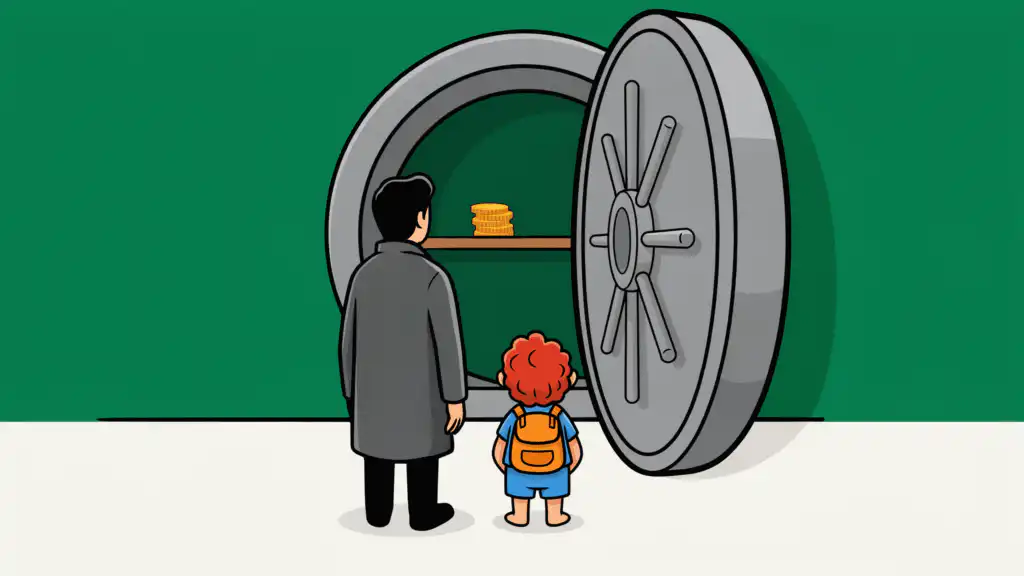
To a 4-year-old, a piggy bank is a box that eats coins. Most kids ages 3 to 5 can’t yet grasp money as an abstract idea, the Consumer Financial Protection Bureau says, so savings they can’t see mean little to them.
Clear jars put every coin in plain view, so a child can watch the pile grow week after week. Use three, labeled Save, Spend, and Give, and your child decides which jar gets each new coin.
Make the jars together. Any clean glass or plastic jar works, or one clear bank with three sections. Let your child draw or write the labels and decorate the jars, then give each jar one job.
- Money in the Spend jar is your child’s to use however they like, even on a toy that breaks by Tuesday.
- Money in the Give jar goes to a cause they choose, such as a food bank or an animal shelter.
- Money in the Save jar stays put until there’s enough for a goal, like a toy your child is saving up for, or to move into a savings account of their own.
Then pick one rule for splitting and use it every time money comes in, whether from an allowance, a birthday card, or the tooth fairy. A third in each jar is the simplest rule. Half to Save, with the rest shared between Spend and Give, works too. Hand over the money in bills or coins that split evenly, like three $1 bills, and let your child do the counting. Matching what goes into Save makes that jar fill faster.
Say your 5-year-old gets $3 a week and nothing else. A dollar goes in each jar, so over 10 weeks, $10 goes to saving, $10 to spending, and $10 to the animal shelter they picked.
Keep the jars where your child sees them every day, like the kitchen counter. A jar on a closet shelf hides the coins just as a piggy bank does.


Subscribe and we'll send you 101 Essential Money Tips to get you started.
The 101 money moves that matter most, from the foundations to protecting what you’ve built.
Advertiser Disclosure: Many or all of the offers that appear on this site are from companies that compensate us, and some companies pay for sponsored content. That compensation may influence which products we cover and where and how they appear on a page, including the order in which they appear. We do not include every company or offer available in the marketplace.