
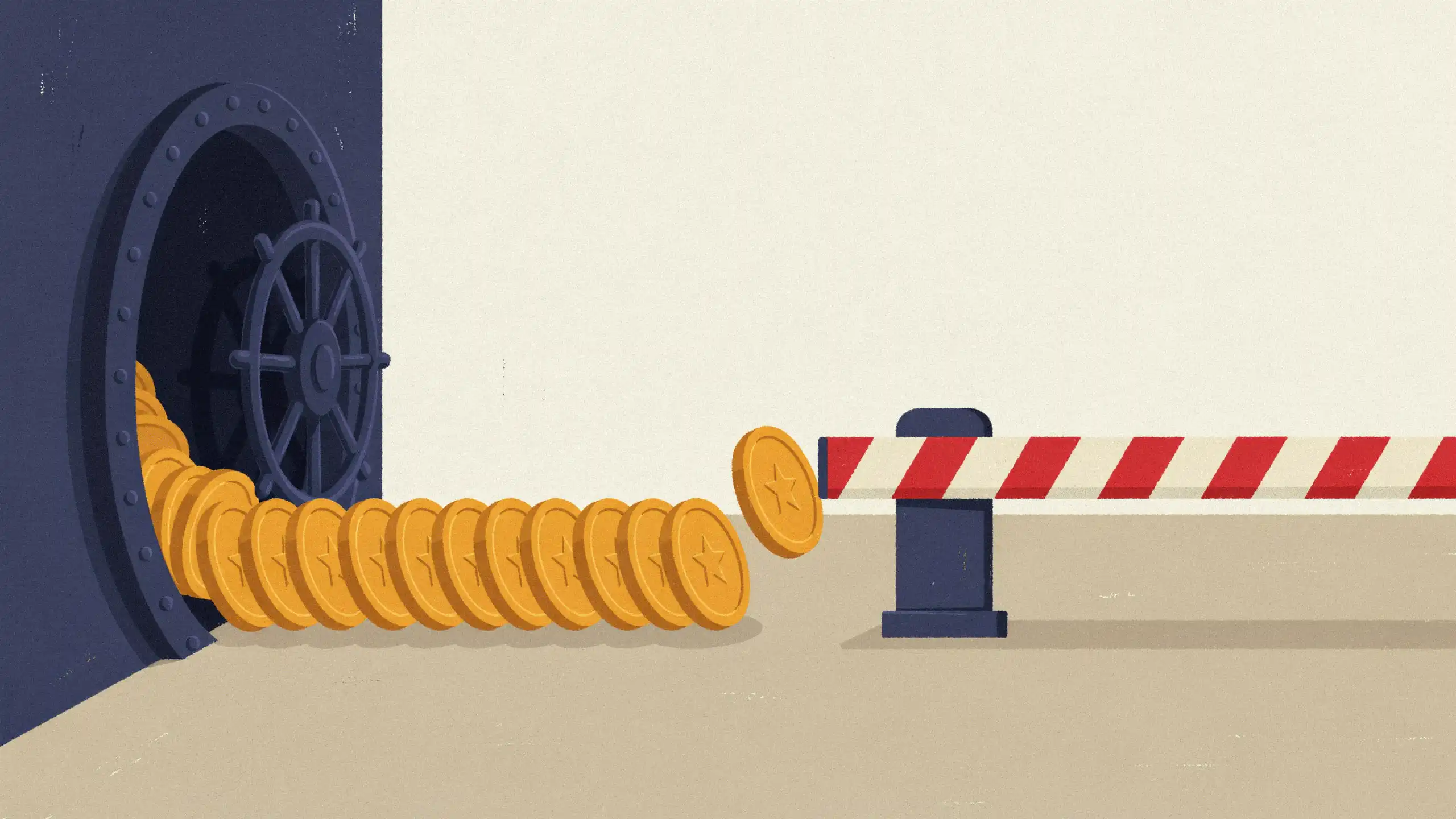

The federal limit of six withdrawals or transfers a month on savings accounts ended in April 2020, but the Federal Reserve let each bank decide whether to keep one. Find your bank’s limit in the account agreement, pay bills from checking, and move money out of savings in fewer, larger transfers.
Go over your bank’s limit and it can charge you for each extra withdrawal or close the account, and a bill paid straight from savings counts toward it.
The limit was how the Federal Reserve told savings accounts apart from checking. Its rule on bank reserves, Regulation D, treated any account allowing more than six convenient transfers a month, such as online transfers and automatic payments, as a transaction account, like checking. Banks had to hold reserves against those accounts, money kept in their vaults or at the Fed. When the Fed cut reserve requirements to zero in March 2020, the difference stopped mattering.
Three large banks now handle the limit three different ways. Capital One’s terms for 360 Performance Savings still list a six-transfer limit per statement cycle, but they say the bank isn’t enforcing it and will notify you if that changes. Chase Savings charges $5 for each withdrawal or transfer past six in a monthly statement period, up to $15 a period. Ally caps online and mobile transfers out of savings at 10 per statement cycle and charges no fee for going over, but it closes the account of anyone who exceeds the cap more than occasionally.
Find your own bank’s rule in its account agreement or fee schedule, under a heading on withdrawal, transfer, or transaction limits, and note which transactions it counts. The old federal limit counted online and phone transfers, automatic payments, checks, and debit card purchases, but not ATM, teller, or mail withdrawals. Chase counts those too, so don’t assume your bank kept the old exemptions.
At Chase, five bills on autopay from savings and three transfers to checking in one statement period make eight withdrawals and transfers, and the two past six cost $10.
Switch every biller and app that draws from savings to checking, then cover the month’s bills with one scheduled transfer from savings.
To find a savings account that fits how often you move money, compare the best high-yield savings accounts.

Subscribe and we'll send you 101 Essential Money Tips to get you started.
The 101 money moves that matter most, from the foundations to protecting what you’ve built.
Advertiser Disclosure: Many or all of the offers that appear on this site are from companies that compensate us, and some companies pay for sponsored content. That compensation may influence which products we cover and where and how they appear on a page, including the order in which they appear. We do not include every company or offer available in the marketplace.