
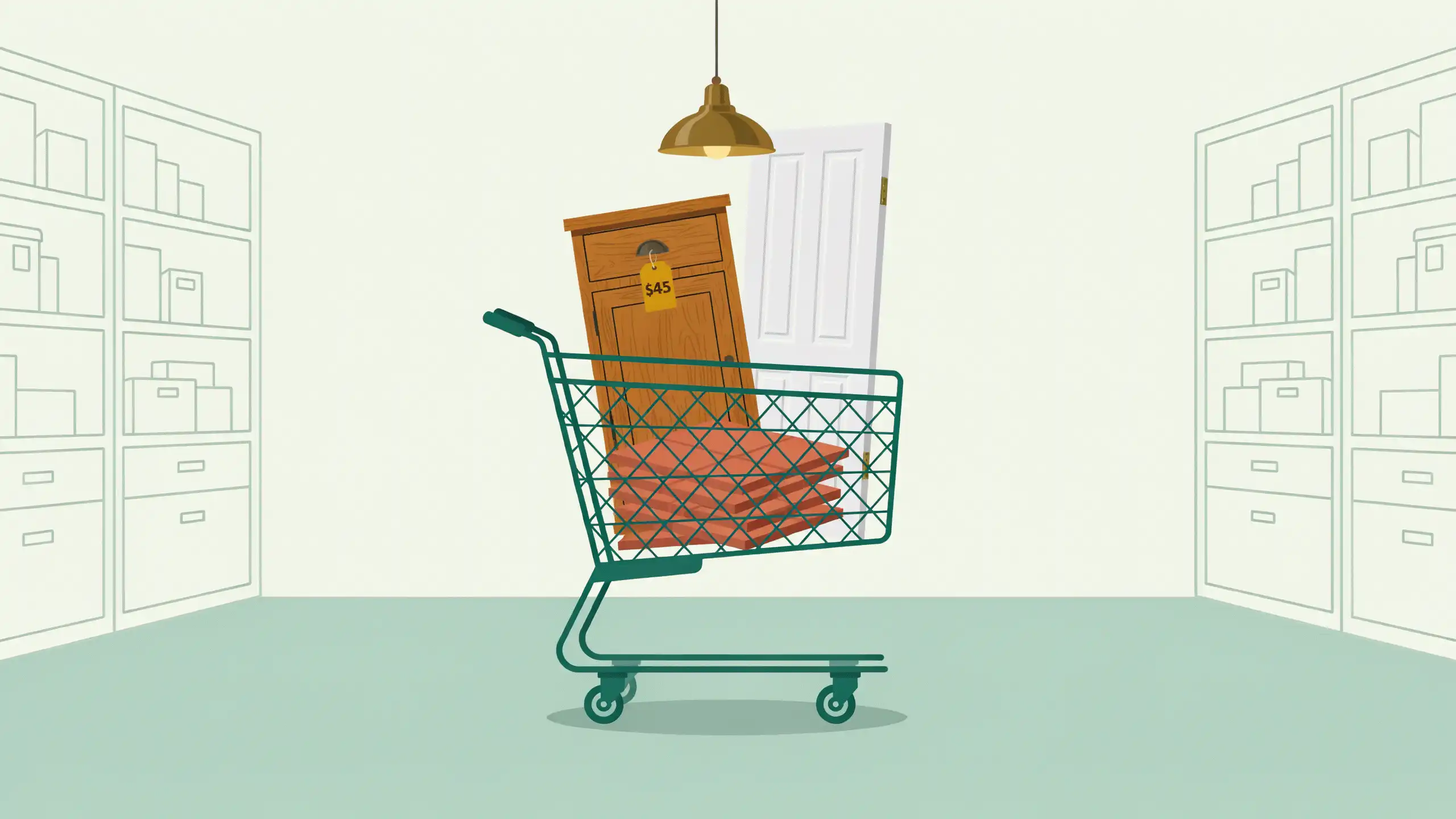

Before you pay full price for cabinets, doors, or light fixtures, check a Habitat for Humanity ReStore and a local architectural salvage store. ReStores sell donated surplus and used materials below retail, and salvage stores carry vintage pieces you can’t buy new. Bring your measurements, visit often, and test old paint for lead.
One ReStore near Chicago listed a 13-piece kitchen cabinet set, with base, wall, corner, sink, and over-fridge cabinets, for $1,300, about $100 a cabinet. Its listing also noted that one base cabinet was missing a pullout or door.
ReStores are nonprofit home improvement stores run by local Habitat for Humanity groups. They sell what people and businesses donate, from surplus construction materials to cabinets pulled out in remodels, at less than retail. Some of it has never been opened.
Architectural salvage stores sell older pieces taken from buildings being renovated or torn down, such as wood doors, vintage hardware, light fixtures, mantels, and clawfoot tubs. Prices there depend on a piece’s rarity, condition, and demand, so a salvage store pays off most when you’re matching the original doors, trim, or hardware in an older home.
Shop either kind of store this way:
- Bring the measurements of every wall, doorway, and window you’re filling, plus a tape measure, since a used set or door comes only in the sizes it was built in.
- Go back often. Stock changes as pieces come in, so ask which days the store puts out new arrivals and how it announces sales.
- Count every door, drawer, and shelf in a set, and ask to see any appliance run before you pay, since many ReStores treat sales as final, apart from a short return or exchange period on some appliances.
- Treat paint on anything that may predate 1978 as lead paint, the simplest and safest approach EPA recommends for homes and buildings that old. Don’t sand, scrape, or strip it until a lab tests a paint chip.
Before you pay, look up what the same piece costs new, since a find that needs missing parts replaced or lead paint removed can end up costing more than buying new.
Find your nearest Habitat for Humanity ReStore before you buy materials for your next project.


Subscribe and we'll send you 101 Essential Money Tips to get you started.
The 101 money moves that matter most, from the foundations to protecting what you’ve built.
Advertiser Disclosure: Many or all of the offers that appear on this site are from companies that compensate us, and some companies pay for sponsored content. That compensation may influence which products we cover and where and how they appear on a page, including the order in which they appear. We do not include every company or offer available in the marketplace.