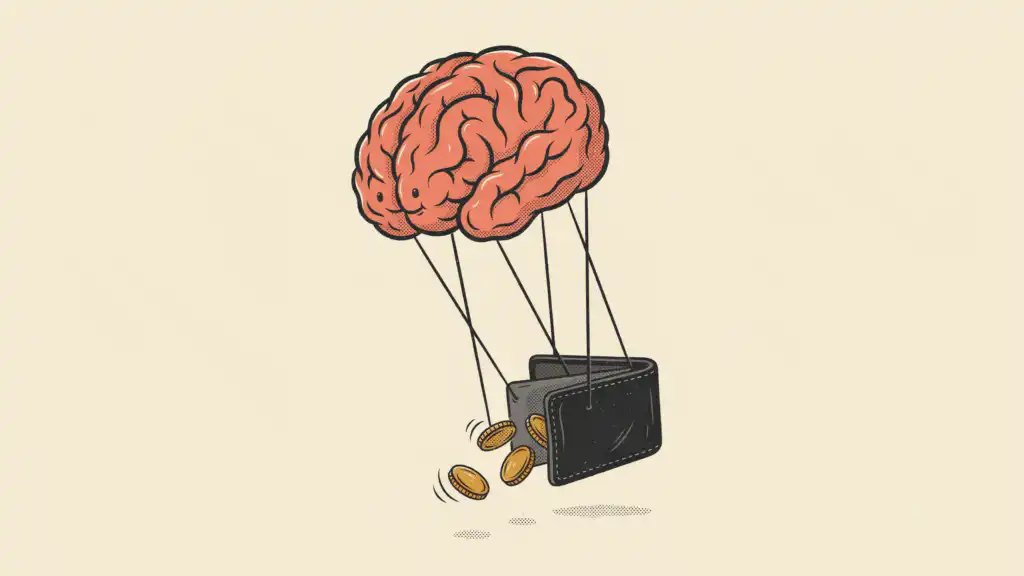

If you keep making the same money mistake despite knowing better, work on the thought that sets the habit off. Cognitive behavioral therapy, or CBT, teaches you to catch and test it, and a financial therapist pairs that work with money coaching. Start with a free self-help workbook, or ask your health plan for a CBT therapist.
The habit starts with a thought that goes by fast, like “it’s all bad news anyway” when a bill arrives or “I deserve this” at the checkout. By the time you notice it, the envelope is in a drawer or the purchase is made.
CBT works on that thought, whether it leads to overspending, unopened bills, or a decision you keep putting off. A therapist teaches you to spot it, test it against the facts, and practice a different response, with homework between sessions. The American Psychological Association reports that CBT has been shown to work for depression and anxiety disorders, and in many studies it has matched or beaten other talk therapies and psychiatric medication.
Picture someone who leaves mail unopened for weeks and pays a late fee most months. Over eight sessions, he learns to catch the thought that it’s all bad news anyway, and he sets a 10-minute mail routine every Sunday. The late fees stop.
Start on your own. The Centre for Clinical Interventions, a service of Western Australia’s Department of Health, offers free self-help workbooks, including one on procrastination that has you identify and test the excuses behind putting things off. For a habit with no worry behind it, like nightly takeout, swap in a cheaper routine that gives a similar reward.
A financial therapist combines work on your feelings about money with coaching on the money itself, so pick one when you want help with both. A financial planner works on goals such as retirement, and a credit counselor on your budget and debts.
Financial therapy isn’t regulated in the U.S., so confirm that anyone you find in the Financial Therapy Association’s directory holds a mental health license or the association’s Certified Financial Therapist credential, CFT-I. For CBT, the Association for Behavioral and Cognitive Therapies lists licensed therapists you can search by zip code.
Most individual and small-employer health plans must cover mental health care. Call the member services number on your insurance card and ask which therapists in your plan’s network use CBT.


Subscribe and we'll send you 101 Essential Money Tips to get you started.
The 101 money moves that matter most, from the foundations to protecting what you’ve built.
Advertiser Disclosure: Many or all of the offers that appear on this site are from companies that compensate us, and some companies pay for sponsored content. That compensation may influence which products we cover and where and how they appear on a page, including the order in which they appear. We do not include every company or offer available in the marketplace.