
Before you grab the family size or the sale item, check the unit price on the shelf tag, which gives the cost per ounce, count, or sheet. It’s the only fair way to compare packages of different sizes, and when both tags use the same unit, it shows in seconds whether the bigger or discounted package costs less.
Take two jars of the same brand on the same shelf. The 24-ounce jar costs $4.79, and the 48-ounce jar costs $10.29. By our math, the small jar works out to about 20 cents an ounce and the big one to about 21.4 cents. Two small jars get you the same 48 ounces for 71 cents less.
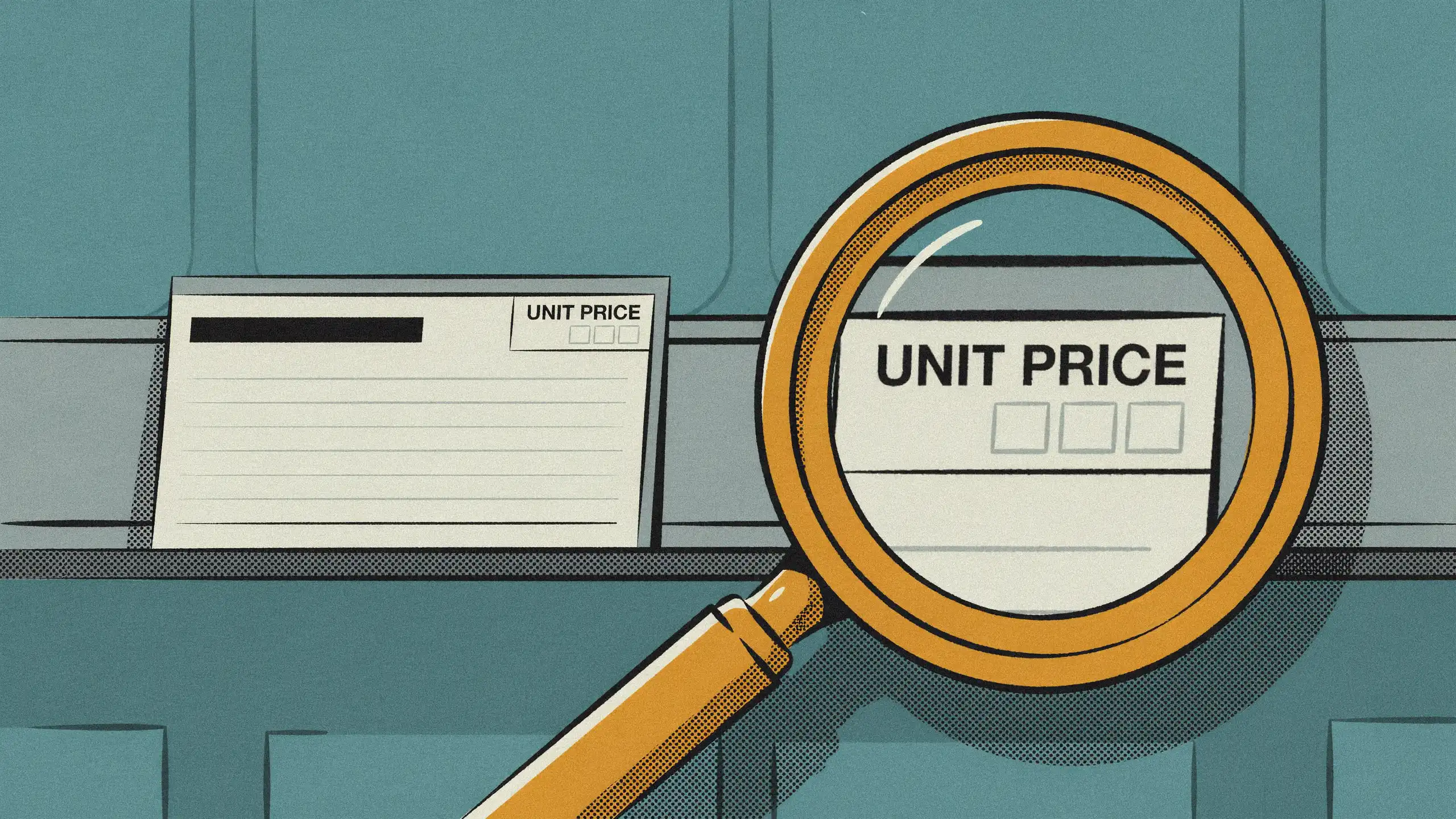
Where the store posts unit prices, you don’t have to do that division in the aisle, because the shelf tag already did it. The unit price sits on the same tag as the item price, usually in smaller type.
Give it a hard look in three situations:
- Bulk and family sizes, which sometimes cost more per unit than the regular package
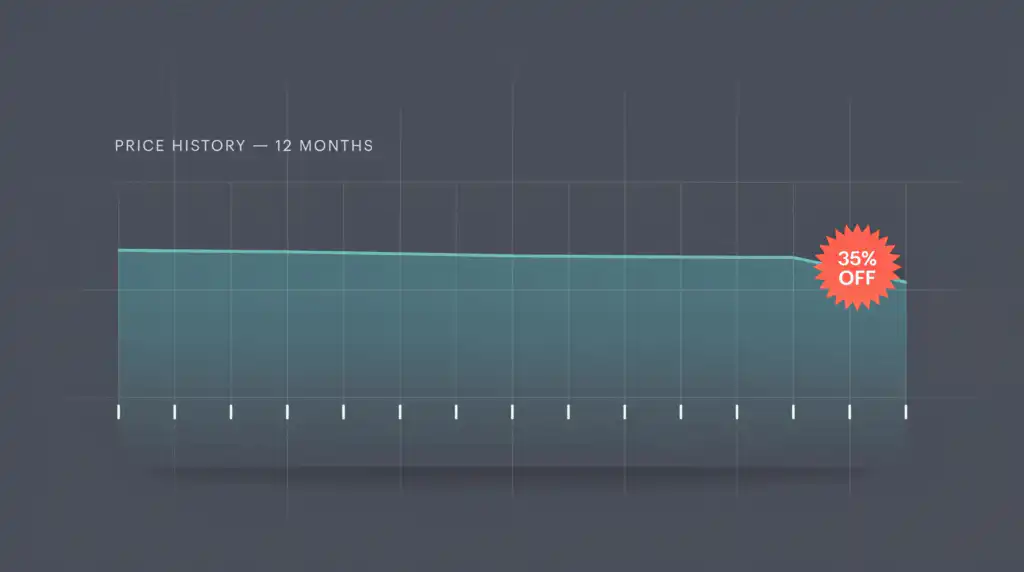
- A sale on the bigger package that still loses to the smaller one at full price
- A package that shrank while its price stayed the same, which pushes its unit price up
Watch the units, too. The National Institute of Standards and Technology, the federal agency that develops measurement standards, has flagged stores that price similar items in different units. Its example is the juice aisle, where one juice’s unit price is quoted per gallon, another’s per quart, and another’s per fluid ounce.
When the units don’t match, convert before you compare. A quart is 32 fluid ounces and a gallon is 128, so divide a per-quart price by 32 or a per-gallon price by 128 on your phone’s calculator.
Don’t count on the tag being there, either. By the agency’s count, last updated in September 2025, only nine states and two territories require unit pricing, and 34 states have no unit-pricing rules at all. Where posting it is voluntary, a tag can be missing or inconsistent, so divide the price by the size yourself.
Make the unit price the first number you read on every tag. Buy the bigger size only when it wins on that number and you’ll use all of it.

Editorial & Advertiser Disclosure: The editorial content on this page is not provided, commissioned, reviewed, approved, or otherwise endorsed by any advertiser. Opinions expressed here are ours alone, not those of any advertiser. The offers that appear on this site are from companies that compensate us. That compensation may influence which products we cover and where and how they appear on a page – including the order in which they appear – but it does not influence our evaluations, ratings, or opinions. We do not include every company or offer available in the marketplace.
Related: