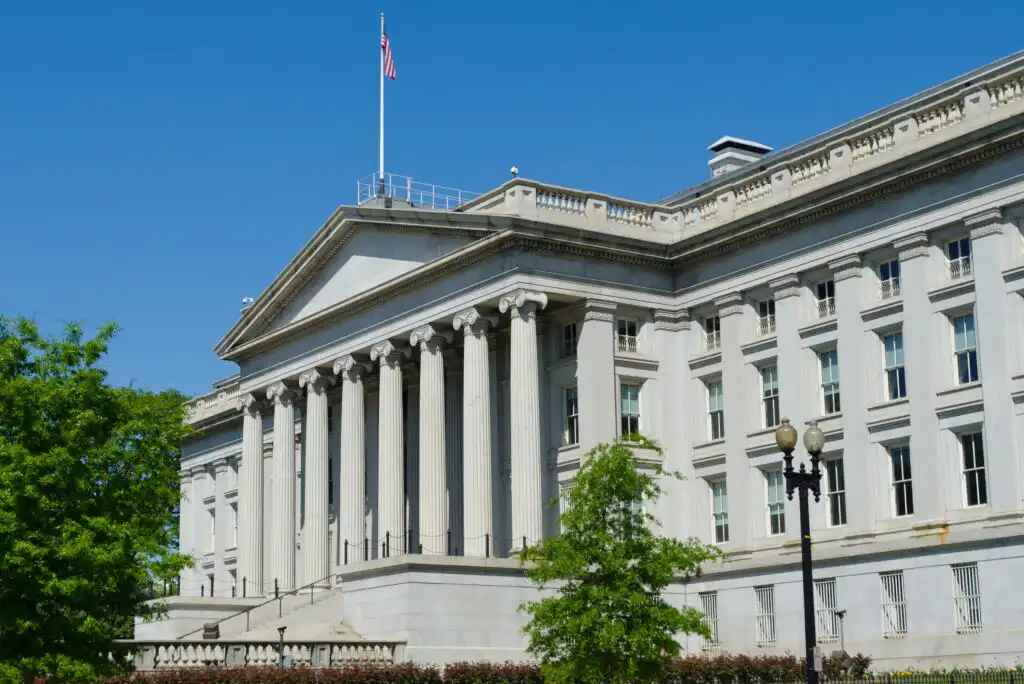

The circus is coming back to town, seemingly an annual occurrence following the 2010 Congressional elections. Republicans gained control of the House of Representatives with the most House seats since 1938 (242 Republicans, 193 Democrats), while Democrats retained control of the Senate with 53 seats. And even though Democratic President Barack Obama won reelection in 2012, Congress remains divided between the Republican-controlled House and the Democratic-controlled Senate.
It’s not just a divided Congress that contributes to the annual political circus. The 2010 elections also introduced an ultra-conservative movement into the Republican Party – a unique coalition of politicians combining anti-tax, reduced government spending, libertarian, social conservative, and anti-immigration groups centered in rural areas and the Deep South. Aided by years of gerrymandering by both political parties to create safe seats, 87 freshman House Republicans came to Washington committed to the tea party movement, reflecting the group’s influence on Congressional elections and party primaries, pushing the Republicans to the right and further embracing a “no compromise” stance.
The Federal Debt Ceiling
Simply stated, the debt ceiling is the amount of debt the United States can legally owe. It’s established by majority agreement of the Senate and House of Representatives. The debt ceiling does not control or limit the ability of the Federal Government to run deficits or incur obligations. It is instead “a limit on the ability to pay for obligations already incurred,” according to a Government Accounting Office (GAO) Report to Congress on February 2011. In other words, the debt ceiling restricts the Government from paying the bills or costs for programs which have been legally authorized by Congress with an excuse similar to a debtor telling his creditors, “I can’t pay you because I don’t have any money in the bank.”
The inability of the debt ceiling to function as a deficit-cutting tool leads many economists and some politicians to suggest abandoning it. According to a poll of the Initiative on Global Markets Panel, the members of which are senior faculty at the most elite research laboratories in the United States, “a separate debt ceiling that has to be increased periodically creates unneeded uncertainty and can potentially lead to worse fiscal outcomes.”
Unfortunately, since the debt level is the consequence rather than the cause of government spending, politicians can have their cake and eat it too each time the debt limit is reached. On the one hand, they can vote for expensive programs that are popular with their constituents, while simultaneously refusing to raise the debt limit when the bills come due, bolstering their conservative credentials.
Many fiscal conservatives believe that denying a debt ceiling increase gives them a second bite of the apple – a chance to de-fund programs they dislike, even though the programs have been passed by a majority of members in both Houses. Currently, some members of Congress are threatening to vote against any funding bill or debt ceiling increase without a repeal of the Affordable Care Act (ACA), commonly known as Obamacare. Senator Ted Cruz, a Republican from Texas and a tea party favorite, appeared on CNBC’s “The Kudlow Report” and said, “The House of Representatives should pass a continuing resolution that funds the entirety of the federal government except for Obamacare.” House Majority Leader Eric Cantor apparently agreed, his aide stating that the debt limit is a “good leverage point” to try to force some action on the healthcare law.
History of Debt Ceiling Negotiations
The first debt ceiling crisis occurred in 1953 when Republican President Dwight Eisenhower requested a debt ceiling increase from $275 billion to $290 billion. His request was defeated by fiscal conservatives of both parties. As a consequence, refusing to raise the U.S. Federal debt ceiling has become an annual exercise undertaken by conservatives as a method to reduce government spending after the fact. Since 1976, there have been 18 government shutdowns as the result of an inability to agree upon a budget, pass a continuing resolution to run the government, or raise the debt ceiling. Acrimonious debates have occurred in virtually every modern administration, both Republican and Democratic.
Most government shutdowns have lasted fewer than five days, the exception being in 1995 when the conflict over spending between President Bill Clinton and House Speaker Newt Gingrich lasted 21 days, despite Gingrich’s promise to “never close the Government.” As a consequence, Clinton was re-elected and Republicans lost eleven seats in the House of Representatives in the 1996 and 1998 elections, leaving them with the slimmest majority held by either party since 1952 (223 Republicans, 211 Democrats).
Debt Ceiling Crisis 2011
In early April 2011, Treasury Secretary Timothy Geithner notified Congress that a new debt ceiling would be necessary by early August when the “borrowing authority of the United States would be exhausted.”
Having recognized the differences between the two parties over income taxes and government spending, President Obama created the bipartisan National Commission on Fiscal Responsibility and Reform, informally called the Simpson-Bowles Commission, to identify and recommend policies to achieve fiscal sustainability over the medium- and long-term. The final report issued on December 1, 2010, was calculated to reduce federal debt by $4 trillion and eliminate deficits by 2035. The recommendations included:
- Discretionary Spending Cuts. Recommendations would reduce farm subsidies by $3 billion per year, eliminate subsidized student loans, cease funding for the Corporation of Public Broadcasting, and establish co-pays in the VA medical system.
- Increased Revenue Through Tax Reform. The number of income tax brackets would be reduced to three, the personal deduction increased to $15,000, and the mortgage interest deduction eliminated.
- Medicare and Social Security Savings. Savings would result from raising the retirement age, increasing the income ceiling for Social Security taxes, and increasing premiums and co-pays for Medicare.
However, committee members were unable to agree on the final report with 4 of 11 Democrats and 3 of 8 Republicans voting against the recommendations. A bill based upon the proposals, and subsequently introduced in the House, failed 382 to 38.
In the following months, the debt ceiling increase was held hostage by the political parties’ inability to reach agreement over the expiring Bush tax cuts and how to cut government expenditures. The possibility of the U.S. Government defaulting on its debts for the first time in history roiled financial markets and raised future borrowing costs by $18.9 billion, according to a Bipartisan Policy Center analysis released in November 2012. An agreement was finally reached on the eve of the default, and was passed as the Budget Control Act of 2011. The Act intended to cut spending by more than the amount of the increase in debt limit, relying upon a sequester mechanism that would automatically trigger across-the-board cuts in defense and non-defense programs with specific exemptions of Social Security, Medicaid, civil and military pay, and veteran affairs – if Congress could not agree on specific cuts.
The delay in reaching an agreement, as well as the apparent unwillingness of the parties to honor previously authorized government debt, led Standard & Poor, a credit rating agency, to downgrade the United States credit rating from AAA to AA+. This was the first downgrade of the United States credit rating in history. While the other rating agencies, Fitch and Moody’s, did not downgrade their ratings, both agencies announced a negative outlook for U.S. debt, a consequence which is likely to result in higher interest costs long-term.
The GAO estimates that the showdown between House Republicans and the White House cost the government (and American taxpayers) $1.3 billion in additional expenses for fiscal year 2011.
Fiscal Cliff 2012
Despite the seemingly endless debate throughout 2012, the political parties were unable to reach agreement about taxes or program cuts, so the onerous terms of the Budget Control Act were scheduled to take effect on January 1, 2013. Had the consequences of the parties’ failure to reach agreement been put into effect, they would have included a combination of tax increases due to:
- The end of the 2011 temporary payroll tax cut
- An increase in the alternative minimum income tax
- The “rollback” of the tax cuts passed in the previous Bush Administration
- New taxes imposed by the Affordable Care Act (Obamacare)
In addition to these tax increases, the political stalemate would have also resulted in spending cuts indiscriminately applied to over 1,000 government programs, including Defense and Medicare. These consequences collectively became known as “The Fiscal Cliff.”
Believing that the combination of heavy tax increases (if the Bush tax cuts were not extended), severe reductions in government spending due to sequestration, and another protracted battle over the debt ceiling, would send the still-recovering economy into a tail spin, Congress passed two acts to postpone the crisis:
- American Taxpayer Relief Act of 2012. The American Taxpayer Relief Act of 2012 made most of the Bush tax cuts permanent, except at the highest income levels ($400,000 for individuals, $450,000 for joint filers; levels indexed to future inflation), and established caps on deductions and credits for higher income taxpayers. The Act also suspended sequestration for two months. The majority of the Republicans in the House of Representatives opposed the bill, despite support from the Republican Speaker of the House, John Boehner, and Senate Minority Leader, Mitch McConnell.
- No Budget No Pay Act of 2013. The No Budget No Pay Act of 2013 temporarily suspended the debt ceiling from February 4, 2013 to May 19, 2013, at which point the debt ceiling was raised to accommodate the borrowing that had occurred during the suspension. As a public relations stunt, Congress also voted to escrow their pay for a period, theoretically not receiving paychecks until both Houses of Congress passed a budget, or the end of the Congressional session. All that being said, however, the debt ceiling was not raised above the level of the May 19 level, so the Federal Government is once again expected to run out of borrowing capacity and funds to pay for previously authorized expenditures sometime in mid-October 2013.
Debt Ceiling Crisis 2013
At this time, the two political parties have drastically different budget proposals:
- The Democratic-controlled Senate Budget proposes an end to sequestration, higher taxes, major infrastructure investment, and replacement of the funds taken from health and education programs.
- The Republican-controlled House would maintain sequestration except for the Defense Department, maintain or lower taxes, and eliminate any funding for the Affordable Care Act.
The likelihood of reaching agreement on the 2014 Budget is slim, and is most likely to result in another continuing resolution which allows the Federal Government to continue operating until another resolution is passed, and then another, continually passing the buck down the road until a single party is in control of the White House and Congress.
Both sides seem firmly entrenched in their respective positions and are willing to bear the consequences, so they say, of their convictions. According to tea party favorite Representative Tim Huelskamp, R-Kan, “There’s a real concern about the lack of courage of folks who don’t want to stand up to something. Sometimes you just have to do the right thing – that should be more important than winning the next election.” House Majority Leader Eric Cantor has said Republicans will demand a one-year delay in the implementation of the healthcare act in exchange for raising the debt limit.
Recently confirmed Treasury Secretary Jack Lew, speaking for the Democratic Administration on a CNBC newscast on August 27, 2013, said, “The President is not going to be negotiating over the debt limit. Congress has already authorized funding, committed us to make expenditures. We’re now in a place where the only question is, will we pay the bills the United States has incurred?” Lew went on to say that failure to raise the limit could undermine financial markets and result in significant disruptions to the economy.
Possible Outcomes
Republican Proposal
While the President wants to remove debt ceiling increases and possible government shutdowns in the future, the Republicans believe the continuing crisis to be a potent weapon in their demand to down-size government. According to a National Journal article, the Republicans’ current proposal to the President and Democrats will have several options, although none of the options would eliminate debt ceiling limits from future partisan politics:
- Long-Term. The Treasury would receive borrowing authority for three and a half years, the remainder of Obama’s term, in return for agreeing to privatize Medicare.
- Medium-Term. The debt limit would be raised until sometime in 2015 as a consequence of agreeing to cut the SNAP food-stamp program, implement tax reform, or block-grant Medicaid.
- Short-Term. The debt limit would be raised through the first half of 2014 if there is agreement to means-test Social Security or end certain agricultural subsidies.
Democrats claim that the proposals are nothing more than a political stunt, built around a previous proposal by Representative Paul Ryan, the Republican candidate for Vice President, which was repudiated during the last Presidential election.
Democratic Proposal
The Democrats and President Obama have expressed a desire to make a “grand bargain” to resolve the existing crisis and solve long-lasting problems that drive up budget deficits. Their proposals include:
- De-Coupling Debt Limit Discussions From Budget Negotiations. The Administration has made it clear that bills of the Federal Government were incurred with the approval of Congress, and must be paid as promised to protect the credit standing of the United States.
- Increasing Taxes on the Wealthiest Americans. Democrats point out that the gap between the richest 1% of Americans and the rest of the population is the widest it has been since the years preceding the Great Depression, with the top 10% of the population collecting a record 48.2% of total earnings in 2012. That said, most Republicans are pledged to Grover Norquist’s Americans for Tax Reform which is opposed to tax increases for any reason.
- Continued Implementation of the Affordable Care Act. While showing a willingness to delay or modify the implementation of various elements of the legislation, Democrats remain steadfast in their belief that the existing healthcare system and its costs are unsustainable and unfair to the majority of American citizens.
Areas of potential agreement include changes to Social Security to allow means testing, amendments to the chained consumer price index (CPI) that would affect payments, adjustments to Medicare that would affect providers and the insured, and elimination of “pork barrel” legislative actions.
Pros & Cons of Eliminating the Debt Ceiling
President Obama, Secretary of the Treasury Geithner, and numerous economists have suggested eliminating the vote to raise the debt ceiling since the expenditures and budgets are pre-approved by Congress. This would effectively eliminate the debt ceiling. In fact, from 1979 to 1995, Congress operated under the Gephardt Rule which automatically gave the Treasury the right to borrow money as needed to carry out Congressional approved budgets.
Proponents for eliminating recurring debt ceiling votes argue that the existing system of requiring a vote intensifies partisan wrangling, needlessly subjects the economy to uncertainty, and regularly jeopardizes the good credit of the country.
Reasons to Eliminate Debt Ceiling Votes
- Voting to raise the national debt limit is a redundant process as the proposed spending and costs of government have been previously passed by majority votes in both Houses. The debt limit ceiling does not affect spending per se, but the ability of the government to pay debts which have been legally contracted. The United States is virtually the only industrialized nation that requires regular debt ceiling votes.
- Having previously voted on programs popular with voters, the current two step process allows the same Congressmen responsible for increased spending to subsequently pose as fiscal stewards by refusing to raise the debt limit to pay for the programs they have just approved. Effectively, voting on the debt limit has not resulted in demonstrable fiscal discipline by government elected officials.
- The possible failure of Congress to raise the limit jeopardizes the credit standing of federal debt and results in higher interest costs to be paid for essential government borrowings. The 2011 political battle over the limit and an inability to reach timely agreement resulted in a lowering of the credit rating of the country’s debt. According to a GAO report, it cost taxpayers an estimated $1.3 billion in additional interest expense.
- The necessity of voting to raise the debt limit magnifies the power of a committed minority to shut down government and hold the country hostage to an extreme position, even in instances where the majority in both Houses have approved past legislation.
Reasons to Retain Debt Ceiling Votes
- Having to periodically review and pass increased debt limits focuses attention on the growing national debt and the necessity of taking action to restrain budget deficits. Since 1963, the national debt as a percentage of gross domestic product (GDP) has climbed from 42.4% to 72.6% in 2012, with annual deficits resulting from the Republicans’ efforts to reduce taxes, even in the event of costly wars, and the Democrats’ unwillingness to remodel entitlement programs such as Social Security, Medicare, and Medicaid.
- Political leaders are forced to periodically assess their positions vis-a-vis their constituents and the good of the country as a whole. Republicans who have pledged to “never raise taxes” or Democrats who seek revenues, but are unwilling to curb spending, must face the consequences of their failure to reach a compromise.
- When programs are controversial or complex, leading to public confusion about benefits and costs, minorities can delay, even control the process and implementation of legislation, such as the current ACA funding. This ability maintains the status quo and dilutes the impact of affected legislation, good or bad.
Final Word
Historians claim that Republicans and Democrats are more divided now than at any time since the end of the Civil War. Both sides are supported by zealots and extremists who are willing to pay any price for the sake of a so-called principle. Compromise is considered betrayal, which leads to a winner-take-all environment and the inability to deal meaningfully with any of the big issues facing the country. Unfortunately, this infighting results in an unwillingness to pay the country’s debts when they come due.
While a government shut-down over the debt limit is possible in October or November, along with further degradation of the country’s credit rating, it is more likely that a series of continuing resolutions will occur. These actions will postpone the crisis, effectively passing the buck until after the 2016 elections and the seating of a new president and Congress. In the meantime, the sequestration will continue to drop federal spending and eliminate critical government services, particularly the services designed to assist those citizens who need the help most.
What are your opinions on the debt ceiling crisis?

Editorial & Advertiser Disclosure: The editorial content on this page is not provided, commissioned, reviewed, approved, or otherwise endorsed by any advertiser. Opinions expressed here are ours alone, not those of any advertiser. The offers that appear on this site are from companies that compensate us. That compensation may influence which products we cover and where and how they appear on a page – including the order in which they appear – but it does not influence our evaluations, ratings, or opinions. We do not include every company or offer available in the marketplace.
Related: