
In many ways, owning a bicycle can be a money-saver. You can save on gas by commuting by bike or use it to exercise for free.
But all these benefits come with a significant upfront cost. A good-quality new bike can cost anywhere from $400 to upward of $15,000. Even the lower end of that range is a lot of money when you’re on a tight budget.
But there are ways to get the benefits of biking at a lower cost. By shopping strategically, you can find the best bike for you on a budget you can afford.
Tips for Saving Money on a Bicycle
It’s easy to get sticker shock looking at the prices of new bicycles, particularly at small local bike shops. But with this kind of purchase, you get what you pay for. All the parts of your bicycle — frame, tires, and components — get better the higher you go up the price scale.
By paying for quality upfront, you’re more likely to get a bike that serves you for many years, reducing your true cost to own it over the long term. So rather than going for a cheap bike, it makes more sense to look for ways to lower the cost of a quality one.
1. Choose the Right Type of Bike
The first and most important rule for saving money on a bicycle is to choose the right kind of bike for the type of bicycling you want to do. If you choose the wrong type of bike — for instance, a rugged mountain bike for commuting or a road bike for mountain biking — you’ll almost certainly get frustrated with it and want to trade it in within a few months. It’s just a waste of the money you paid for it.
There are many kinds of bikes with highly specific names and uses, such as racing bikes, gravel bikes, trail bikes, and cruisers. But according to The Bicycle Planet’s YouTube channel, bicycles fall into five primary types: road bikes, mountain bikes, fitness hybrids, sports hybrids, and comfort hybrids.
Road Bikes
Road bikes are just what they sound like: bicycles for riding on roads and paved surfaces. They’re lightweight and fast-moving with narrow tires that can roll fast on pavement. They have multiple gears that allow you to adjust your speed on level surfaces and hills.
Most road bikes have a drop-bar handlebar, which curves downward and toward the rear of the bike. Using this type of handlebar requires you to ride in a bent-forward position, which reduces air resistance so you can go faster. This riding position can be uncomfortable if you aren’t used to it, but it’s the most efficient way to travel long distances.
A road bike is the bike of choice for professional cyclists in racing events like the Tour de France. It’s also a good bike for other kinds of on-road cycling, such as fitness riding or long-distance touring. Road bikes can also be a reasonable choice for commuting, but only if they can accommodate accessories like fenders and storage racks.
According to Outside Online, road bikes are available in a variety of price ranges. For around $500, you can get a heavy but sturdy road bike with a steel frame and 16 speeds. A lighter aluminum frame and better brakes costs closer to $1,350. An ultralight carbon bike with hydraulic disc brakes, and an electronic drivetrain costs around $11,000.
Mountain Bikes
A mountain bike is built for off-road riding on narrow, bumpy dirt trails. These rugged bikes are heavier than road bikes and not as fast for riding on pavement. They feature flat handlebars and wide tires with lots of tread to roll over roots and rocks. Mountain bikes also offer additional low gears for getting you up steep slopes and hydraulic disc brakes for managing sharp descents.
Another critical feature of mountain bikes is suspension, which protects you from the jolts of the trail. Some models, known as “hardtail” bikes due to their rigid rear end, have suspension on the front tire only using a device called a suspension fork. Others, called full-suspension models, provide suspension on both the front and rear wheels.
Overall, mountain bikes are cheaper than road bikes. According to Switchback Travel, hardtail bikes with aluminum frames typically cost less than $1,000. Lightweight, full-suspension bikes built to stand up to the most challenging trails cost $3,000 to $5,000.
Fitness Hybrids
Hybrid bikes are a cross between road and mountain bikes, taking different features from each type. A fitness hybrid is a hybrid that most closely resembles its road bike “parent.” It’s relatively lightweight and doesn’t offer the suspension of a mountain bike.
But unlike road bikes, fitness hybrids typically have flat handlebars that provide a more upright riding position. That can make them more comfortable for riding long distances. They also have wider tires to provide more traction for off-road riding.
As their name implies, fitness hybrids are ideal for people who see a bike as a way to work out without investing in a gym membership. They’re also a good all-around choice for anyone from commuters to casual weekend riders. The Bicycle Planet calls them the “Honda Accord of bikes.”
Fitness hybrids tend to cost less than either road or mountain bikes. In a roundup by Bicycling magazine, 2021’s top fitness hybrids range in price from $440 to $875.
Sport Hybrids
A sport hybrid, or dual sport, is a hybrid bike that’s closer to a mountain bike in style and function. They have rugged tires, flat handlebars, disc brakes, and front suspension to help them stand up to the rigors of trail riding. They also provide the wide range of gears found on a mountain bike.
They’re heavier than fitness hybrids and generally not as fast.
A sport hybrid is a good compromise for someone who primarily wants a bike for trail riding but wants to be able to take it out on the road as well. It won’t go as fast on paved roads as a road bike or fitness hybrid, but it will provide a smoother, more cushioned ride than either.
Dual sport hybrid bikes from Trek Bikes range from $600 to $1,220 in price. At REI, hybrid bikes with front suspension are a bit pricier, from $700 up to $4,100 for a high-end electric model.
Comfort Hybrids
It’s slightly confusing to call a comfort bike a hybrid, as it doesn’t look much like either a road bike or a mountain bike. Rather than the dropped handlebar of a road bike or the flat handlebar of a mountain bike, comfort hybrids have high, raised handlebars that are easy to control. That gives them the most upright riding position of all bike styles.
These bicycles are built for comfort in other ways as well. They feature large, heavily cushioned seats, and some models have front suspension to protect you from bumps. Their tires are wider than a road bike’s for extra cushioning and traction without the heavy tread of a mountain bike. Many comfort hybrids have a step-through frame that makes them easy to mount.
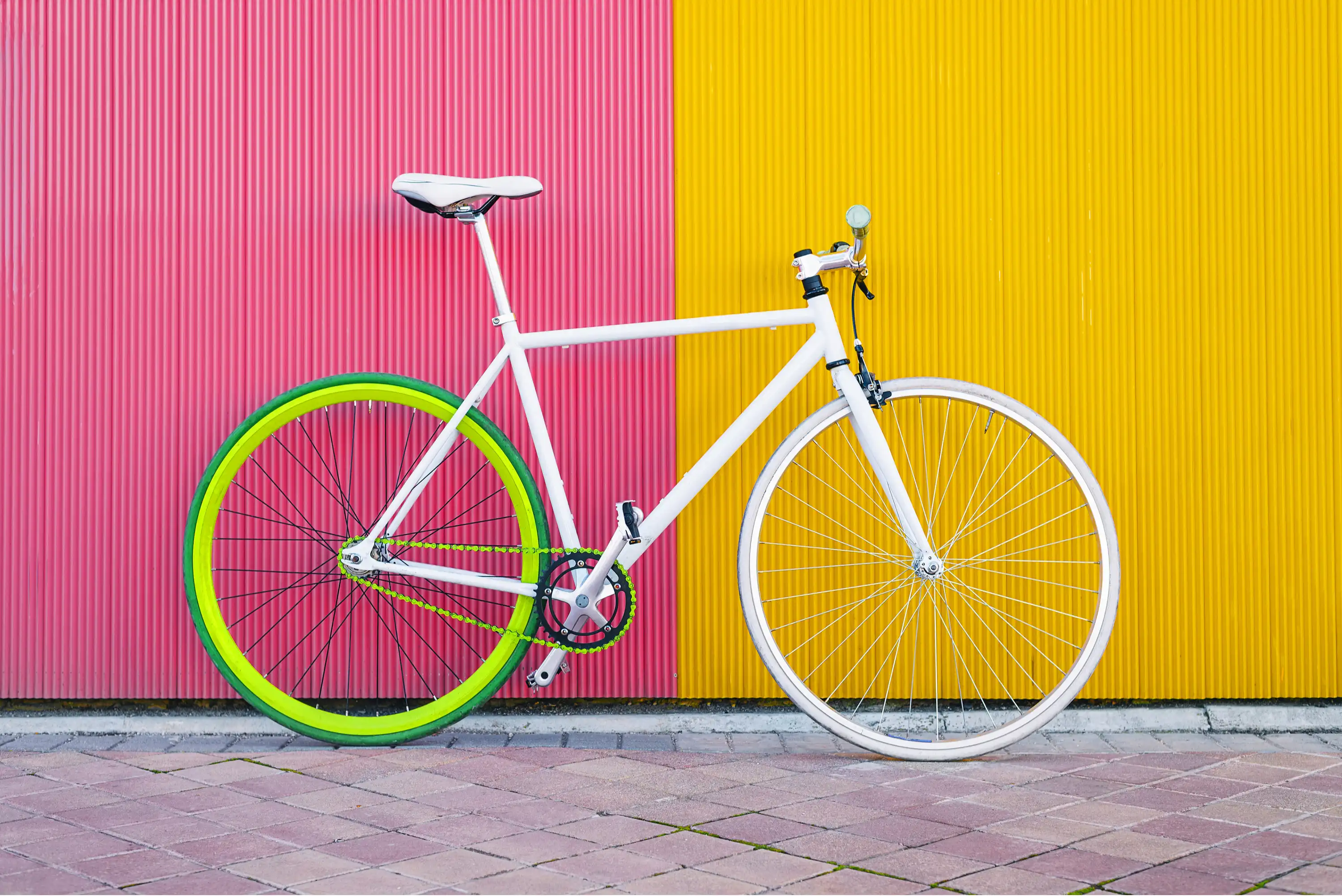
One common variety of comfort hybrid is the cruiser. It has wide handlebars and fat tires suitable for riding sandy surfaces, such as a beach. Cruisers typically have no more than seven gears, and some have only one. These single-speed bikes are sometimes called “fixies,” short for “fixed gear.”
Comfort hybrids aren’t built for speed or off-road riding. They’re best for the casual cyclist who just needs something to take on short trips around the neighborhood. For example, they’re perfect for a jaunt to the park or market. But they’re not ideal if you live in an area with lots of hills or frequently pull heavy loads.
Cruiser and “townie” bikes (comfort bikes for in-town use) are the cheapest of all bike types. At REI, these styles sell for $330 to $650. Townie bikes from Trek Bikes range from $530 to $800.
2. Know Your Budget
Once you know what kind of bicycle you want, figure out how much you’re willing to spend on it. Check prices at online retailers to learn how much you should expect to pay for a decent bike with the features you want.
You could also do this research by comparing models and prices at your local bike shop, but there are several reasons not to. First, small bike stores don’t have a large selection, and their prices tend to be on the high side. You can get a better overall view of available models and costs online.
Also, any time you go into a store, you’re likely to be subjected to a sales pitch. Even if you plan to go into a bike shop just to look, you could easily be tempted into making a purchase right away. It’s better to know your budget before you set foot in the store. That way, you can ignore models outside your price range and focus on getting the best value for your dollar.
3. Test Different Models
Once you know what type of bike you want and your price range, you’re ready to start looking at bicycles in person. But don’t limit yourself to looking. If you see something you like that fits your budget, take it for a road test. Most bike stores allow them, as long as you leave your ID and a credit card behind to ensure you don’t just ride off with the bike.
Put the bike through its paces on your test ride. Spend around 15 minutes trying all the gears and seeing how it handles hills, corners, and sudden stops. If you want to test out a mountain bike, find out if the shop has a demo day scheduled when you can take its bikes out on a real trail.
If you haven’t made up your mind which type of bike you want, test out multiple kinds. You can get a better sense of what you want by riding a bike than reading about it. For instance, you can figure out whether you prefer an upright or bent-over riding position or how much you care about the bike’s suspension and weight.
As you ride, consider how well the bike fits you and how comfortable it feels. While riding, you should be able to extend your legs fully on the pedals without having to stretch. Your riding position shouldn’t feel hunched or cramped. You also need to be able to get on and off easily and reach the ground when you come to a stop.
But don’t worry if the fit needs some adjustments. Most local shops offer a complimentary fitting that adjusts the bike to fit your unique height, weight, leg length, torso length, and joint angles. If you buy your bike online or from an individual seller, you can pay a local shop to perform this service or do it yourself using guidelines from REI.
4. Shop During Sale Season
In general, the best time to shop for a bike is in the fall. According to Bicycling, most major bicycle brands put out new models every year, usually in the fall. When the new models are set to come out, bike shops tend to sell their older stock at a discount to make room for new models.
In many cases, you’re not missing much by choosing last year’s models over this year’s. The changes are often purely cosmetic, such as a new color scheme and maybe a few minor changes to the components. The weight and basic functionality remain the same. Thus, by choosing last year’s model, you’re effectively getting the same bike at a significantly lower price.
But if you can’t wait for the fall sales, there are a few other times throughout the year when bikes tend to go on sale. According to Bicycle Universe, you can often find good deals on Black Friday, throughout the Christmas season, and sometimes around Easter.
5. Shop Online
There are many places to shop for a bike online. You can buy from an online retailer like Amazon, an auction site like eBay, or directly from the manufacturer. Shopping online gives you a more comprehensive selection of bikes to browse, and the Internet can offer better prices than local stores. And browser extensions like Capital One Shopping may help you find a better price.
But shopping online has its downsides too. The biggest one is that you don’t have the opportunity to test the bike before you buy it. Sometimes, you can get around that by borrowing a friend’s bike or riding one at a bike shop’s demo day before ordering it online. But there’s no guarantee of finding a deal on the exact model you tested.
Also, when you buy a bike online, you have to assemble it yourself. Not everyone has the skill to handle that type of job, especially if you run into problems like a kinked cable or air bubbles in the brake lines. Depending on the nature of the problem, you might have to return the bike or take it to the local shop for a repair, which could eat up most of the money you saved buying online.
A final downside is the difficulty of getting repairs under warranty. Instead of simply taking the bike back to the store where you bought it, you have to contact the retailer, explain the problem, ship the bike back, and wait to have it returned. That could mean going without your bike for weeks.
It’s up to you to decide whether the savings from buying a bike online outweigh the problems. To make an informed decision, compare prices at local stores and online to get an idea of how much you stand to save.
6. Try the Local Bike Shop
Don’t overlook your local bike shop as a place to get a good deal on your next bike. Though they charge more on average, they’re also more willing to negotiate on pricing than big chains or online retailers. And even if they can’t match the online bike price, sometimes they’re willing to throw in accessories like a helmet or panniers (attachable bags or baskets).
Local bike stores have other perks too. They usually have a knowledgeable staff who can help you find the right fit and tell you which features are most useful for the kind of riding you want to do. They also offer perks like a free tune-up or discounts on future service. And they make it much easier to get repairs under warranty.
Along with these benefits, you get the satisfaction of supporting a local business that’s important to your community. If you’re going to ride your bike regularly, you’ll come to rely on your local shop as a source of parts or emergency repairs as well as a place to connect with other cyclists. Supporting it with your shopping dollars helps ensure it stays in business.
7. Look at Secondhand Bikes
You can get the most significant bicycle savings by buying it secondhand. Just like cars, bicycles depreciate quickly in value, so you can often find a reasonably high-end used bike for a fraction of its original price. My husband once bought two used bikes for $30 on Craigslist. He’s still riding one of them eight years later.
If you’ve done your research and found a particular bicycle you love, you can try searching for the same model on eBay or Craigslist. Other places to look for a used bike include:
- Local Bicycling Groups. Local bike clubs, such as the Rochester Bicycling Club, often have Web-based classified ad forums where members buy and sell old bikes. Buying from a local group means you’re dealing with a well-known seller within your local cycling community who really understands bikes.
- Police Auctions. Local police departments, such as New York City’s, often hold auctions of unclaimed stolen goods. You can find these auctions through listings in local papers or by searching for “police auctions” or “public auctions” online. Some departments also hold online auctions through sites like PropertyRoom.com.
- Cycling Teams. According to Cycling Weekly, some professional cycling teams sell their used bikes on their own websites or manufacturer sites like Canyon. These bikes have definitely seen some hard use, but they’ve also received regular professional care. Plus, they come with built-in bragging rights.
Buying a secondhand bike carries the risk of getting stuck with a lemon. But you can minimize this risk by doing careful research. First, ensure the seller is reputable. Check their selling history on the site you’re using to confirm they have experience selling bikes or bike-related equipment.
Second, ask plenty of questions. Find out about the bike’s history, condition, any defects, and whether the seller has the original purchase receipt. If you’re buying from a local seller, take a good look at the bike before buying it. If you’re not that knowledgeable about bikes, bring an experienced friend to give the bike a good once-over and ensure it’s in decent shape.
Minor problems with a used bike don’t have to be deal breakers. As long as the frame and wheels are in good condition and the price is right, you can take it to your local bike shop to deal with any minor problems. The staff there can adjust the derailleur (gear system) and replace the brake pads, cables, tires, chain, or seat.
These repairs add to the cost, so factor them into the total price before you buy. If the bike needs a lot of repairs, you can always ask the seller for a discount. But even with repair costs factored in, a used bike will typically cost much less than a comparable new one.
8. Build Your Own Bike
If you can’t find the exact bike you want at a price you can afford, you can build it instead. Assembling a bicycle from parts can be cheaper than buying a complete bike because it allows you to mix and match used and new parts. For instance, you could buy a nice, slightly used frameset and wheels, then add new parts like a drivetrain and saddle.
The experts at Cycling Weekly recommend spending most of your budget on a good-quality frame and less on the components. You can always choose to upgrade them when you have more money to spare. And it’s much easier to find good components that fit an existing frame than the other way around.
When choosing a bike frame, focus on the quality of the construction, not the material. Carbon bike frames can be very light and aerodynamic, but only if they’re well made. Cheap carbon bikes cut corners, so you end up with a bike that isn’t that light and doesn’t ride smoothly. Aluminum is a cheaper material, allowing you to get top-notch construction at a lower price.
9. Save Money for Accessories
If this is your first bike, remember you’ll need some accessories to go with it. It’s no good having a top-notch bicycle if it becomes unrideable the first time you get a flat tire because you forgot to buy a repair kit.
So when you’re figuring how much you can afford to spend on the bike, set aside some money for accessories. Depending on how you use the bike, essential equipment can include:
- A Helmet. A good helmet is your best protection against a potentially fatal head injury. Look for one certified by the Consumer Product Safety Commission, fits well, and provides proper ventilation to keep you cool. According to Consumer Reports, a top-notch helmet costs around $50, and it’s well worth the investment.
- A Bike Lock. A few months after my husband spent hundreds of dollars on a new bike, a thief snipped right through the old-fashioned chain lock and stole it. Don’t make the same mistake. Protect your investment with a sturdy high-end lock. The cheapest one recommended by Cycling Weekly costs around $60.
- Lights. If you’re planning to ride at dusk or after dark, you need headlights and taillights so passing cars can see you. You can pick up one of each for anywhere from $20 to $100.
- A Pump. Unless you want to feed quarters into a gas station’s pump every time your bike tires run low, you need a bicycle pump to keep them properly inflated. A basic floor pump costs between $20 and $75. Handheld pumps, which are more portable but harder to use, are a bit cheaper.
- A Repair Kit. With a basic repair kit, you can handle problems like a flat tire or a thrown chain at home or on the road. At a minimum, you need a tire patch kit, tire lever, wrench, and multitool for quick adjustments. You can buy a complete set for around $20 total.
- Storage. Rear storage racks and panniers are handy for commuters who want to tote a briefcase or shoppers hauling home groceries. They cost around $50.
- A Phone Mount. With a phone mount, you can use the GPS maps on your smartphone while riding. You can pick up a basic mount for as little as $12.
- A Water Bottle Cage. Staying hydrated on a long ride is much easier if you keep a water bottle within easy reach. A simple cage that mounts to your bike frame can hold your bottle in place for $5 to $20.
- Cycling Gear. You can go for a bike ride in your street clothes, but for long rides, bike shorts designed for the purpose (about $20) are much more comfortable. A packable windbreaker ($20 to $70) is handy to have in case of rain. And decent-quality sunglasses ($20 and up) are a must.
Final Word
Once you’ve found the bicycle of your dreams, maintain it properly to keep it in great shape. Keep the chain properly adjusted and lubricated, and watch out for wear on the brake pads and tires.
Maintaining your bike costs money, but it saves you money in the long run. Paying to have parts repaired or replaced as necessary can keep your bike running longer and prevent you from having to shell out for a new one. If you’re relatively handy, you can do the repairs yourself with the assistance of YouTube videos or friends from a bike club.
The other way to get the maximum value from your new bike is to ride it as much as possible. If something’s holding you back from putting your bicycle to a particular use, consider whether investing in a new bike accessory would make a difference.
For instance, if you don’t use your bike for commuting because it’s dark when you leave work, a set of bike lights could make it possible. If you don’t take your bike shopping because you can’t haul your purchases home, maybe you can add panniers or a bike trailer. Add what you need to make your new bike work for you to get the most out of your investment.

Editorial & Advertiser Disclosure: The editorial content on this page is not provided, commissioned, reviewed, approved, or otherwise endorsed by any advertiser. Opinions expressed here are ours alone, not those of any advertiser. The offers that appear on this site are from companies that compensate us. That compensation may influence which products we cover and where and how they appear on a page – including the order in which they appear – but it does not influence our evaluations, ratings, or opinions. We do not include every company or offer available in the marketplace.
Related: