

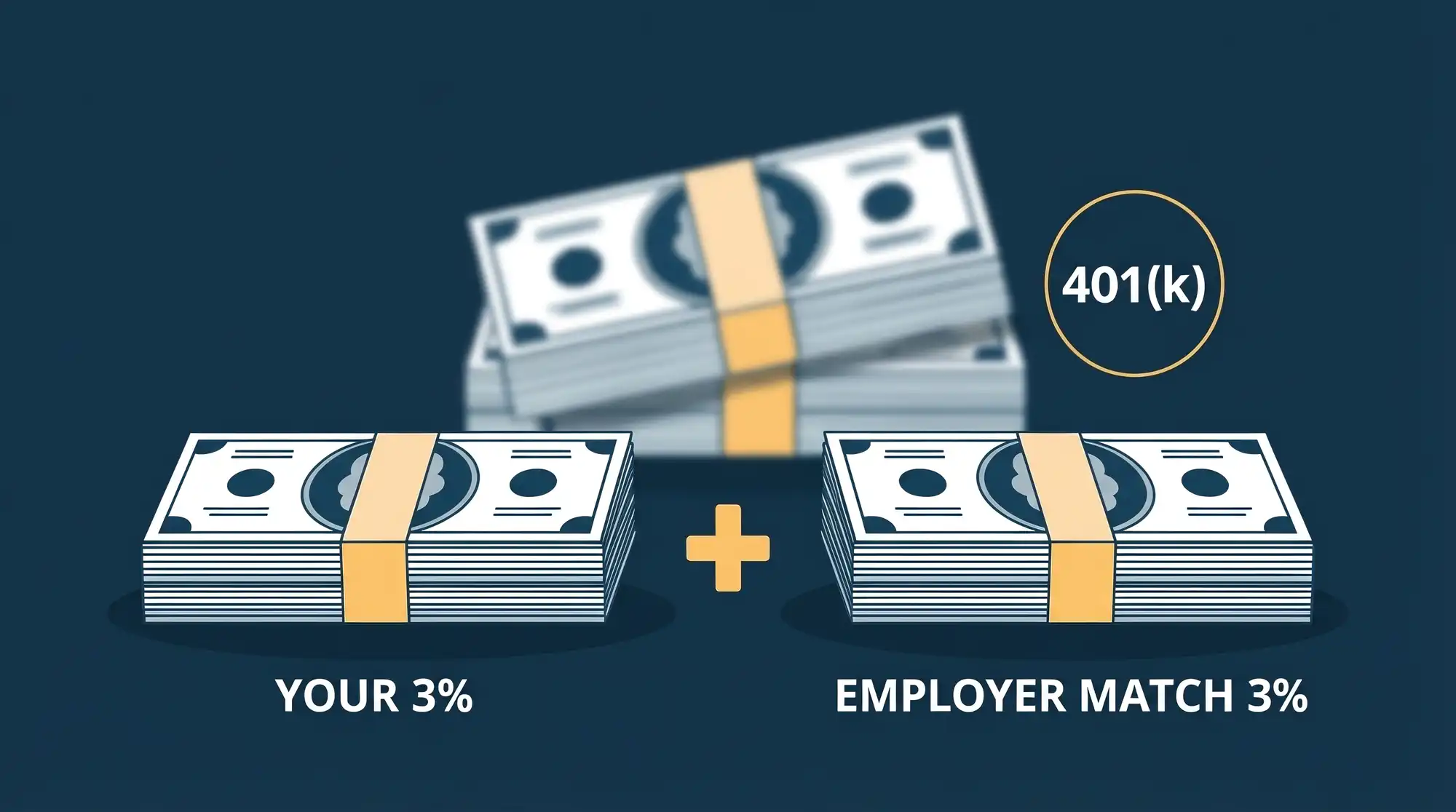

An employer match is an immediate 50-100% return on your contribution, and nothing in investing comes close to that. If your employer matches 50% of contributions up to 6% of your salary, contributing less than 6% means leaving free money on the table. Treat it as the single highest-priority move in your retirement plan.
Run the numbers on what skipping the match costs. On a $60,000 salary with a 50% match up to 6% of pay, contributing the full 6% means you put in $3,600 and your employer adds $1,800. Contribute 3% instead and you hand back $900 a year. At a 7% average return, that habit costs roughly $85,000 over a 30-year career.
Most people who miss the match never decided to miss it. Auto-enrollment is the usual culprit. Plans set a default contribution rate, and it often sits below the threshold that earns the full match. The default feels like a recommendation, so it goes untouched for years. And the match is part of your compensation. Skipping it means working for less than your full pay.
Find your match formula first. It lives in your benefits portal or plan documents, or ask HR directly. Then log into your 401k account and set your contribution rate at or above the level that captures the full match. If the jump strains your budget, raise your rate 1% now and schedule automatic annual increases until you get there.
Check the vesting schedule too. Your own contributions are always yours, but employer money may vest over several years, which matters if you plan to change jobs soon. Match dollars don’t count against the annual IRS limit on your own contributions either, so the match never crowds out your saving room.
The match threshold is your contribution floor, not your goal. Clear it first, then build from there as your budget allows.

Editorial & Advertiser Disclosure: The editorial content on this page is not provided, commissioned, reviewed, approved, or otherwise endorsed by any advertiser. Opinions expressed here are ours alone, not those of any advertiser. The offers that appear on this site are from companies that compensate us. That compensation may influence which products we cover and where and how they appear on a page – including the order in which they appear – but it does not influence our evaluations, ratings, or opinions. We do not include every company or offer available in the marketplace.
Related: