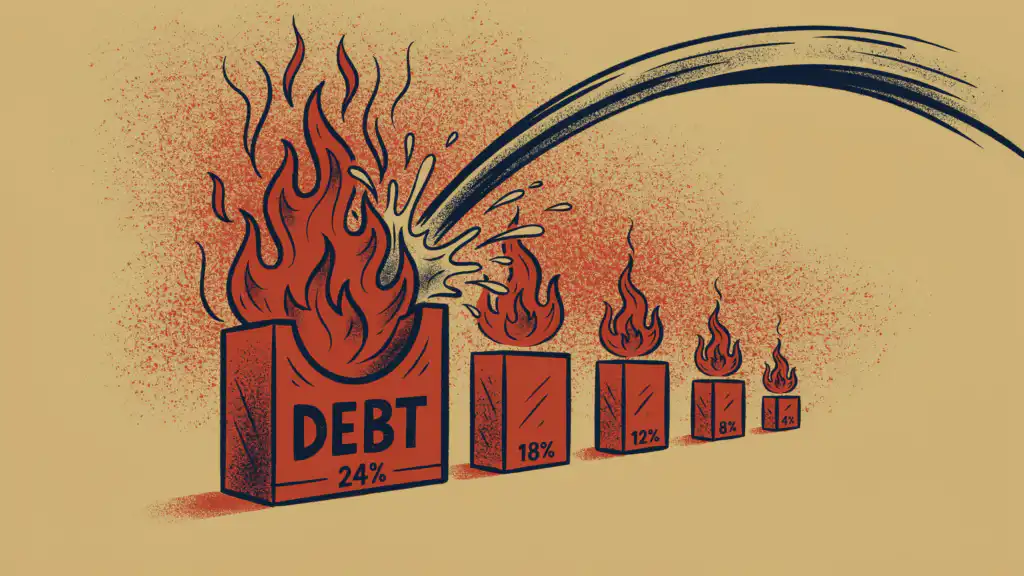

Following a financial order of operations means funding your goals one at a time instead of splitting every paycheck across all of them, so each dollar goes where it earns or protects you the most. Cover essentials first, then build a small emergency fund, capture your full employer match, and clear high-interest debt before you invest more.
Doing a little of everything feels balanced, but it’s expensive. Put $200 a month into an index fund while a credit card charges 22%, and you’re paying 22% on the card to chase an uncertain return in the fund.
The order works because each step but one beats the ones below it on guaranteed return or on protection. A dollar-for-dollar match doubles every contribution it covers, and a skipped match is gone for good. Paying off a 22% card earns a guaranteed 22%, a return no investment promises. A starter emergency fund comes early because without one, the next surprise bill goes on a card and undoes months of progress. The exception is retirement savings, which comes before early payoff of a low-rate loan even though the payoff is the surer return.
Send each spare dollar to the first step on this list that isn’t finished:
- Essentials, plus the minimum payment on every debt so nothing goes late
- A starter emergency fund covering one month of essential expenses
- Enough in your 401(k) to earn the full employer match
- High-interest debt, meaning credit card balances and any loan charging more than about 8%
- A full emergency fund of three to six months of expenses
- Retirement savings until you’re putting away at least 15% of pre-tax income, match included, the target Fidelity suggests
- Bigger goals such as a home down payment, college savings, other investing, and early payoff of low-rate debt like a mortgage
The emergency fund is split on purpose. One month of cash covers a typical car repair or insurance deductible, which lets you attack a 22% balance sooner and finish the fund once that debt is gone.
Within step six, fund a health savings account (HSA) first if your health plan qualifies, because that money skips federal income tax going in, growing, and coming out for medical bills. A Roth IRA, funded with taxed money and tax-free in retirement, comes next for anyone under its income limit, then more in your 401(k).
Any dollar you’re unsure about goes to the first unfinished step.

Editorial & Advertiser Disclosure: The editorial content on this page is not provided, commissioned, reviewed, approved, or otherwise endorsed by any advertiser. Opinions expressed here are ours alone, not those of any advertiser. The offers that appear on this site are from companies that compensate us. That compensation may influence which products we cover and where and how they appear on a page – including the order in which they appear – but it does not influence our evaluations, ratings, or opinions. We do not include every company or offer available in the marketplace.
Related: