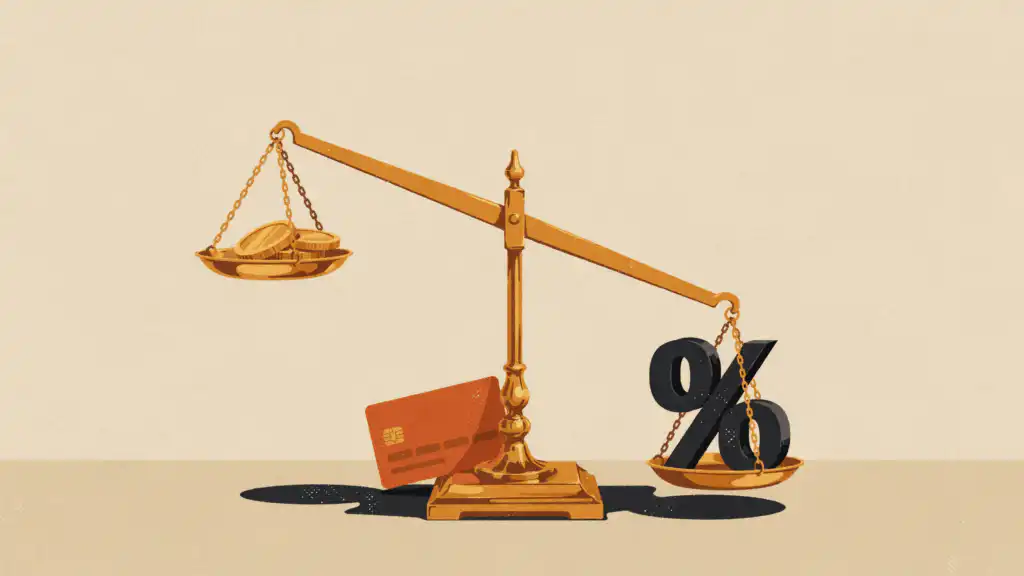

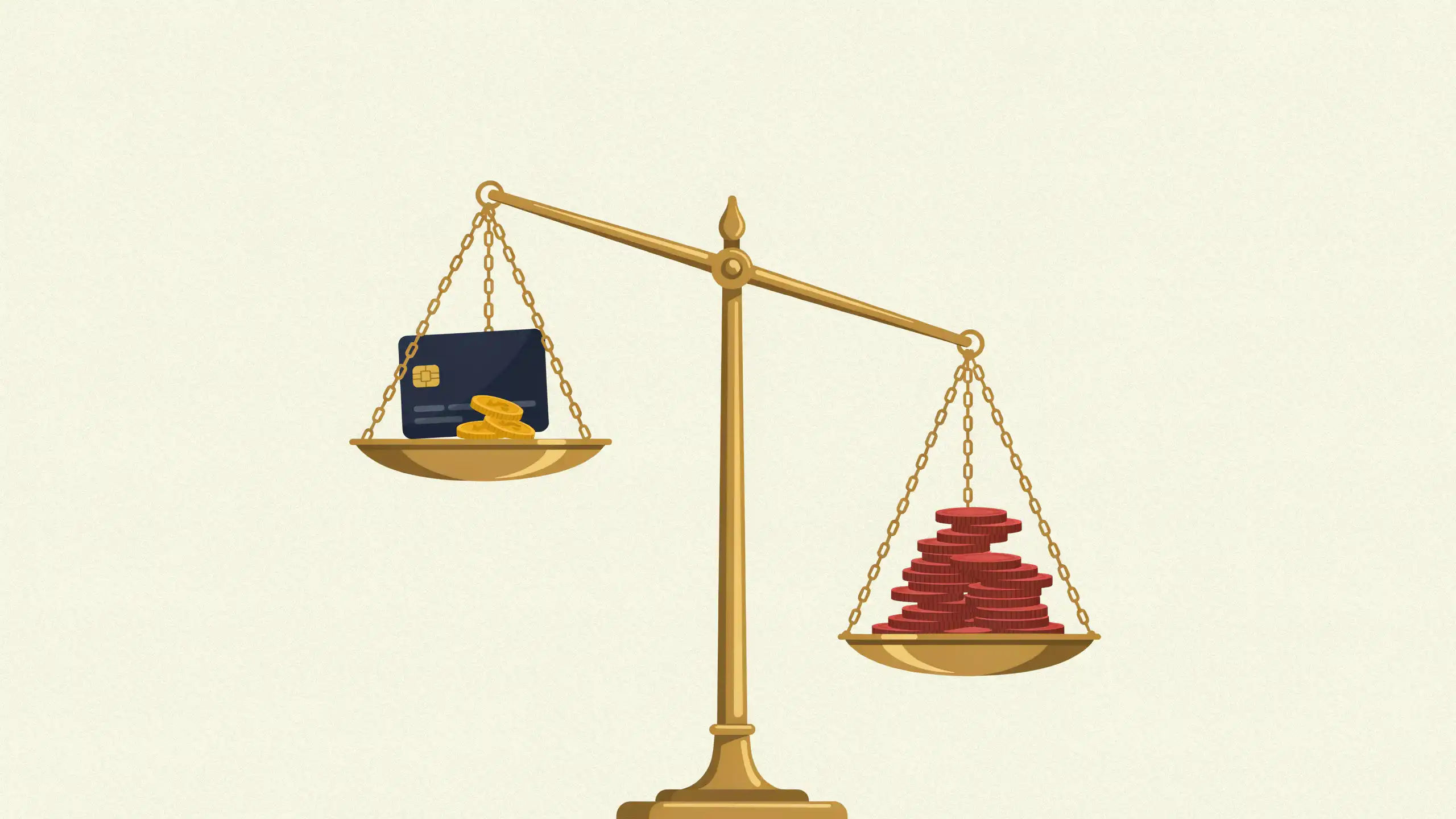

Before you compare credit card rewards, decide whether you’ll ever carry a balance. If you might, weigh the interest a lower rate or a long 0% intro offer would save against the rewards you’d give up. If you always pay in full, ignore the rate and choose on rewards and fees.
Answer with what you’ve done, not what you intend. If you’ve carried a balance in the past year, or a surprise bill would land on the card, shop as someone who carries one.
In LendingTree’s June survey, new cash back cards averaged about 24% APR, the card’s yearly interest rate, and low-interest cards about 17%. By our math, the lower rate saves about $70 a year per $1,000 carried, as much as a 2% card earns on $3,500 of purchases.
Carrying a balance also ends the interest-free grace period, so interest starts on new purchases the day you make them.
If you might carry a balance, compare cards’ ongoing APRs, the rates left once any promotion ends. A 0% intro APR on purchases or balance transfers gives you interest-free months, so pick one long enough to pay off what you owe. A balance transfer usually costs 3% to 5% of the amount moved. Favor cards without a penalty APR, a rate that can jump to around 30% after a missed payment.
If you always pay in full, the APR drops out of the decision, since most cards charge no interest on purchases paid off by the due date. Match the rewards to where you spend, and pay an annual fee only when the extra rewards beat it.
- A flat-rate cash back card if your spending is spread across everything
- A category card if a few categories, like groceries or gas, dominate your budget
- A travel card if you travel enough to redeem its points for flights and hotels
Either way, run three checks before you apply. Target cards built for your credit score, since applying triggers a hard credit check that can lower your score, approved or not. Prequalify where the issuer offers it, because prequalifying uses a soft check that doesn’t affect your score. Then read the pricing table that card applications must include, which lists the annual, foreign transaction, and late fees beside the APRs.
Revisit the choice when your habits change. Twelve straight months with no balance is your cue to ignore the rate.

Editorial & Advertiser Disclosure: The editorial content on this page is not provided, commissioned, reviewed, approved, or otherwise endorsed by any advertiser. Opinions expressed here are ours alone, not those of any advertiser. The offers that appear on this site are from companies that compensate us. That compensation may influence which products we cover and where and how they appear on a page – including the order in which they appear – but it does not influence our evaluations, ratings, or opinions. We do not include every company or offer available in the marketplace.
Related: