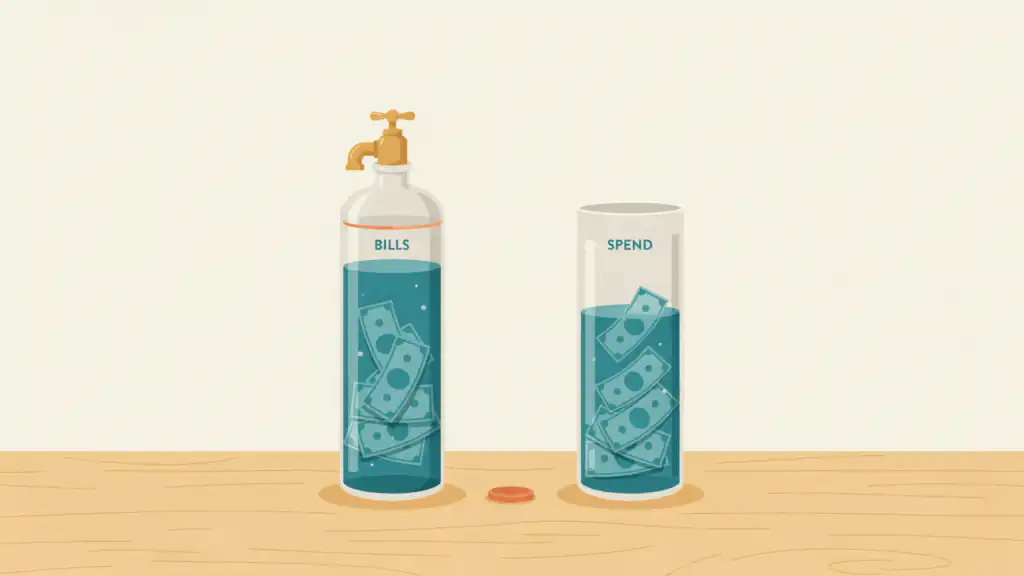

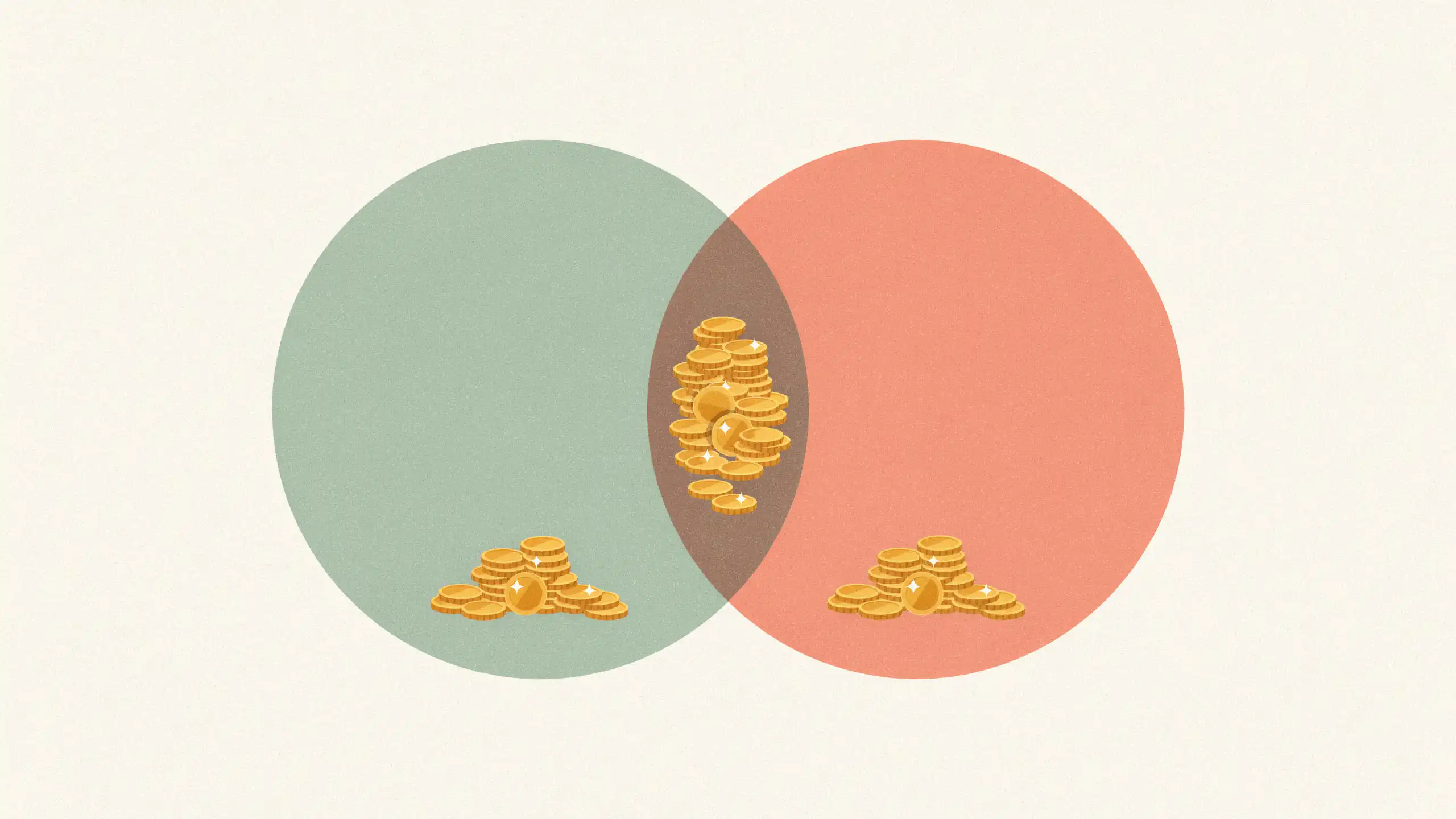

Run your shared bills and goals through one joint account with your partner, and keep a personal account each for spending neither of you has to explain. Fund the joint account with the same percentage of each paycheck, so the split stays fair when one of you earns more.
Pooling everything in one joint account does more than pay the bills. In a 2023 study in the Journal of Consumer Research, researchers randomly assigned some of 230 engaged or newlywed couples to merge their money into a joint account and others to keep their money separate. Two years later, the joint-account couples reported higher relationship quality than the couples who kept their money apart. The researchers credit a shared view of money, where partners stop keeping score. Couples who kept separate accounts beside a joint one didn’t show the same benefits, a finding co-author Eli Finkel wants studied further.
Pooling every dollar has its own cost, though. Every coffee and hobby purchase becomes something your partner can see and question. In Bankrate’s December 2025 survey, 62% of couples kept at least some money separate, and 38% combined everything. So do both. A joint account covers what you share, and each of you keeps a personal account for the rest.
Open a joint checking account for rent or the mortgage, utilities, groceries, childcare, and shared savings goals. Divide those monthly costs by your combined take-home pay, and each of you puts in that percentage of your own pay. Say you bring home $6,000 a month and your partner brings home $3,000. Shared costs of $3,600 are 40% of your combined $9,000, so you put in $2,400 and your partner puts in $1,200. A 50/50 split, at $1,800 each, would take 60% of your partner’s pay and 30% of yours.
Send each share to the joint account on payday, by split direct deposit or automatic transfer. The rest of each paycheck lands in your personal account, yours to spend or save without a discussion.
Settle two rules up front. Pay debts either of you brought into the relationship, such as student loans, from personal money unless you both agree the joint account should cover them. And set one dollar amount, say $500, above which any purchase from the joint account gets a conversation first.
Recalculate the percentage whenever either paycheck changes, so the joint account keeps covering what you share.
If you’re choosing where to open the joint account, compare the best checking accounts.

Editorial & Advertiser Disclosure: The editorial content on this page is not provided, commissioned, reviewed, approved, or otherwise endorsed by any advertiser. Opinions expressed here are ours alone, not those of any advertiser. The offers that appear on this site are from companies that compensate us. That compensation may influence which products we cover and where and how they appear on a page – including the order in which they appear – but it does not influence our evaluations, ratings, or opinions. We do not include every company or offer available in the marketplace.
Related: