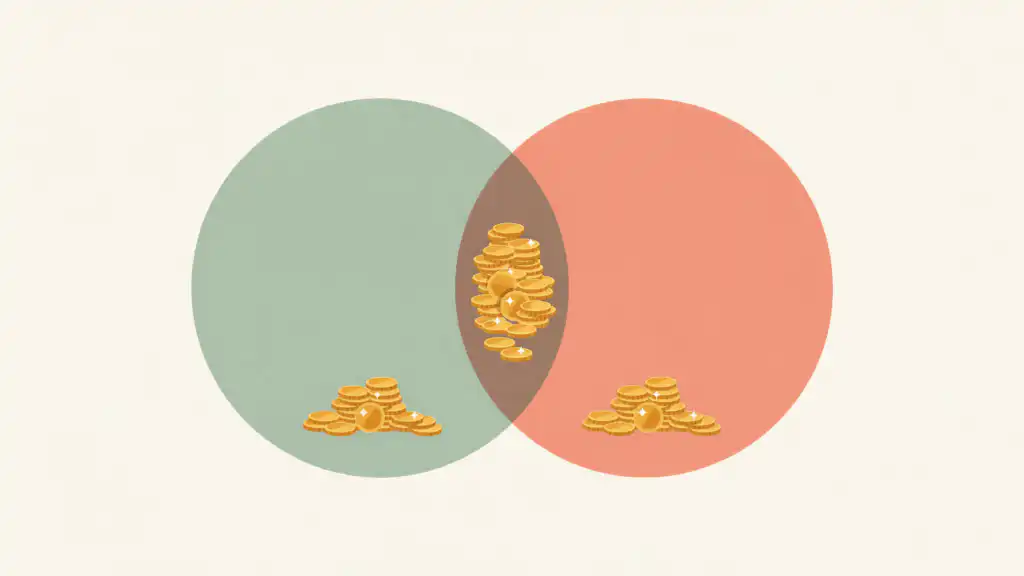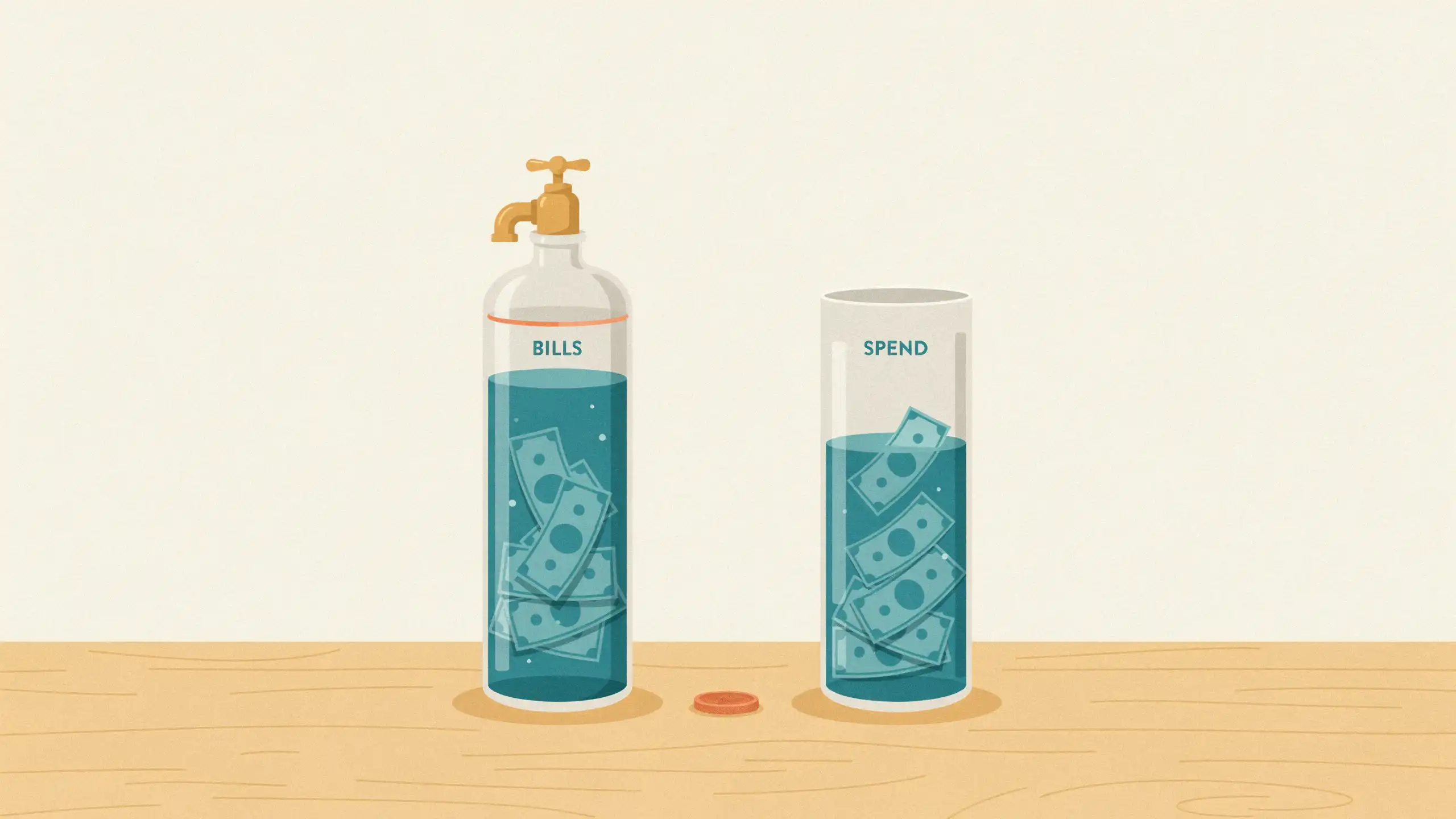

Open a second checking account just for bills, and move each paycheck’s share of your fixed costs into it on payday. Send every autopay there and keep your everyday debit card on the other account, so once your savings are set aside, the spending account’s balance tells you exactly what you can spend.
When bills and everyday spending share one checking account, the balance always overstates what’s free to spend. Rent due next week sits inside the same number as money you can spend tonight.
Two accounts split the money by purpose. The bills account holds what your fixed costs will take, and every autopay draws from it. The spending account holds the rest, minus whatever you move to savings, so its balance is your budget. You don’t need an app or a spreadsheet to know whether dinner out fits. You check one number.
The split protects your bills, too. The debit card you use everywhere connects only to the spending account, so a stolen card number or a weekend of overspending can’t touch the rent money. That only works if the bills account isn’t set up to cover the spending account’s overdrafts. A bounced autopay can mean a late fee, and a payment that slips 30 days past due can reach the credit bureaus. That late mark can stay on your report for seven years, according to Experian.
Add up a month of fixed bills, including annual costs like insurance premiums divided by 12, and work out each paycheck’s share. If your bills total $2,600 a month and you’re paid every other week, that’s $1,200 per paycheck ($2,600 times 12, divided by 26).
Move that amount on payday through a split direct deposit, if your employer offers one, or an automatic transfer. Start the bills account with one extra paycheck’s share when you open it, as a cushion for bills due before your next payday. Then switch every autopay over and leave that account’s debit card at home.
When the spending account runs low, you stop spending, and the bills still get paid.

Editorial & Advertiser Disclosure: The editorial content on this page is not provided, commissioned, reviewed, approved, or otherwise endorsed by any advertiser. Opinions expressed here are ours alone, not those of any advertiser. The offers that appear on this site are from companies that compensate us. That compensation may influence which products we cover and where and how they appear on a page – including the order in which they appear – but it does not influence our evaluations, ratings, or opinions. We do not include every company or offer available in the marketplace.
Related: