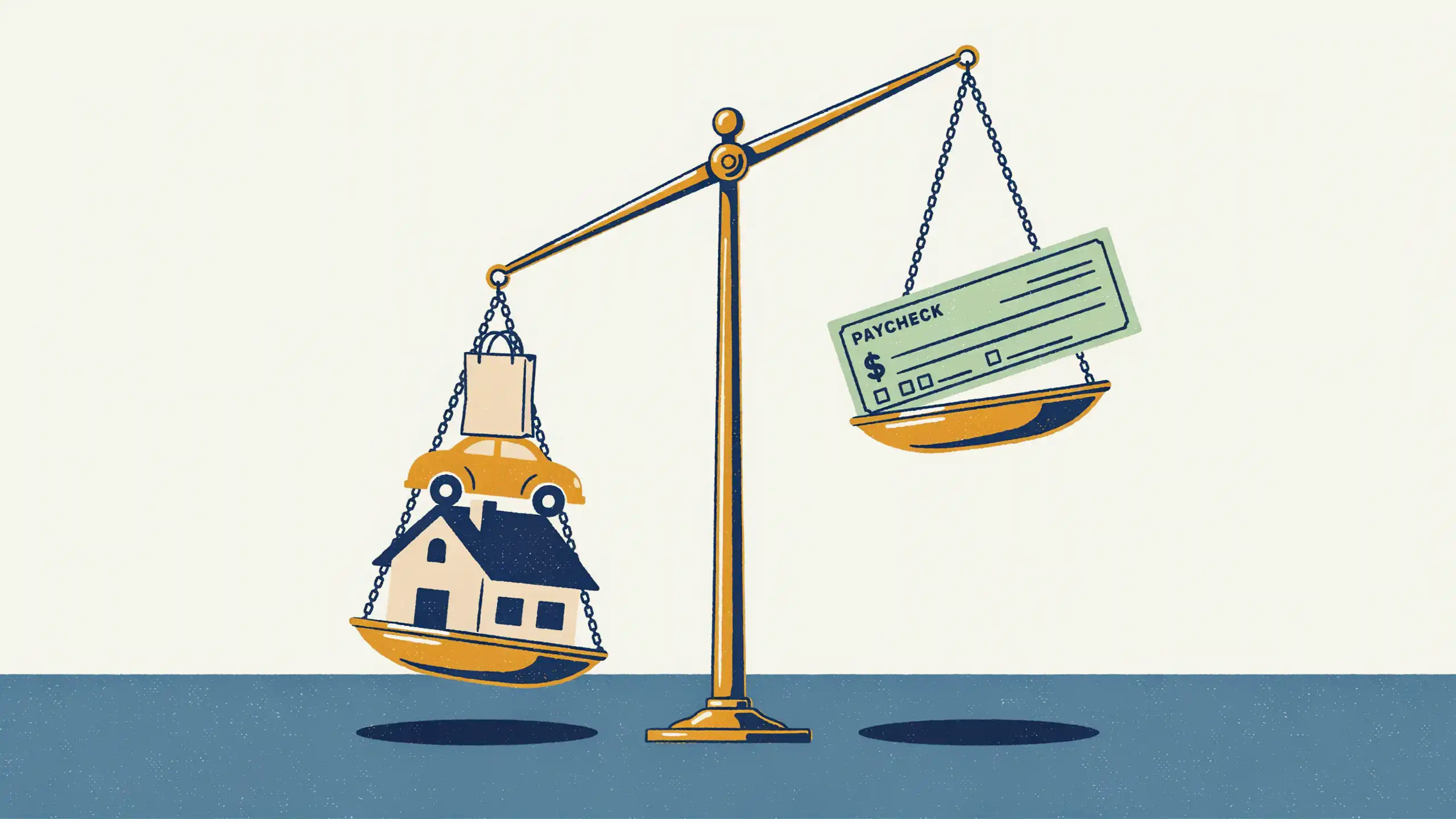

Debt that keeps growing comes from too little income or too much spending, and each needs a different fix. Add up one month of essentials, minimum payments included, and compare the total to your take-home pay. If essentials alone are higher, you need more income or lower fixed costs. If they fit, the problem is spending.
The standard answer to growing debt is to cut back, and it works when spending outruns a solid income. It fails when rent, groceries, and a car payment already take the whole paycheck, because you can cancel every extra and still fall behind.
Picture two households that each take home $4,500 a month and spend $4,700. In the first, essentials alone cost $4,700, so not one dollar goes to extras and it still runs $200 short. In the second, essentials cost $3,200, and eating out and shopping take $1,500. The shortfall is the same $200, but only the second can budget its way out.
To see which household you match, pull last month’s bank and card statements and total your essentials: housing and utilities, groceries, transportation, insurance, and the minimum payment on every debt. Count a bill you pay once or twice a year at one-twelfth of its yearly cost. Compare the total with your take-home pay. Higher means an income problem. Lower, with debt still growing, means a spending problem.
Trimming small purchases can’t fix an income problem, because the shortfall starts before you buy anything extra. Ask for a raise or find a better-paying job, add side income, or cut a large fixed cost by moving somewhere cheaper or trading your car for one with a smaller payment.
A spending problem needs automation. Schedule a transfer to savings and an extra payment toward your debt for payday, so both come out before you can spend the money. The second household could send $300 that way and still have $1,000 a month for eating out and shopping.
Run this test before you choose a payoff plan. No plan can shrink a balance your budget adds to every month.

Editorial & Advertiser Disclosure: The editorial content on this page is not provided, commissioned, reviewed, approved, or otherwise endorsed by any advertiser. Opinions expressed here are ours alone, not those of any advertiser. The offers that appear on this site are from companies that compensate us. That compensation may influence which products we cover and where and how they appear on a page – including the order in which they appear – but it does not influence our evaluations, ratings, or opinions. We do not include every company or offer available in the marketplace.
Related: