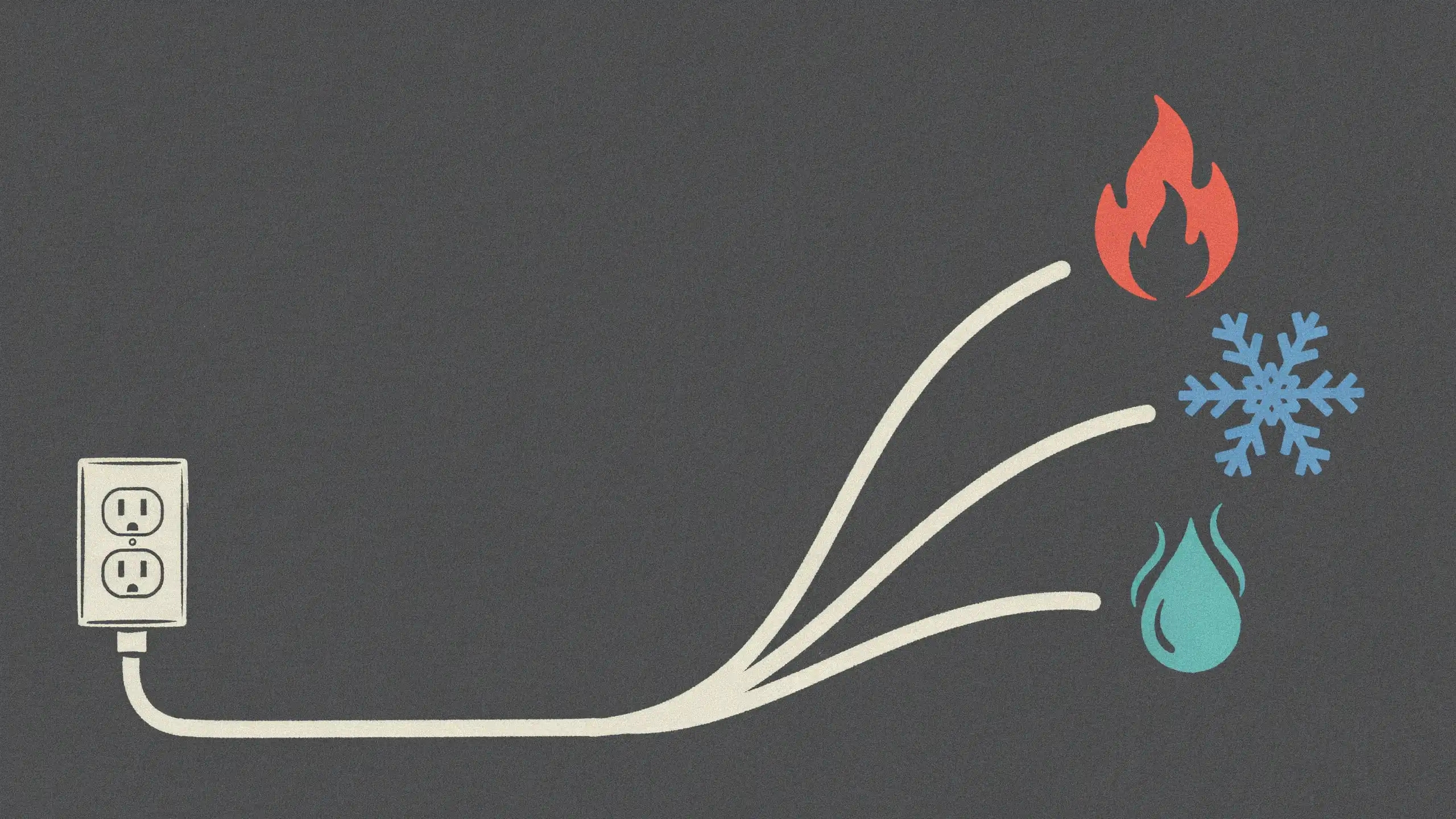

Start with air conditioning, heating, and the water heater to cut your electric bill, since they’re the three biggest uses of electricity in U.S. homes. Check your utility account’s usage history to see whether summer or winter costs you more, and leave light bulbs and power strips for last.
Air conditioning took 19% of the electricity used in U.S. homes in 2020, and home heating and water heating took 12% each, according to the U.S. Energy Information Administration. If your furnace or water heater burns gas, that cost shows up on your gas bill instead, and the same fixes lower it.
In your utility account’s usage history, find the month with the most kilowatt-hours (kWh), the unit your bill charges by, and compare it with a mild month like April or October, when you barely heat or cool. Most of the difference is heating or cooling. A home that used 600 kWh in April and 1,100 in July spent about 500 kWh of July on air conditioning.
Then program the thermostat to heat less while you sleep in winter, a nightly setback, and to heat or cool less whenever the house is empty. Smart thermostats certified by ENERGY STAR make those changes on their own and cut heating and cooling bills by about 8% on average. With a heat pump, keep winter setbacks small unless the thermostat is built for heat pumps, since warming the house back up after a big one can switch on costly backup heat.
Next, turn the water heater down to 120 degrees, unless your dishwasher lacks a built-in heater and needs hotter water. Then wash clothes in cold water and air-dry what you can, swap any old incandescent bulbs for LEDs, and plug the TV and game console into a power strip you switch off.
A time-of-use rate, which charges less outside peak hours, pays off for households that can move laundry and the dishwasher to the cheaper hours. Budget billing splits your yearly cost into equal monthly payments, which makes the bill predictable without lowering what you pay over the year. If you can’t pay, ask your utility for a payment plan and apply for LIHEAP, the federal program that helps low-income households with energy bills.
Open last year’s usage tonight, and set the thermostat schedule for your peak season first.

Subscribe and we'll send you 101 Essential Money Tips to get you started.
The 101 money moves that matter most, from the foundations to protecting what you’ve built.
Advertiser Disclosure: Many or all of the offers that appear on this site are from companies that compensate us, and some companies pay for sponsored content. That compensation may influence which products we cover and where and how they appear on a page, including the order in which they appear. We do not include every company or offer available in the marketplace.