
Pay for a new business with savings and side income before you borrow or take on investors, and leave your emergency fund and retirement accounts out of it. Your own money costs no interest and gives no one a share of what you build. Keep your job until sales show the business can pay you.
A new business often loses money for months before it turns a profit. Paying for that stretch yourself means a slow start costs you time, not a loan payment you can’t make.
Your job makes that possible. Its paycheck covers your household, so the business doesn’t have to pay you yet and can reinvest every dollar it earns. Earn your side income in the field you plan to enter. Each sale then adds to the startup fund and shows whether strangers will pay for what you sell, before you sign a lease.
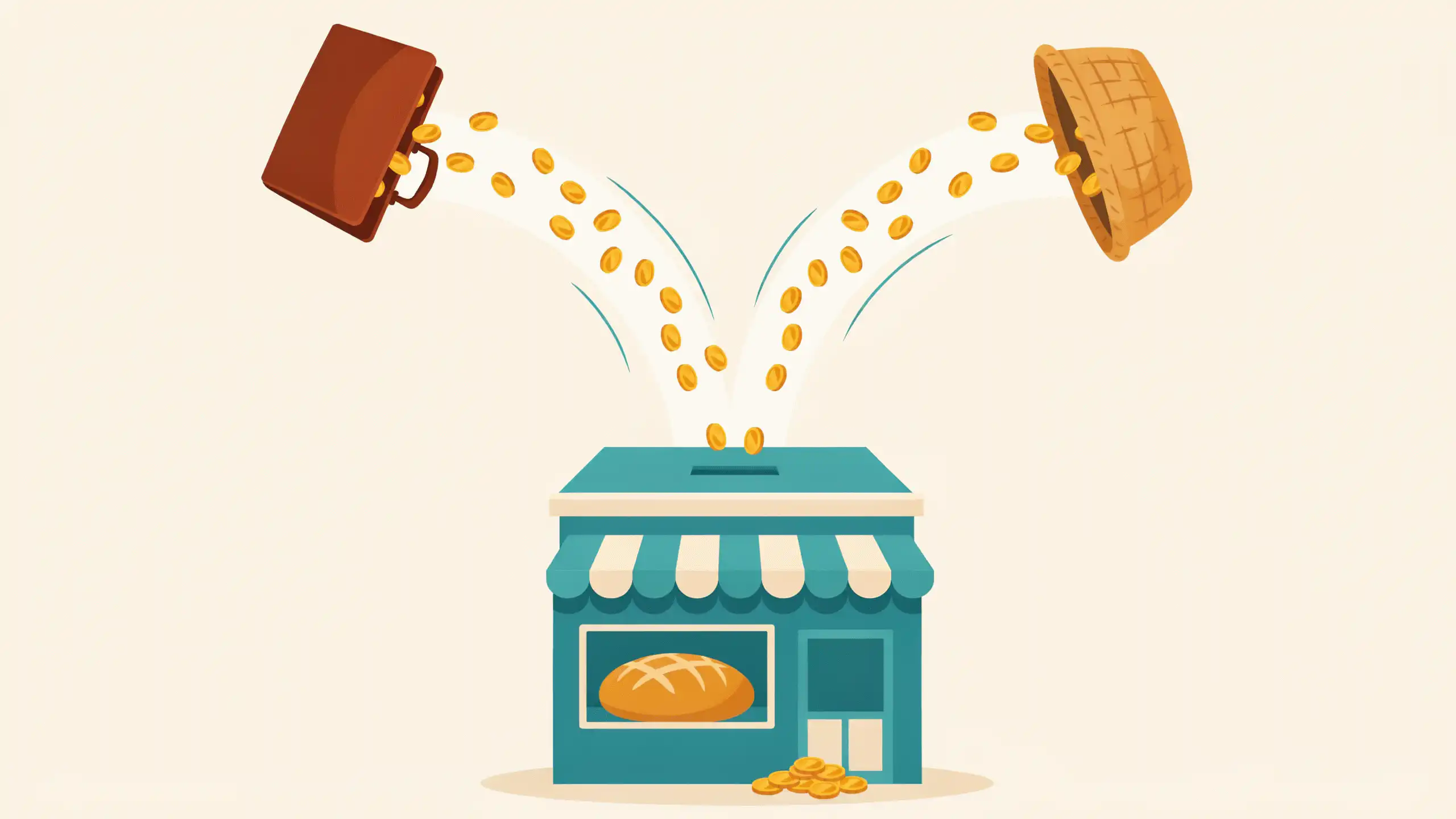
Picture a baker who keeps her office job and sells at weekend markets for a year. Saving $1,000 a month from her paycheck and making about $1,100 a month in market profits, she has roughly $25,000 by year’s end, enough to open a small storefront with used ovens without owing anyone. A year of sales has also shown her which breads customers buy.
To size the fund, add up the business’s opening costs plus several months of running costs. The Small Business Administration’s guide to startup costs lists the usual ones, from permits to insurance, and offers a fillable worksheet. If the total is out of reach, start smaller, with a market stall before a storefront or used equipment before new.
Leave your emergency fund alone, because it keeps the household afloat if the business stalls or your job ends. Retirement accounts are expensive to tap early. A withdrawal from a 401(k) or traditional IRA before age 59½ usually costs income tax plus a 10% penalty. Even Roth IRA contributions, which come out anytime without tax or penalty, stop growing for retirement once withdrawn.
Grow the fund faster by saving a bigger share of each paycheck and selling what you no longer use, and keep it in its own high-yield savings account, apart from your emergency fund.
Open that account this week and schedule a transfer into it for every payday, so the money is saved before you can spend it.
Pick the startup fund’s account from the best high-yield savings accounts.

Subscribe and we'll send you 101 Essential Money Tips to get you started.
The 101 money moves that matter most, from the foundations to protecting what you’ve built.
Advertiser Disclosure: Many or all of the offers that appear on this site are from companies that compensate us, and some companies pay for sponsored content. That compensation may influence which products we cover and where and how they appear on a page, including the order in which they appear. We do not include every company or offer available in the marketplace.