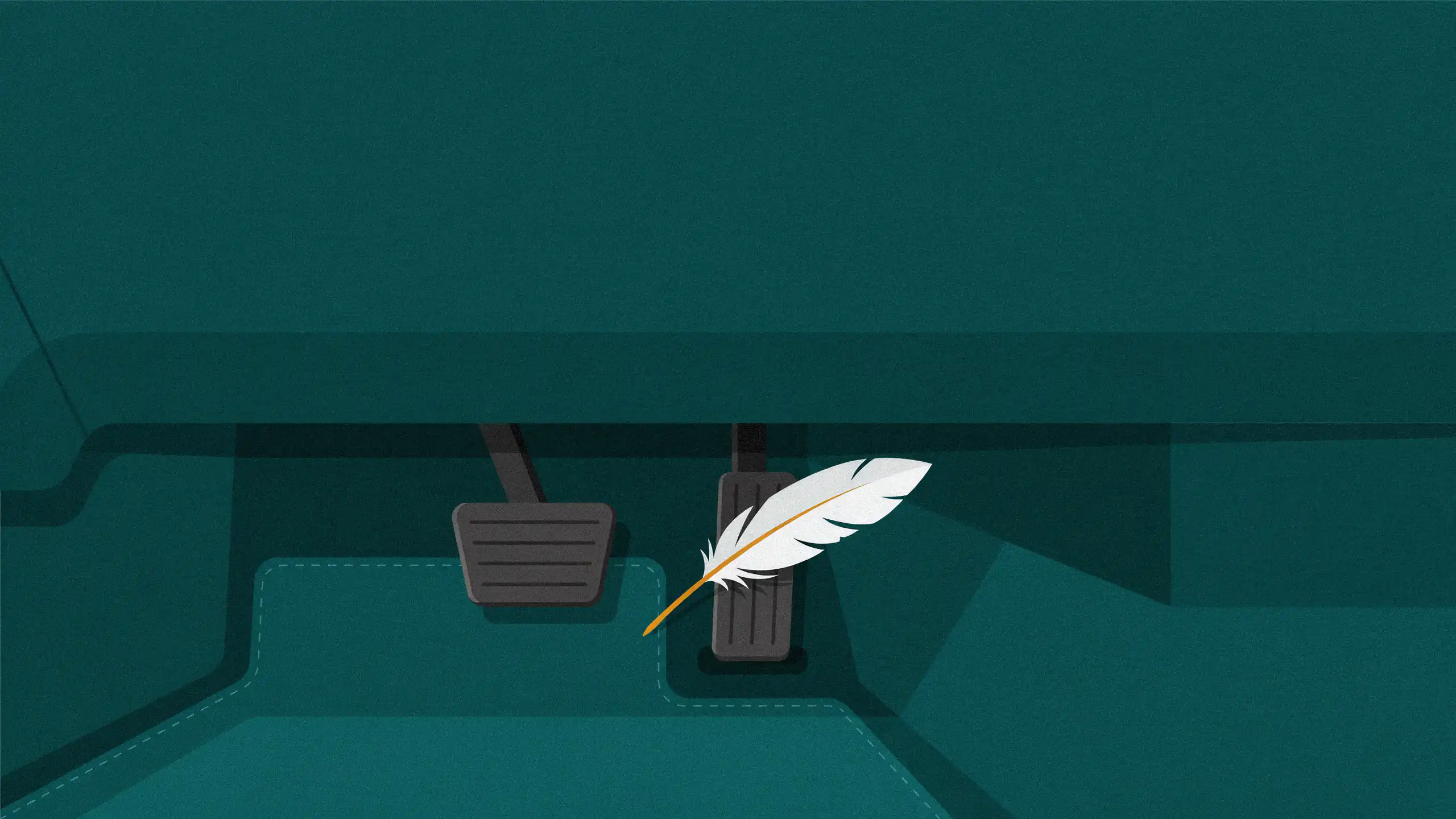

You can raise your gas mileage without buying anything or driving less. Accelerate gently, coast up to red lights, keep highway speeds near the limit, and take the cargo box off the roof between trips. Speeding, fast starts, and hard braking can cost several miles per gallon.
A commuter who drives 15,000 miles a year and climbs from 28 to 32 mpg by driving gently burns about 67 fewer gallons. That’s about $255 at $3.81 a gallon, the national average for regular in the Energy Information Administration’s November 16 survey.
Speeding, fast starts, and hard braking can cut highway mileage by roughly 15% to 30% and mileage in stop-and-go traffic by 10% to 40%, the Energy Department’s fueleconomy.gov estimates. Mileage usually drops quickly above 50 mph, and slowing down by 5 to 10 mph improves it by 7% to 14% on average.
A large roof cargo box can cut highway mileage by 6% to 17%, and each extra 100 pounds inside can cost about 1%, more in a small car, so unload what you don’t need between trips.
Start with these habits:
- Ease onto the gas from a stop, and look ahead so you can coast toward red lights instead of braking late.
- Set cruise control near the speed limit on open highways.
- Turn the engine off when parked, since idling can burn a quarter to a half gallon an hour.
- Combine errands into one trip, since a cold engine burns more gas than a warm one.
Use the motor oil grade in your owner’s manual, since the wrong one can lower mileage by 1% to 2%, according to the site’s maintenance tips. The same page notes that a new air filter can raise mileage only on old cars with carburetors. Check the tire pressure monthly, too.
Fuel additives and gas-saving gadgets don’t improve mileage in tests and may damage the engine, says the site’s list of myths. Today’s cars can be driven gently seconds after starting, and driving warms the engine faster than idling, so skip the long warm-up. And because open windows add drag at speed, the site’s hot-weather tips favor the AC on the highway and open windows in town.
Reset the trip meter at your next fill-up, drive that tank with gentle starts and stops, and compare its mpg with your last tank’s.

Subscribe and we'll send you 101 Essential Money Tips to get you started.
The 101 money moves that matter most, from the foundations to protecting what you’ve built.
Advertiser Disclosure: Many or all of the offers that appear on this site are from companies that compensate us, and some companies pay for sponsored content. That compensation may influence which products we cover and where and how they appear on a page, including the order in which they appear. We do not include every company or offer available in the marketplace.