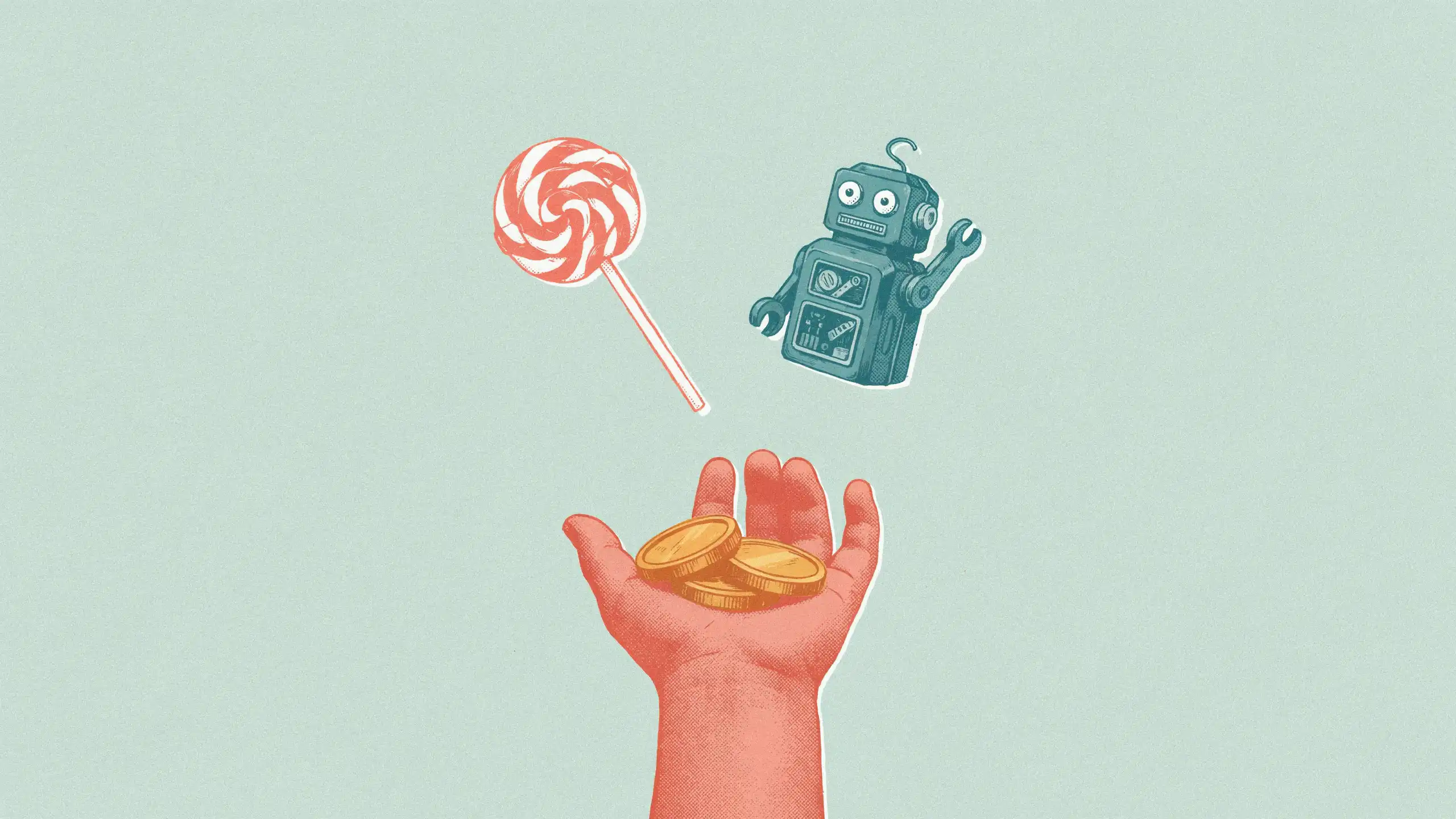

An allowance teaches your kids to manage money only if they make the spending decisions. Pay a set amount on a set day and have it cover a real slice of what you now buy them, such as snacks and toys. When it runs out early, don’t top it up.
Count on that happening at least once. Your 9-year-old spends the whole allowance on the first thing that catches their eye, and two days later the toy they wanted most turns up on the shelf. Your job is to sympathize and keep your wallet closed.
That disappointment is the lesson. Once the allowance pays for their snacks and toys, the question at the store stops being whether you’ll buy something and becomes whether they want to spend their own money on it. If you still buy whatever they ask for, the allowance is bonus cash, and none of their choices cost them anything.
Setting it up takes four decisions.
- Pick what the allowance covers from now on, such as snacks, toys, and outings with friends, and stop paying for those yourself.
- Set the amount by adding up what you already spend on those things. If that comes to about $10 a week, the allowance is $10, so it replaces money you were spending anyway instead of adding a new line to your budget.
- Pay it on the same day every week so your child can plan around it.
- Don’t top it up when it runs out. Coming up short on an allowance costs far less than coming up short on a paycheck later.
Then build in a regular check-in, which the Consumer Financial Protection Bureau’s Money as You Grow guidance recommends for parents who give an allowance. Talk often about how your child plans to use the money, where it actually went, and what they learned. The decisions stay theirs.
Whether you pay for chores is a separate choice, and either way works, because the budgeting is what teaches. A jar can hold the money, and so can a savings account or a kids’ debit card. To automate payday, Chase First Banking can send the allowance from your Chase checking account on a recurring schedule.
After that, when your child asks you to buy something the allowance covers, hand the decision back. It’s their money now.

Editorial & Advertiser Disclosure: The editorial content on this page is not provided, commissioned, reviewed, approved, or otherwise endorsed by any advertiser. Opinions expressed here are ours alone, not those of any advertiser. The offers that appear on this site are from companies that compensate us. That compensation may influence which products we cover and where and how they appear on a page – including the order in which they appear – but it does not influence our evaluations, ratings, or opinions. We do not include every company or offer available in the marketplace.
Related: