
If you carry a credit card balance, call your card issuer and ask it to cut your interest rate. Issuers grant most of these requests, and each percentage point off saves about $10 a year for every $1,000 you owe. Lead with your on-time payment record and a better offer from another card.
In LendingTree’s 2026 survey, only 23% of cardholders had asked for a lower APR, the yearly interest rate on a card balance, in the previous 12 months.
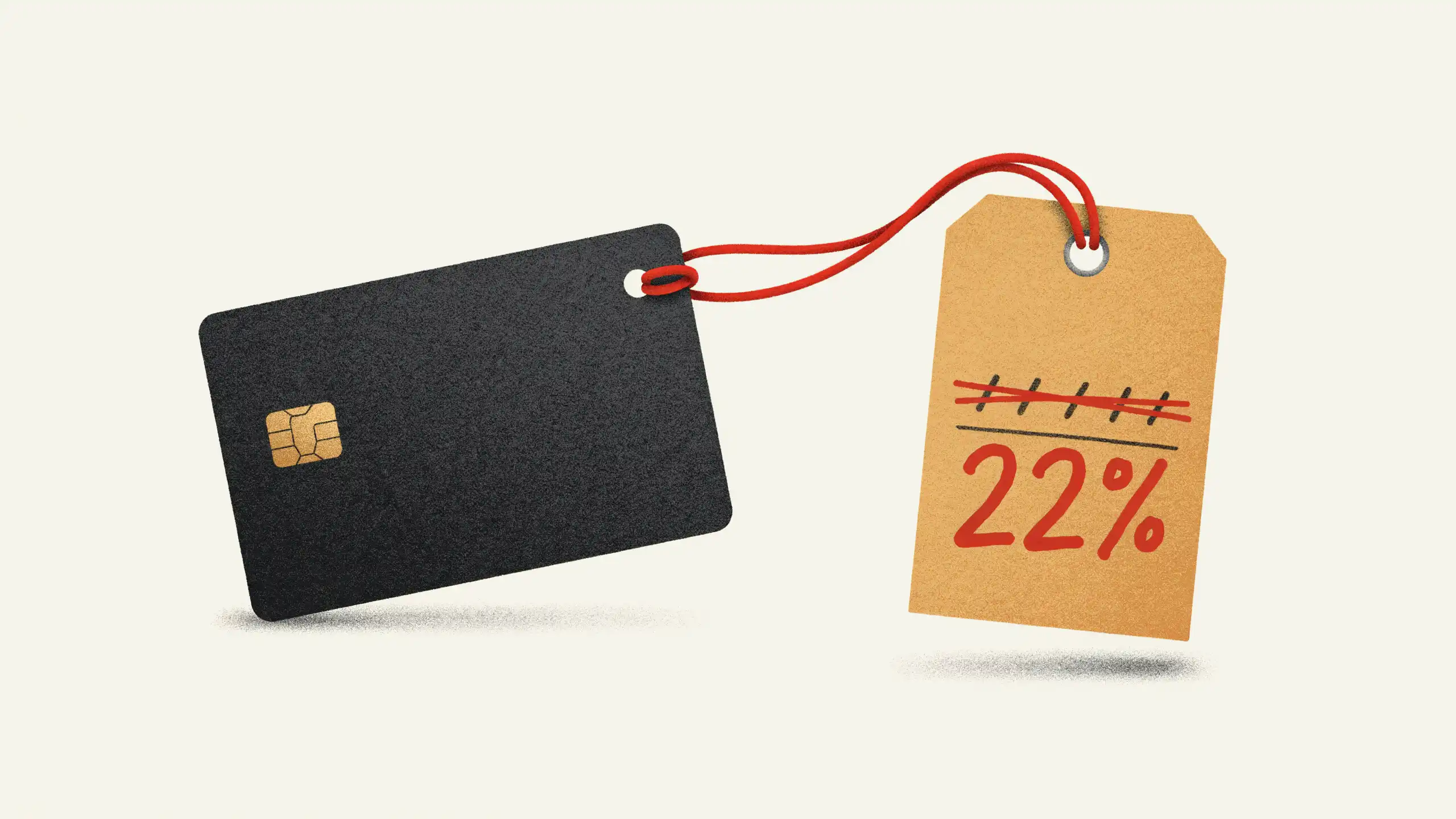
Of those who did, 84% got a lower rate, and the average cut was 6.3 percentage points. On a $6,000 balance, a six-point cut from 28% to 22% saves about $360 a year in interest for as long as you carry it.
Before you call, have four things in front of you.
- Your current APR, printed on your statement.
- How long you’ve had the card and paid it on time.
- Your current credit score, which helps your case if it has risen since you opened the account.
- A competing offer you’d qualify for, such as another card’s lower rate or a 0% balance transfer offer.
Call the customer service number on your card and keep the pitch short. “I’ve paid this card on time for six years, and my rate is 28%. I have an offer for a card at 20%, and I’d rather stay with you. Can you lower my rate?” Before the rep reviews your account, ask whether the review involves a hard credit check, which can happen when an issuer treats the request as an account change.
If the first rep can’t lower the rate, ask for a supervisor or the retention department, whose job is keeping customers. When the answer is yes, ask whether the new rate is permanent or promotional and, if it’s promotional, when it ends.
If it’s still no, try again in a few months or move the balance. A 0% balance transfer card stops interest on the moved balance for its promotional period. It usually takes good credit to get one, and the one-time fee is typically 3% to 5% of the amount moved. A debt consolidation loan can pay off the card instead. Compare its APR, which includes its fees, with your card’s. If you’re struggling to keep up, ask about the issuer’s hardship program, which can lower your rate temporarily. Then give your other monthly bills the same call.

Editorial & Advertiser Disclosure: The editorial content on this page is not provided, commissioned, reviewed, approved, or otherwise endorsed by any advertiser. Opinions expressed here are ours alone, not those of any advertiser. The offers that appear on this site are from companies that compensate us. That compensation may influence which products we cover and where and how they appear on a page – including the order in which they appear – but it does not influence our evaluations, ratings, or opinions. We do not include every company or offer available in the marketplace.
Related: