
If card rates above 20% keep your balances from shrinking, ask a nonprofit credit counseling agency about a debt management plan. The agency asks your card issuers to lower those rates, often to single digits, and you pay off the cards with one monthly payment instead of a new loan.
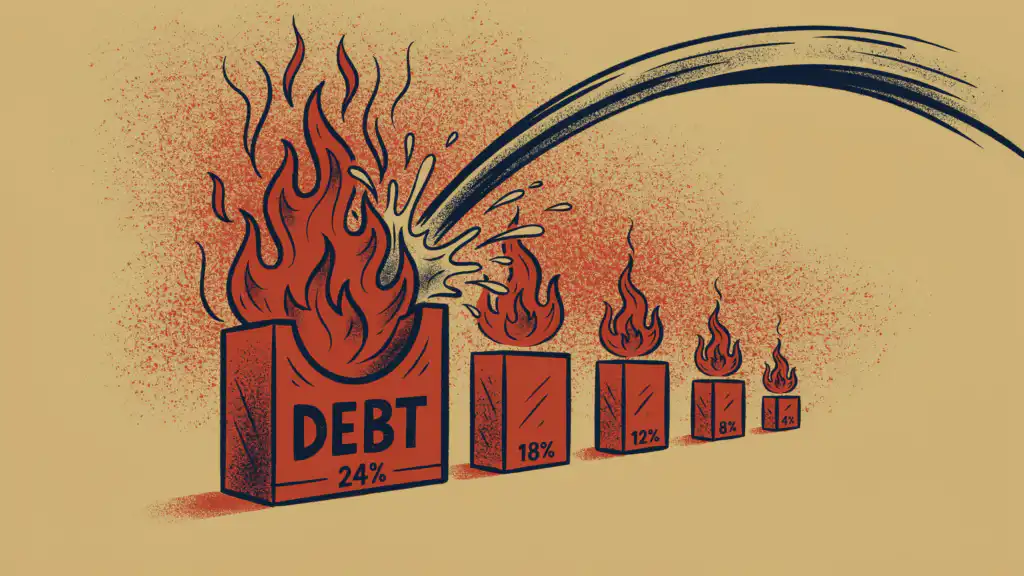
At 24%, $20,000 of card debt costs $400 in interest the first month, so two-thirds of a $600 payment never touches the debt. Get the rate down and most of that payment goes to the balance instead.
The process starts with a counseling session, usually free, where a counselor goes through your budget. If a plan fits, the agency asks your card issuers to cut their rates and waive late and over-limit fees. You then send the agency one payment a month, and it pays each card until the balances are gone, typically in three to five years.
By our math, $600 a month against that $20,000 takes 56 months to clear at 24%. At 8%, the same payment clears it in 38 months, and the interest falls from about $13,300 to about $2,700, roughly $10,600 saved. The agency charges setup and monthly fees, which some states cap by law. Even if they came to $50 a month, they’d total about $1,900 over the 38 months, so you’d still save about $8,700.
Look for a nonprofit agency that belongs to the National Foundation for Credit Counseling or the Financial Counseling Association of America. Both require member agencies to be accredited and their counselors certified. Get every fee in writing, and walk away from any agency that wants a big payment up front or pushes a plan before it has seen your budget.
Expect your issuers to close the cards on the plan. That can dip your score for a while as your available credit shrinks, though less than settlement or bankruptcy would, and on-time payments rebuild it. The deal also holds only while you pay. Miss a payment and you can lose the plan and its lower rates, so call the agency the moment a payment looks shaky.
Before you call, list each card’s balance, rate, and minimum payment. The counselor needs those numbers, and they let you work out what a single-digit rate saves on your own debt.

Editorial & Advertiser Disclosure: The editorial content on this page is not provided, commissioned, reviewed, approved, or otherwise endorsed by any advertiser. Opinions expressed here are ours alone, not those of any advertiser. The offers that appear on this site are from companies that compensate us. That compensation may influence which products we cover and where and how they appear on a page – including the order in which they appear – but it does not influence our evaluations, ratings, or opinions. We do not include every company or offer available in the marketplace.
Related: