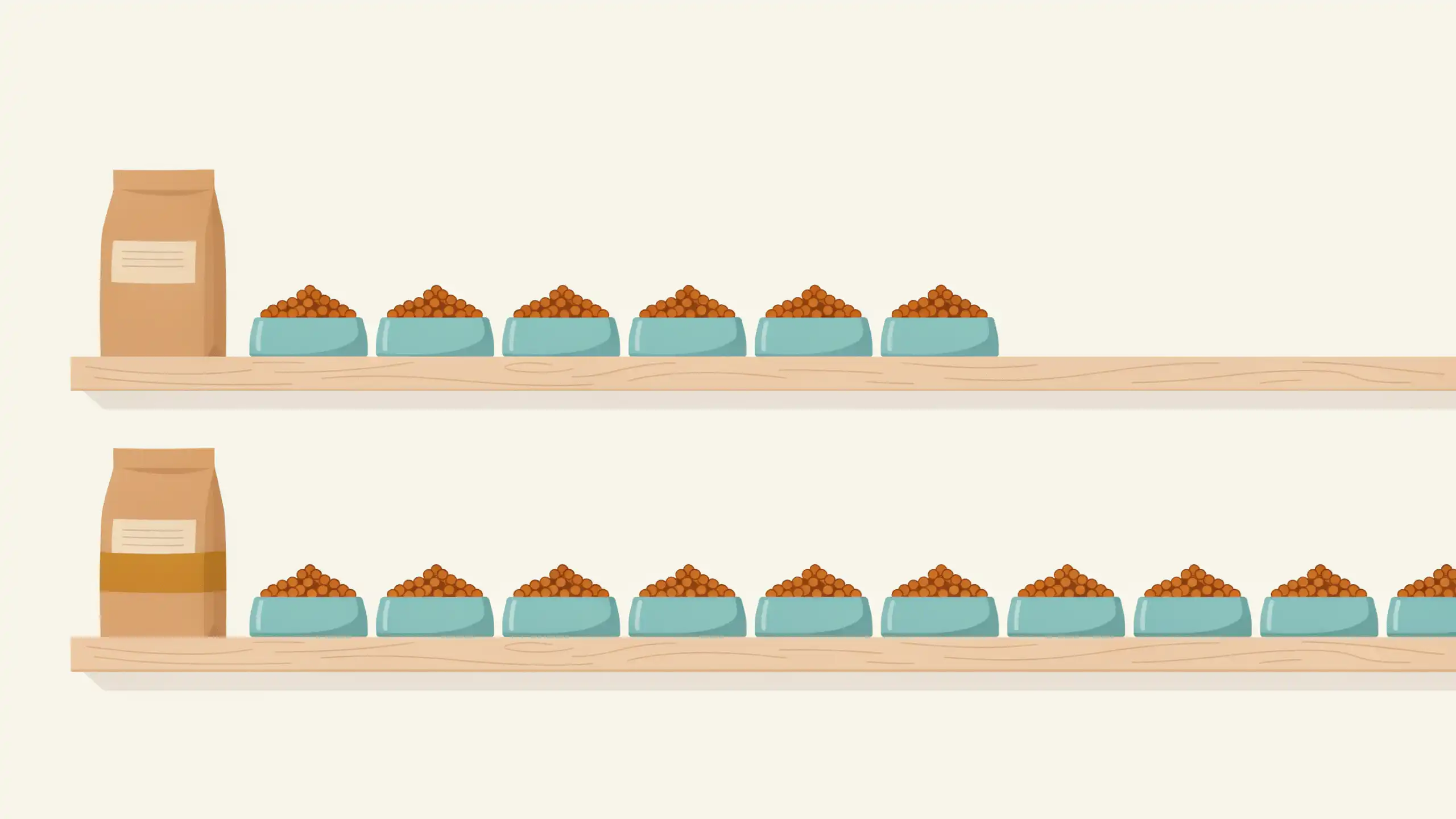

The cheaper bag of pet food isn’t always the cheaper one to feed. A denser food holds more calories in each cup, so your pet eats less of it and the bag lasts longer. Before you buy or switch, divide each bag’s price by the days it lasts at your pet’s feeding amount.
The price per pound on a shelf tag misses how long each pound lasts. A pound of a calorie-dense food feeds your pet for more days than a pound of a less dense one.
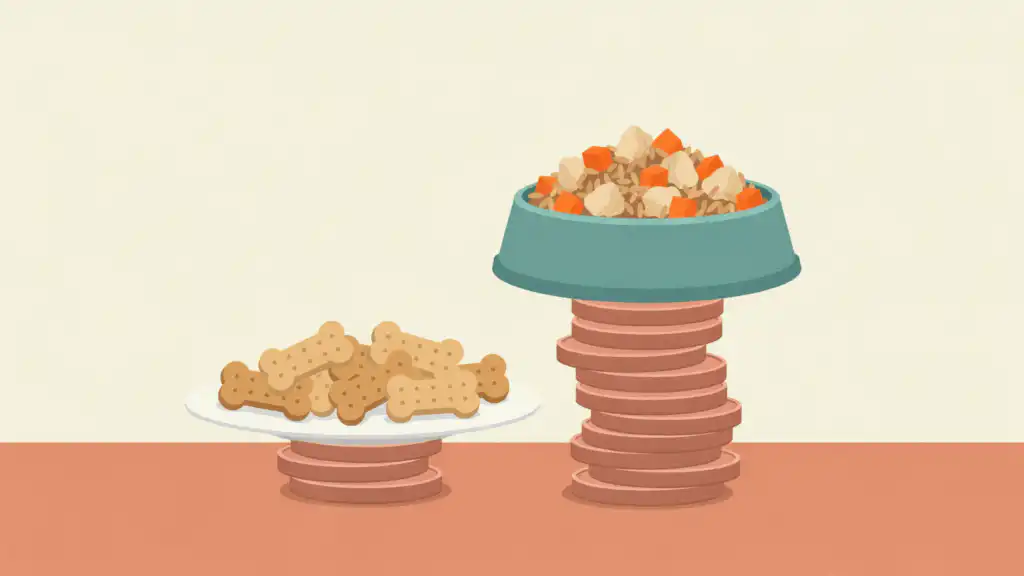
Take two 30-pound bags for a 50-pound dog, at illustrative prices. One costs $45 and lasts the dog 40 days. The other, a denser food, costs $52 and lasts 47 days. Per pound, the denser food costs $1.73 and the other $1.50. Per day, the denser food costs about $1.11 and the other about $1.13, so the $52 bag costs less to feed than the $45 bag.
Gaps like that grow with how much your pet eats, so they matter most for big dogs. A gap of 10 cents a day comes to $36.50 a year.
To compare two dry foods this way:
- Multiply the cups a day your current food’s feeding chart gives for your pet’s ideal weight by that food’s calories per cup (kcal/cup) for your pet’s daily calories.
- Multiply each bag’s weight in kilograms (pounds divided by 2.2) by its calories per kilogram (kcal/kg) for the calories in the bag.
- Divide the bag’s calories by your pet’s daily calories for the days it lasts, then divide its price by those days for its cost per day.
Newer labels list a cup’s weight in grams instead of kcal/kg. To get kcal/kg from those, multiply the calories per cup by 1,000 and divide by that weight. For canned food, divide your pet’s daily calories by the calories per can, then multiply by the price per can.
Between two sizes of the same food, every pound holds the same calories, so the lower price per pound settles it. The bigger bag’s saving depends on the food staying fresh. A veterinary nutritionist at Tufts University recommends finishing an opened bag within two to three months, so buy the size your pet empties in that time.
Switch to a new food slowly. Mix a little more of it into the old food each day for at least a week.


Subscribe and we'll send you 101 Essential Money Tips to get you started.
The 101 money moves that matter most, from the foundations to protecting what you’ve built.
Advertiser Disclosure: Many or all of the offers that appear on this site are from companies that compensate us, and some companies pay for sponsored content. That compensation may influence which products we cover and where and how they appear on a page, including the order in which they appear. We do not include every company or offer available in the marketplace.