


If you can’t cover your bills and debt payments without borrowing more, whether that’s a card for groceries or one card used to pay another, you have too much debt. Stop adding to it, list every balance with its rate and minimum payment, and call your lenders before you miss a payment.
Say you put last month’s electric bill on a credit card you can’t pay off in full, and this month you plan to cover that card’s minimum with a cash advance from another card. It can feel like keeping up, since every bill still gets paid on time.
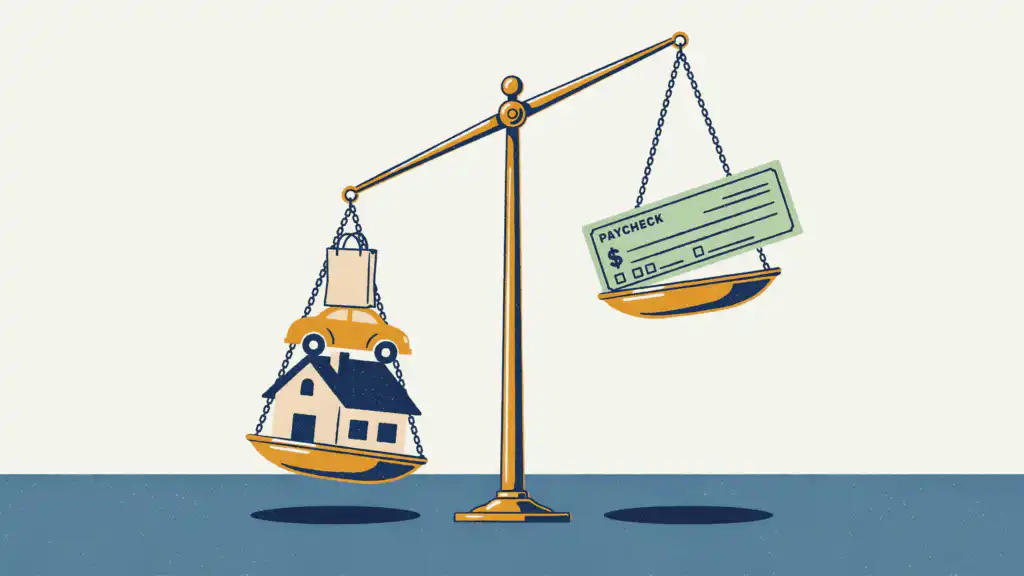
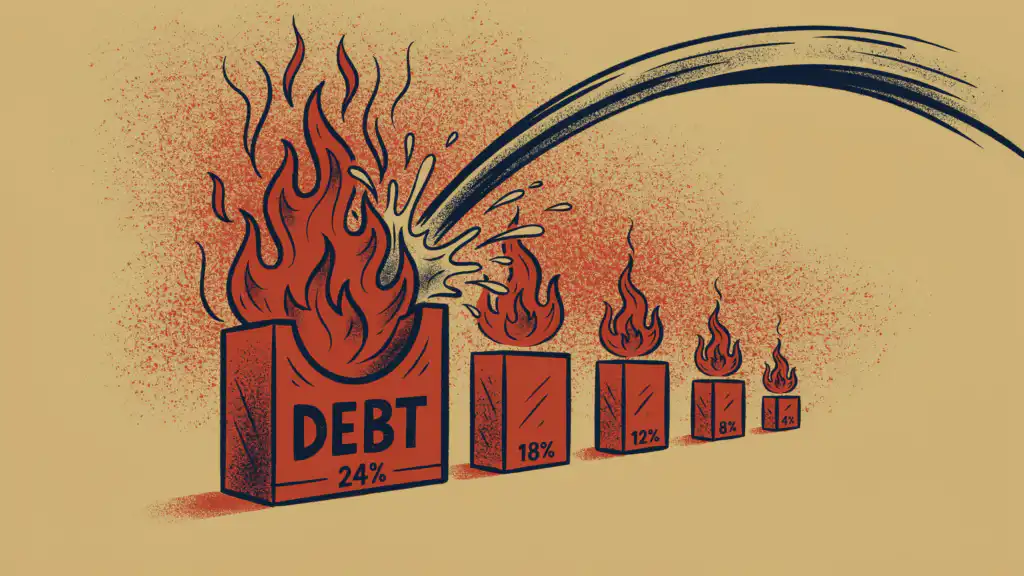
Neither move shrinks what you owe. Each adds a balance that charges interest, so the total grows every month even when you buy nothing extra. That’s why the way you pay a debt matters more than its size. A large mortgage you pay from your income can be manageable. A small card balance you pay with more borrowing is not.
Other warning signs tend to come with that borrowing: making only minimum payments, spending more than about 36% of your gross income on debt payments, having no savings for a surprise bill, and getting turned down for new credit.
Once you spot the borrowing or any of these signs, stop adding debt. That means no new cards, no cash advances, and no buy now, pay later plans for bills.
Next, write down each debt’s balance, interest rate, and minimum payment. Add up the minimums to see what your debts take from each month’s income. For any payment you can’t make without borrowing, call the lender before it’s due and ask what hardship options it offers, such as a lower rate or smaller payments for a short time.
If the minimums don’t fit in your income after essentials, or the calls don’t produce a plan you can keep, bring in a nonprofit credit counselor. A counselor can go over your budget and debts with you, often free or at low cost.
Your target is the first month in which every bill and payment comes out of your income with nothing borrowed. That’s the month your total starts to fall.

Editorial & Advertiser Disclosure: The editorial content on this page is not provided, commissioned, reviewed, approved, or otherwise endorsed by any advertiser. Opinions expressed here are ours alone, not those of any advertiser. The offers that appear on this site are from companies that compensate us. That compensation may influence which products we cover and where and how they appear on a page – including the order in which they appear – but it does not influence our evaluations, ratings, or opinions. We do not include every company or offer available in the marketplace.
Related: