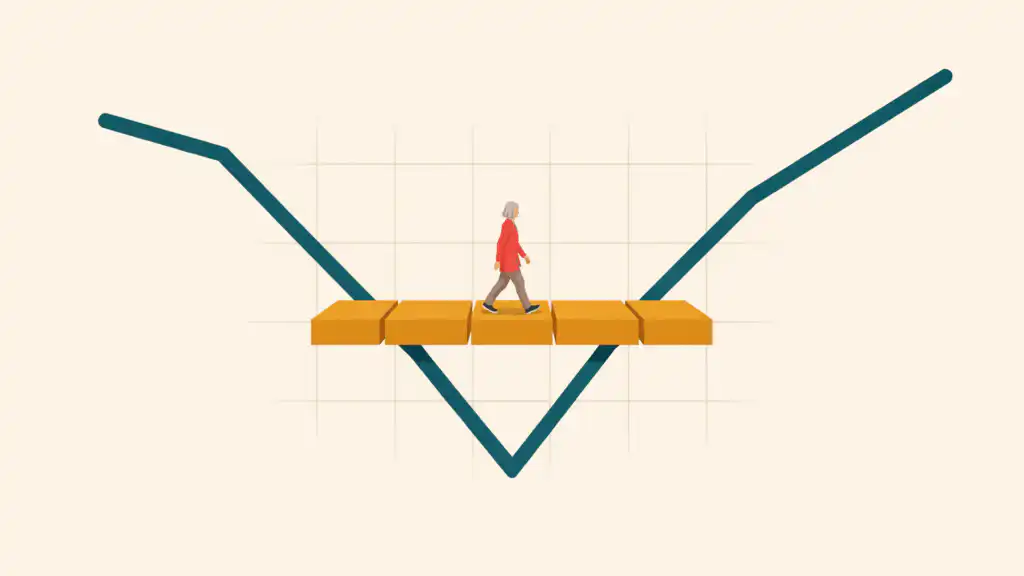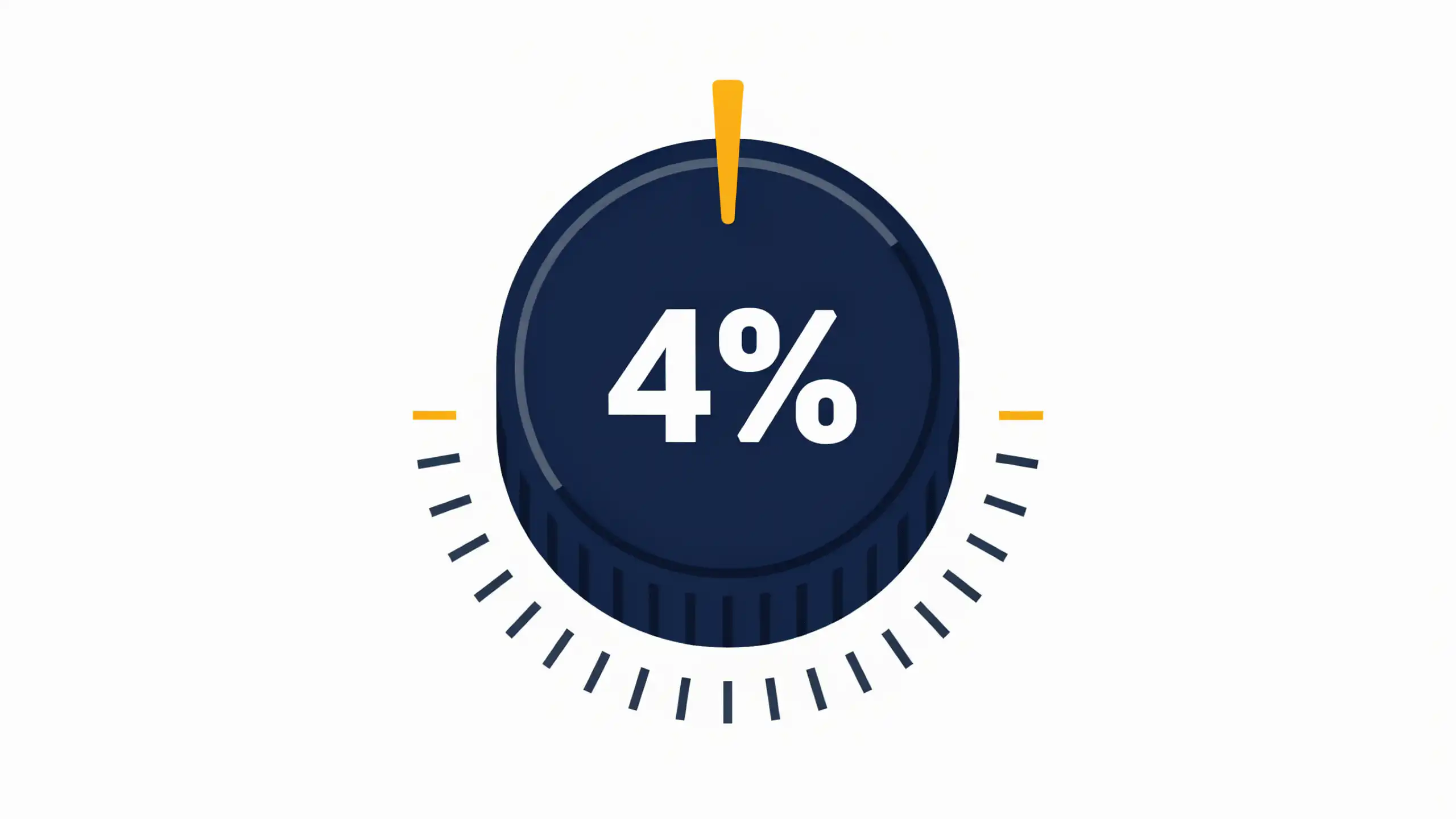

Use the 4% rule to set your first year’s withdrawal for a 30-year retirement, then adjust it as markets move. Skip the inflation raise after a year your portfolio loses money. With a 4% start, cut spending 10% when your withdrawal tops 4.8% of your balance, and add 10% when it falls under 3.2%.
The 4% rule says to withdraw 4% of your savings in your first year of retirement and raise that dollar amount with inflation every year after. In a 1994 study, financial planner William Bengen found that withdrawals made that way never emptied a half-stock, half-bond portfolio in less than 33 years in any period he tested, back to 1926.
The rule assumes a 30-year retirement, about half your money in stocks, and markets no worse than the worst on record. Morningstar’s latest research puts the highest safe starting rate for that plan at 3.9%, for new retirees with 30 years ahead and 30% to 50% in stocks. Safe there means a 90% chance of money left at the end. Plan for 35 years, from age 55 to 90, and the rate falls from 3.9% to 3.5%.
Your first few years matter most, because losses early in retirement do the most lasting harm.
In Morningstar’s tests of a 30-year plan with 40% in stocks, skipping the inflation increase the year after the portfolio lost value raised the safe starting rate from 3.9% to 4.3%, above the rule’s 4%. Say you retire with $1 million and prices rise 3% a year (figures illustrative). You’d take $40,000 in year one and $41,200 in year two, or $40,000 again if the portfolio fell 20% in year one.
In the same tests, guardrails, limits on either side of your starting rate, raised the safe starting rate from 3.9% to 5.2%. Start at 4%, and you’d cut spending 10% in any year the planned withdrawal comes to more than 4.8% of the balance. In a year it comes to less than 3.2%, you’d add 10% on top of inflation.
Guardrails work better on top of a large, steady income, Morningstar found. Cover essentials such as housing, food, and insurance with Social Security, a pension, or an annuity. Withdrawals then pay only for spending you can trim in a bad year.
Write down your starting rate and both guardrail limits before your first withdrawal, so a bad year’s cut is already decided.


Subscribe and we'll send you 101 Essential Money Tips to get you started.
The 101 money moves that matter most, from the foundations to protecting what you’ve built.
Advertiser Disclosure: Many or all of the offers that appear on this site are from companies that compensate us, and some companies pay for sponsored content. That compensation may influence which products we cover and where and how they appear on a page, including the order in which they appear. We do not include every company or offer available in the marketplace.