
In the last few years before you retire, move the money you’ll spend in your first five to 10 years of retirement into low-risk holdings, such as Treasuries, certificates of deposit (CDs), and high-quality bond funds. Size the amount by years of planned withdrawals, not by your age, and leave the rest invested.
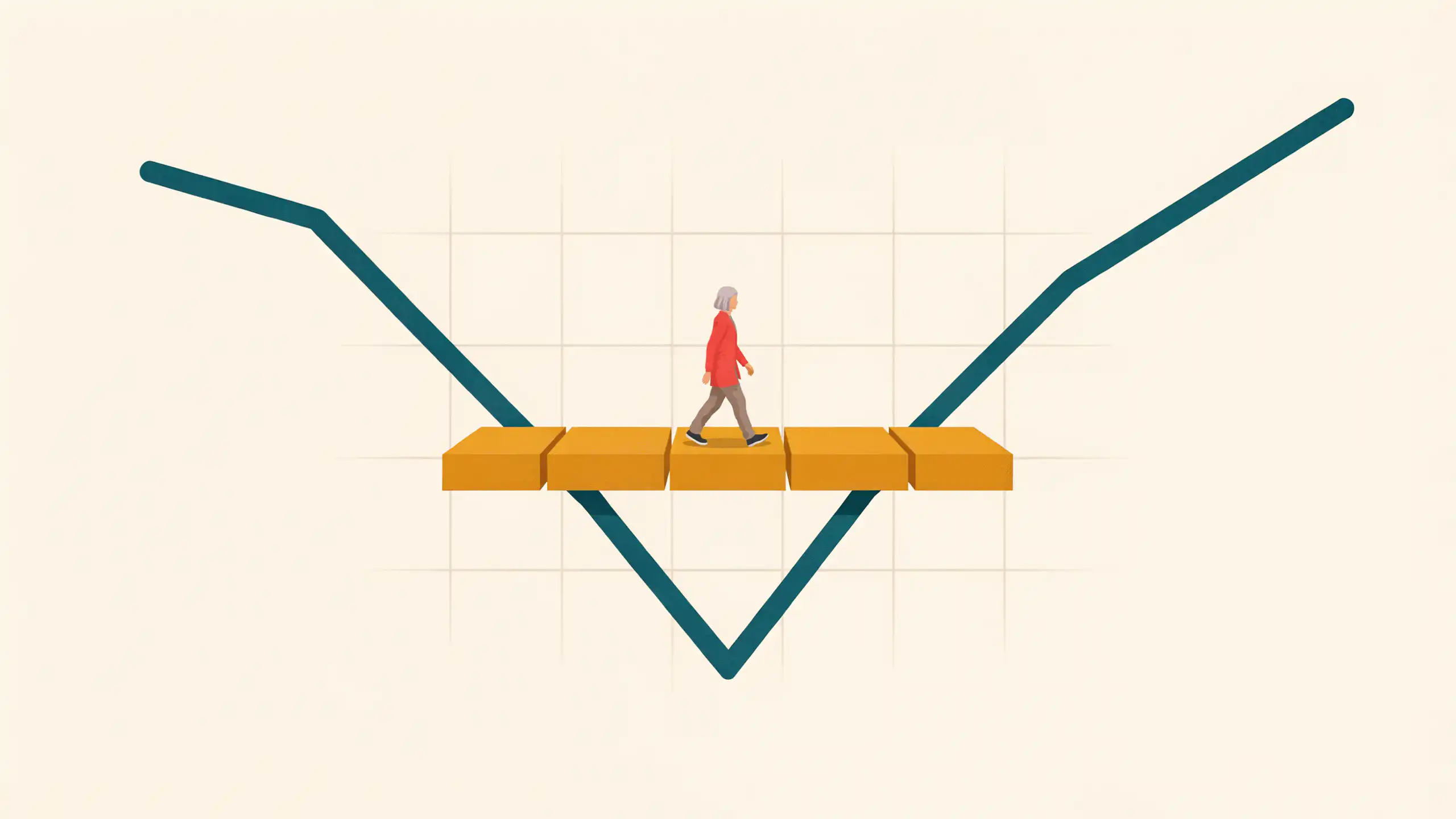
A stock market drop does the most damage in the first years after you retire, when you’d have to sell shares at low prices to pay the bills. That danger, called sequence of returns risk, is why the money you’ll spend first shouldn’t stay in stocks.
Whether a dollar needs protecting depends on when you’ll spend it, not on how old you are. Money in stocks that you’ll need within 10 years may not have time to recover from a crash, while money you won’t touch for a decade or more can stay there and ride out a slump.
Eight low-risk places for that money
Each of these holds up far better than stocks in a crash, and each comes with a catch.
- Treasury bills and notes are backed by the U.S. government, and their interest skips state and local income tax. Bills mature in four to 52 weeks, with a three-month bill yielding 4.34%, and notes run two to 10 years, with a five-year note at 4.86%. Buy each to mature in the year you’ll spend it, since selling early after rates rise can mean a loss.
- TIPS, or Treasury Inflation-Protected Securities, raise their principal with inflation and repay the adjusted amount or your original one, whichever is greater. A five-year TIPS yields 2.64% plus inflation. Each year’s principal increase can add to your federal tax bill before you collect it. TIPS fit the later years of your plan, when rising prices have had longer to add up.
- I bonds are Treasury savings bonds whose rate resets every six months with inflation, and new ones earn 5.51% for their first six months. You can buy up to $10,000 a calendar year per person through TreasuryDirect, can’t cash them in for 12 months, and lose the last three months of interest if you cash out before five years. That limit keeps them a small part of the plan.
- Certificates of deposit (CDs) hold your money for a set term in exchange for interest, and FDIC insurance covers at least $250,000 at each insured bank. The average five-year CD pays just 1.44%, according to the FDIC, well under a five-year Treasury note’s 4.86%, so compare a CD’s rate with a Treasury of the same term before you buy. Cashing one in early can cost a penalty, so a ladder, with one CD coming due each year, fits this money.
- Short- and intermediate-term bond funds that hold Treasuries or other high-quality bonds earn the interest those bonds pay, with no ladder to manage. A fund’s price falls when rates rise, and its duration, a figure stated in years, tells you roughly how far. The Investment Company Institute explains that a fund with a four-year duration would lose about 4% if rates rose one percentage point. Short-term funds fit the next few years, and intermediate funds the later ones.
- Money market funds hold short-term debt, and their dividends generally follow short-term interest rates. They aren’t FDIC-insured, and the SEC says one can drop below $1 a share, though that’s rare. Keep the next 12 months of withdrawals in one.
- Fixed annuities are insurance contracts that pay a rate the insurer sets, with a guaranteed minimum, and a multi-year guaranteed annuity (MYGA) locks one rate for its whole term. Withdrawals in the first several years can cost a surrender charge. If the insurer fails, your state’s guaranty association covers up to $250,000 in benefits in most states, according to NOLHGA, the guaranty associations’ national group. Use one only for money you won’t need before the term ends.
- Paying down your mortgage saves interest at the loan’s rate on every extra dollar of principal, a guaranteed return. Money in the house is hard to get back out, so prepay only with savings beyond the withdrawals you’ve set aside.
Five holdings that aren’t safe money
Holdings bought for their income can still fall in the same crash that hits your stocks. In 2008, when the S&P 500 lost 36.55% with dividends counted, 10-year Treasuries gained 20.10%, according to NYU professor Aswath Damodaran’s historical returns data.
- Dividend stocks are still stocks, and that 36.55% loss already counts the dividends.
- Corporate and high-yield bonds depend on a company repaying them, and high-yield ones come from companies more likely to default. When the economy falters, the SEC notes, investors may sell high-yield bonds to buy Treasuries, and high-yield prices can fall.
- Real estate investment trusts (REITs) that trade publicly fell with stocks in 2008, when Nareit’s index of equity REITs lost 37.73%.
- Master limited partnerships (MLPs) mostly own energy assets like pipelines, so their prices can swing with oil and gas prices, as the SEC notes they did in the 2015-16 oil slump.
- Crowdfunded real estate sold under the SEC’s crowdfunding rules can’t be freely resold for a year and may have to be held indefinitely, and the platform must have you affirm that you can lose all of it.
How much to move
Size the safe money by your withdrawals. Add up what you’ll take from savings each year beyond Social Security and any pension, then multiply by the five to 10 years you want covered. A rule based on age alone, like holding a bond percentage equal to your age, ignores what you’ll actually spend.
An emergency fund and cash for other goals don’t count toward it. Those belong in safe places to earn interest, matched to when you’ll need them.
Say you’re 60, plan to retire at 63, and will need $40,000 a year from savings. Over the next three years, you’d build a five-year ladder of Treasuries and CDs worth $200,000, with $40,000 coming due each year from 63 through 67, and leave the rest invested. These figures are only an illustration, so run the math with your own.
About three years before your retirement date, start moving the money for those years of withdrawals into these holdings, the first year’s money first, and finish before your last paycheck.


Subscribe and we'll send you 101 Essential Money Tips to get you started.
The 101 money moves that matter most, from the foundations to protecting what you’ve built.
Advertiser Disclosure: Many or all of the offers that appear on this site are from companies that compensate us, and some companies pay for sponsored content. That compensation may influence which products we cover and where and how they appear on a page, including the order in which they appear. We do not include every company or offer available in the marketplace.