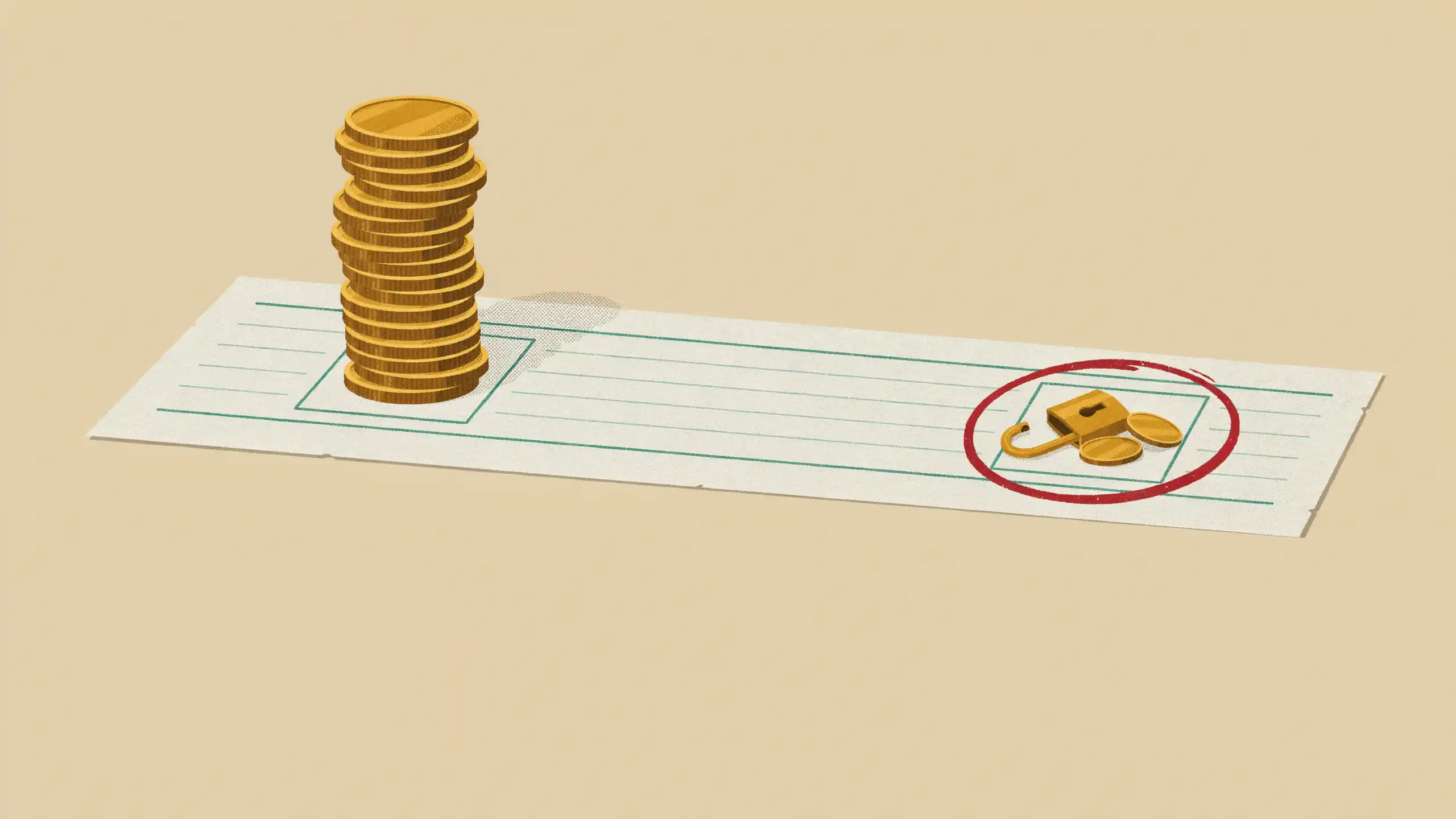

The penalty for cashing in a CD early is deductible whether or not you itemize, unless the CD was in an IRA. Find it in Box 2 of your Form 1099-INT, apart from the interest in Box 1, and claim all of it on Schedule 1, even if it’s more than the interest.
The bank reports your interest in Box 1 without taking out the penalty, so leaving Box 2 off your return means paying tax on interest the bank took back.
The IRS has you deduct the penalty on Schedule 1 as an adjustment to income, a deduction taken before you choose between the standard deduction and itemizing. If the penalty was more than the interest earned, the part the bank took from your principal is deductible too. The IRS’s instructions for Form 1099-INT have banks include it in Box 2. A CD held in an IRA doesn’t qualify, because IRA interest isn’t taxed as it’s earned and no 1099-INT comes for it.
When you enter the 1099-INT in tax software, fill in Box 2 as well as Box 1, and the software moves the penalty to Schedule 1. On a paper return, it goes on Schedule 1’s line for the penalty on early withdrawal of savings. For some CDs longer than a year, the bank sends Form 1099-OID instead, with the penalty in Box 3.
Deducting the penalty also simplifies the math on breaking a CD for a better rate. It cuts the penalty’s cost by your tax rate, the same rate the extra interest is taxed at, so you can compare the two before tax. Divide the penalty by the extra interest a new CD would pay in a year to see how many years the switch takes to pay off. Say you’d pay a $300 penalty to move $20,000 from a CD with two years left into one paying a full percentage point more for those two years. The extra $200 a year earns back the $300 penalty in 18 months. By the old CD’s maturity date, it has added $400, $100 more than the $300 penalty.
Break a CD only when more time is left on it than the switch takes to pay off, and lock the new rate in until the old CD would have matured.


Subscribe and we'll send you 101 Essential Money Tips to get you started.
The 101 money moves that matter most, from the foundations to protecting what you’ve built.
Advertiser Disclosure: Many or all of the offers that appear on this site are from companies that compensate us, and some companies pay for sponsored content. That compensation may influence which products we cover and where and how they appear on a page, including the order in which they appear. We do not include every company or offer available in the marketplace.