
Don’t pay your kids for everyday chores like making their beds, since helping is part of living in a family. Give them a set weekly allowance anyway, so they practice managing money. Then pay extra only for bigger jobs beyond the basics, which teaches them that money is earned.
Paying kids for every chore teaches that money is earned, but it makes helping at home optional, so the week your child doesn’t need money, the dishes sit in the sink. A no-strings allowance lets kids practice managing money, but it teaches nothing about earning.
A mix of the two works better than either alone. Everyday chores, like dishes and laundry, stay unpaid, because everyone who lives in the house helps run it. A set weekly allowance comes regardless of chores, and it teaches the most when you let them run short before payday. Only extra jobs beyond the basics earn pay, so your child learns that money comes from work.
The mix breaks down if you dock the allowance for a skipped everyday chore, since that turns it back into pay for chores. Treat a skipped chore like any other broken house rule instead.
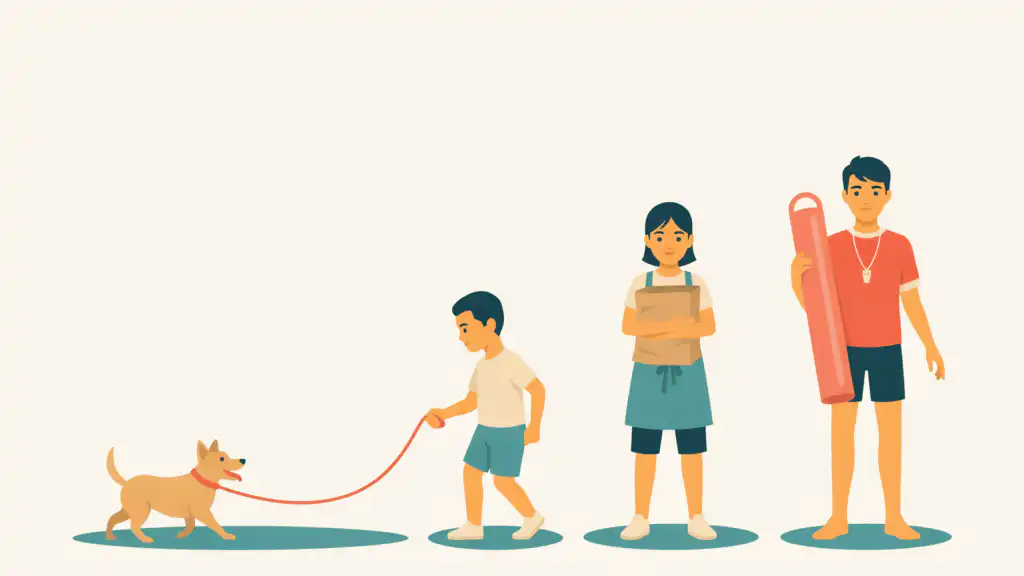
Match the work to age. A 4-year-old can put toys away, an 8-year-old can fold laundry, and kids 13 and up can take on extra jobs like mowing or watching a younger sibling. The American Academy of Pediatrics says to wait until 16 for a riding mower. Set each extra job’s price before it starts, and pay more for a long or skilled job than a quick one.
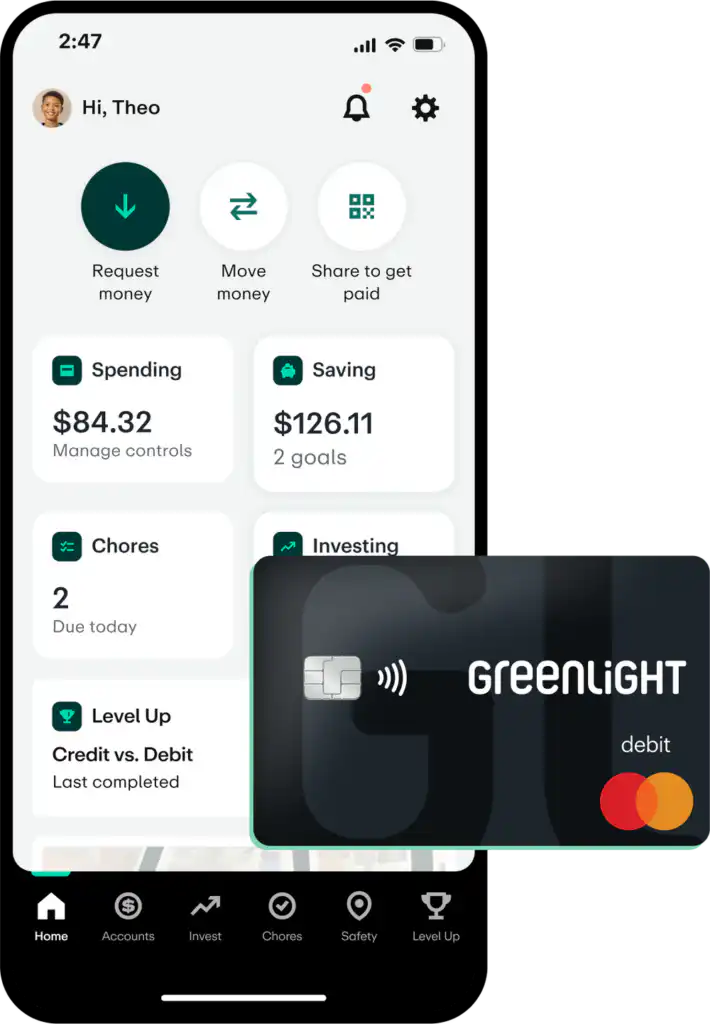
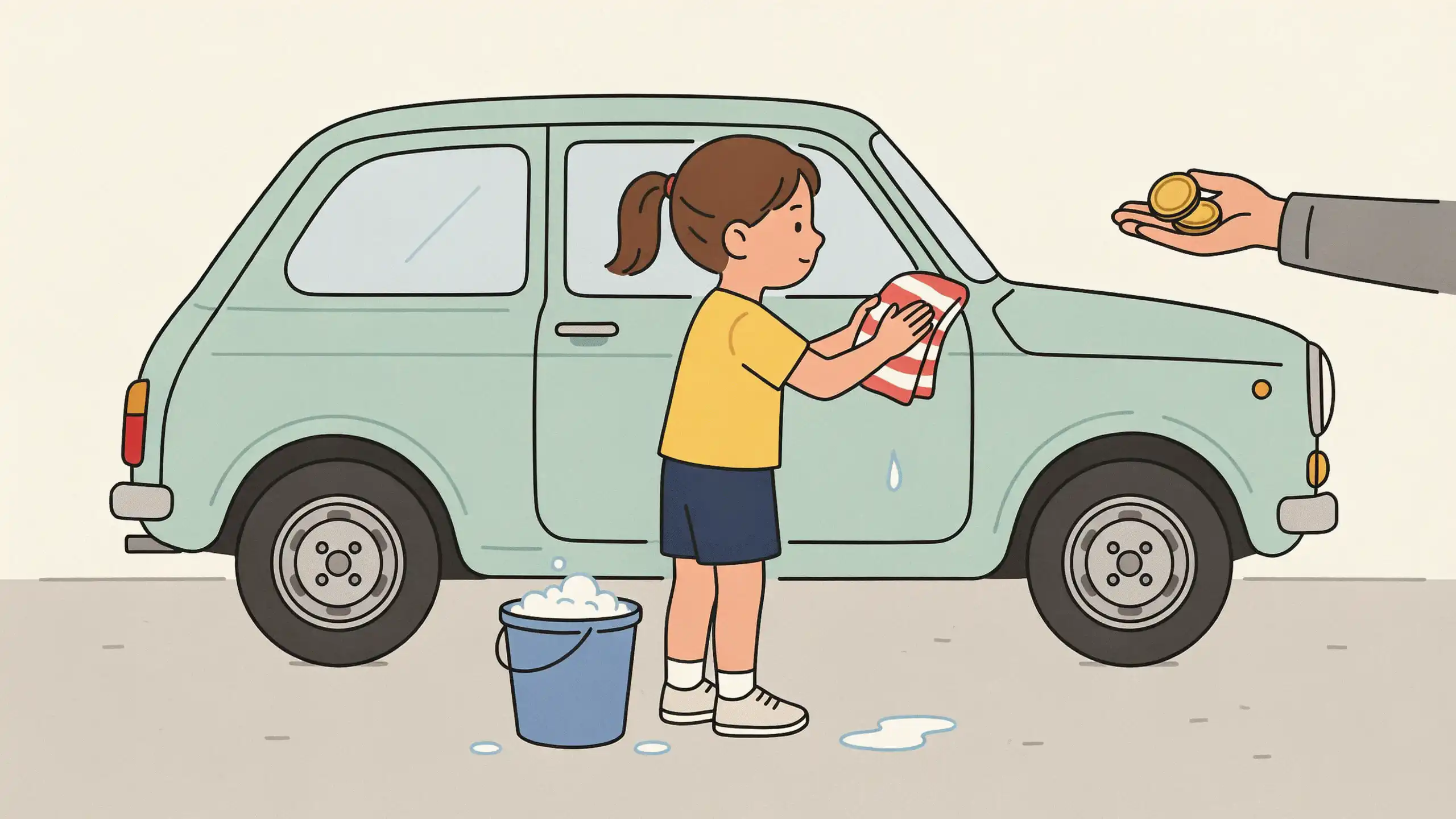
Write both lists on a chart, with each extra job’s price beside it. Pay only for work done to the standard you agreed on, such as a car washed and dried, not just rinsed. Apps such as Greenlight and BusyKid can keep the chore list, pay the allowance automatically on a schedule, and add pay for each extra job.
Say your 9-year-old makes her bed and clears the table as part of the family. She gets $9 a week no matter what, and washing the car earns her $5 more. The $9 is only an example, since how much allowance to give depends on age and what the money covers.
Keep the unpaid list to daily upkeep, like making beds, doing dishes, and feeding pets, and put bigger, occasional jobs on the paid one.
Compare the best debit and prepaid cards for kids to pay the allowance and the extra jobs from one app.


Subscribe and we'll send you 101 Essential Money Tips to get you started.
The 101 money moves that matter most, from the foundations to protecting what you’ve built.
Advertiser Disclosure: Many or all of the offers that appear on this site are from companies that compensate us, and some companies pay for sponsored content. That compensation may influence which products we cover and where and how they appear on a page, including the order in which they appear. We do not include every company or offer available in the marketplace.