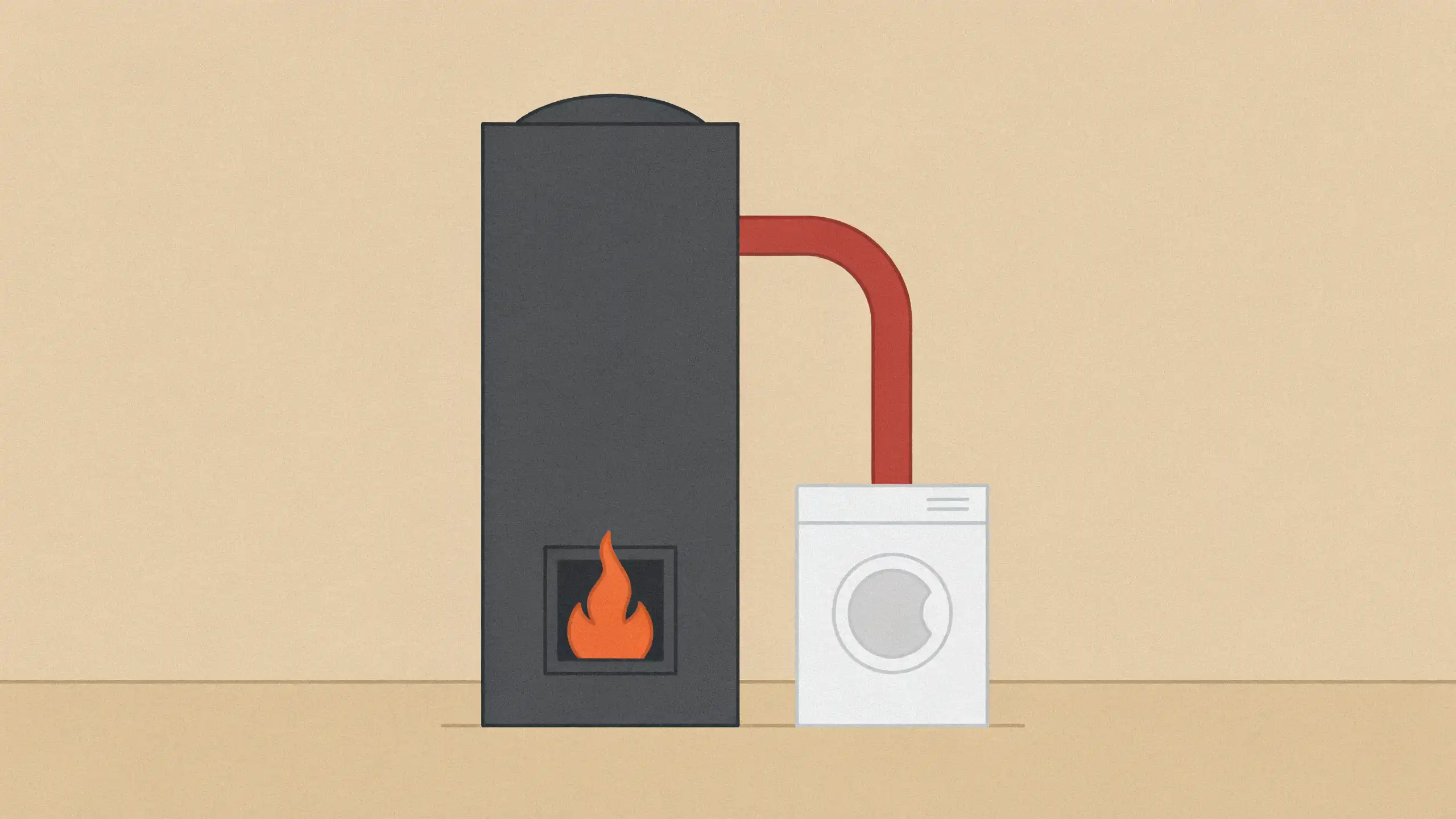

Heating the water takes most of the energy your washing machine uses, so set everyday loads to cold and run the washer only when it’s full. Save hot water for the few loads that need it to kill germs or cut grease.
The washer’s motor is the cheap part of a load. Energy Star puts water heating at about 90% of a clothes washer’s energy use.
Take a standard washer, which uses about 20 gallons a load by Energy Star’s count, and assume a hot wash heats half of that, 10 gallons, from 50 to 120 degrees. With an electric water heater, that takes about 1.7 kilowatt-hours, roughly 30 cents at 17.23 cents per kilowatt-hour, the 2025 average residential price from the Energy Information Administration.
A gas water heater that gets about 80% of its fuel’s heat into the water does the same job for about 11 cents, at the agency’s 2025 residential average of $15.34 per thousand cubic feet. Switching from hot to warm can cut either cost in half, Energy Star says, and the cold cycle cuts the cost further. An Energy Star front-loader uses about half the water of a top-loader with an agitator, so switching it to cold saves less.
Hot water is still worth paying for on a few loads. During a stomach bug, the CDC says to wash clothes, towels, or bedding with vomit or stool on them in hot water on the longest cycle, then machine dry them on the highest heat. Greasy work clothes are the other case, since Energy Star’s advice to wash cold makes an exception for oily stains. Wash everything else on cold, with a detergent made for cold water, as the South Carolina Energy Office advises.
Run fewer, fuller loads, too, and start them at night or on weekends if your utility charges less at those times. A washer uses about the same energy whatever the size of the load, Energy Star says, so two half loads cost about twice what one full load does. If a small load can’t wait, set the water level to match it. For the rest of the electric bill, start with heating, cooling, and hot water.
A family that switches eight warm loads a week to cold saves up to $61 a year with an electric water heater, or $22 with gas.


Subscribe and we'll send you 101 Essential Money Tips to get you started.
The 101 money moves that matter most, from the foundations to protecting what you’ve built.
Advertiser Disclosure: Many or all of the offers that appear on this site are from companies that compensate us, and some companies pay for sponsored content. That compensation may influence which products we cover and where and how they appear on a page, including the order in which they appear. We do not include every company or offer available in the marketplace.