


If you carry a balance, keep it on the card that will charge you least, judged by the rate you’d likely get rather than the low end of its range. For most readers that’s PSECU’s Visa Classic Card, at 9.90% for everyone PSECU approves, so join the credit union and apply.
Credit unions often charge less than big banks. The Consumer Financial Protection Bureau found that small banks and credit unions charged typical rates 8 to 10 percentage points lower than the 25 largest card issuers in the first half of 2023, at every credit level. Federal credit unions also can’t charge more than 18% on most loans, cards included, which is under the 22.36% average rate banks charged on card accounts that paid interest in August 2026, the Federal Reserve reports. The National Credit Union Administration has extended that limit through September 10, 2027.
The cards here earned their spots on what their borrowers are likely to pay, since many approved applicants pay well over a card’s lowest rate. In the bureau’s credit card survey, USAA reported that half the Rate Advantage accounts it opened in the second half of 2025 for applicants with credit scores of 720 or higher carried 17.65% or more. The card’s lowest rate then was 10.65%. If you might pay in full most months, weigh a low rate against rewards before you pick a card here.
Best overall: PSECU Visa® Classic Card

Borrowers with good but not great credit gain the most, since PSECU charges them the same 9.90% as everyone, while a card priced by credit would likely charge them well over its lowest rate.
- Best for: Readers who carry a balance and can join PSECU
- What Sets It Apart: One rate for every approved cardholder, not tied to the prime rate
- Features: Free credit score with PSECU checking or a loan
- Annual Fee: $0
- Intro APR: 0% for up to 12 months on new purchases, for cards opened and first used by December 31, 2026; 0% until September 30, 2027 on transfers posted by then
- APR: 9.90% on purchases and balance transfers; 11.90% on cash advances
- Cost: 2.9% balance transfer fee in the promotion, none after; no foreign transaction or cash advance fee; late fee up to $20
- Credit Needed: Scores of 620 and up, the range PSECU targets
- Eligibility: PSECU membership, through a relative or housemate who’s a member, a partner Pennsylvania school or employer, or the Pennsylvania Recreation and Park Society, $10 in PSECU’s application
- Pros: Lower rate than Navy Federal’s or USAA’s low-rate card; no penalty rate for paying late; no fee on balance transfers after the promotion; credit lines as high as $30,000
- Cons: No rewards; joining can cost $10, plus $5 kept in savings; 0% transfer offer lasts under a year; PSECU can still change the rate with notice
For more information, read our full PSECU Visa® Classic Card Review.
Platinum Credit Card

Navy Federal members who’d rather not join PSECU get the lowest top rate of any card here whose rate depends on credit.
- Best for: Navy Federal members who carry a balance or want to move one
- What Sets It Apart: Navy Federal’s lowest card rates; no balance transfer fee, even on transfers at the intro rate
- Features: Visa or Mastercard; prequalification that doesn’t affect your credit score; secondary rental car damage coverage
- Annual Fee: $0
- Intro APR: 0.99% for 12 months on balances moved in the first 60 days
- APR: 10.49% to 18.00% variable
- Cost: $0 balance transfer fee; $0 foreign transaction fee
- Eligibility: Navy Federal membership, open to service members, veterans, Defense Department civilians, and their families
- Pros: Top rate of 18%, below the 21.19% average bank card rate; no fee to move a balance; no annual fee
- Cons: Navy Federal membership required; no rewards; purchases charged interest while a transfer is unpaid; 18% penalty rate after 60 days late
For more information, read our full Platinum Credit Card Review.
USAA Rate Advantage Visa® Platinum Credit Card
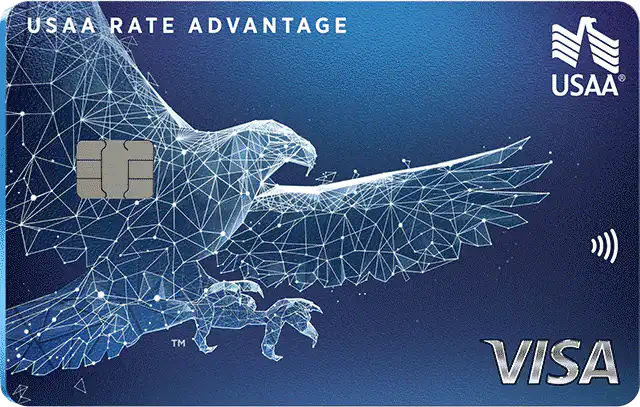
USAA members whose balance transfer posts by March 31, 2027 get 0% through the July 2028 billing cycle, the longest intro period here, so they have the most time to pay it off.
- Best for: USAA members who regularly carry a balance
- What Sets It Apart: Lower rates than any other USAA card, at both ends of its range
- Features: 4% rate cap for eligible active-duty members
- Annual Fee: $0
- Intro APR: 0% through the July 2028 billing cycle for balance transfers that post by March 31, 2027
- APR: 10.65% to 24.65% variable
- Cost: 5% balance transfer and cash advance fee; $0 foreign transaction fee
- Eligibility: USAA membership, open to current and former military, their spouses, and members’ children
- Pros: USAA’s lowest rates; no penalty APR; cash advance fee waived on transfers to a USAA Bank account
- Cons: No rewards; a balance transfer ends the interest-free period on purchases until you pay off the whole balance; no transfers from other USAA cards; no intro rate on purchases; members only
For more information, read our full USAA Rate Advantage Visa® Platinum Credit Card Review.
Truist Future Credit Card

Readers with no military tie who won’t join a credit union can get it with no membership, and new cardholders pay 0% for 15 months on purchases and on transfers in the first 90 days.
- Best for: Borrowers paying off a big purchase or a transferred balance before the 0% ends; Truist customers
- What Sets It Apart: 0% for 15 months for purchases and transfers alike; the lowest ongoing rate of any Truist card
- Features: No penalty rate; no Truist account needed; waives the $12 monthly fee on Truist One Checking
- Annual Fee: $0
- Intro APR: 0% for 15 months on purchases and on transfers within 90 days of opening
- APR: 16.99% to 25.99% variable after the intro
- Cost: 3% balance transfer fee ($10 minimum); no foreign transaction fee
- Credit Needed: Scores of 620 and up, Truist says
- Eligibility: Not offered in California, Iowa, Michigan, Nevada, New York, Utah, or Vermont
- Pros: Truist’s lowest rate; 3% transfer fee; no foreign transaction fee
- Cons: No rewards; less time at 0% than Wells Fargo Reflect; no transfers from Truist cards or loans
For more information, read our full Truist Future Credit Card Review.
East Coast only: TD Clear Visa® Platinum Credit Card

It fits readers who won’t join a credit union and owe most of the line every month. A full $1,000 line carried for a year costs $120 here, against about $99 at PSECU’s 9.90%.
- Best for: Residents of TD’s East Coast states who owe more than 57% of the limit month after month
- What Sets It Apart: No interest at all; a flat monthly fee set by the limit you choose
- Features: Minimum payment of $45 or $70, fee included; cell phone protection when you pay your phone bill with the card
- Annual Fee: $0
- Monthly Fee: $10 for a $1,000 limit or $20 for $2,000, billed even if you don’t use the card
- APR: 0%: no interest on purchases, balance transfers, or cash advances
- Cost: $0 late, balance transfer, cash advance, and foreign transaction fees
- Credit Needed: A credit score of 620 or higher
- Eligibility: Open only in CT, DE, FL, MA, MD, ME, NC, NH, NJ, NY, PA, RI, SC, VA, VT, and D.C.; in Vermont, only the $2,000 limit
- Pros: Costs less than interest at the 21.19% average bank card rate once you owe more than 57% of the limit; a cost that doesn’t grow with your balance; no late fee
- Cons: Paying in full still costs $120 or $240 a year; no rewards; limits of only $1,000 or $2,000; offered only in 15 East Coast states and D.C.
For more information, read our full TD Clear Visa® Platinum Credit Card Review.
What you’ll pay depends on which lenders will take you and the rate each would likely charge you, not the lowest rate it advertises. Most readers pay least by joining PSECU and applying for its card, so start there.
To pay a balance off within the next year or two, compare the best balance transfer credit cards.

Editorial & Advertiser Disclosure: The editorial content on this page is not provided, commissioned, reviewed, approved, or otherwise endorsed by any advertiser. Opinions expressed here are ours alone, not those of any advertiser. The offers that appear on this site are from companies that compensate us. That compensation may influence which products we cover and where and how they appear on a page – including the order in which they appear – but it does not influence our evaluations, ratings, or opinions. We do not include every company or offer available in the marketplace.
Related: