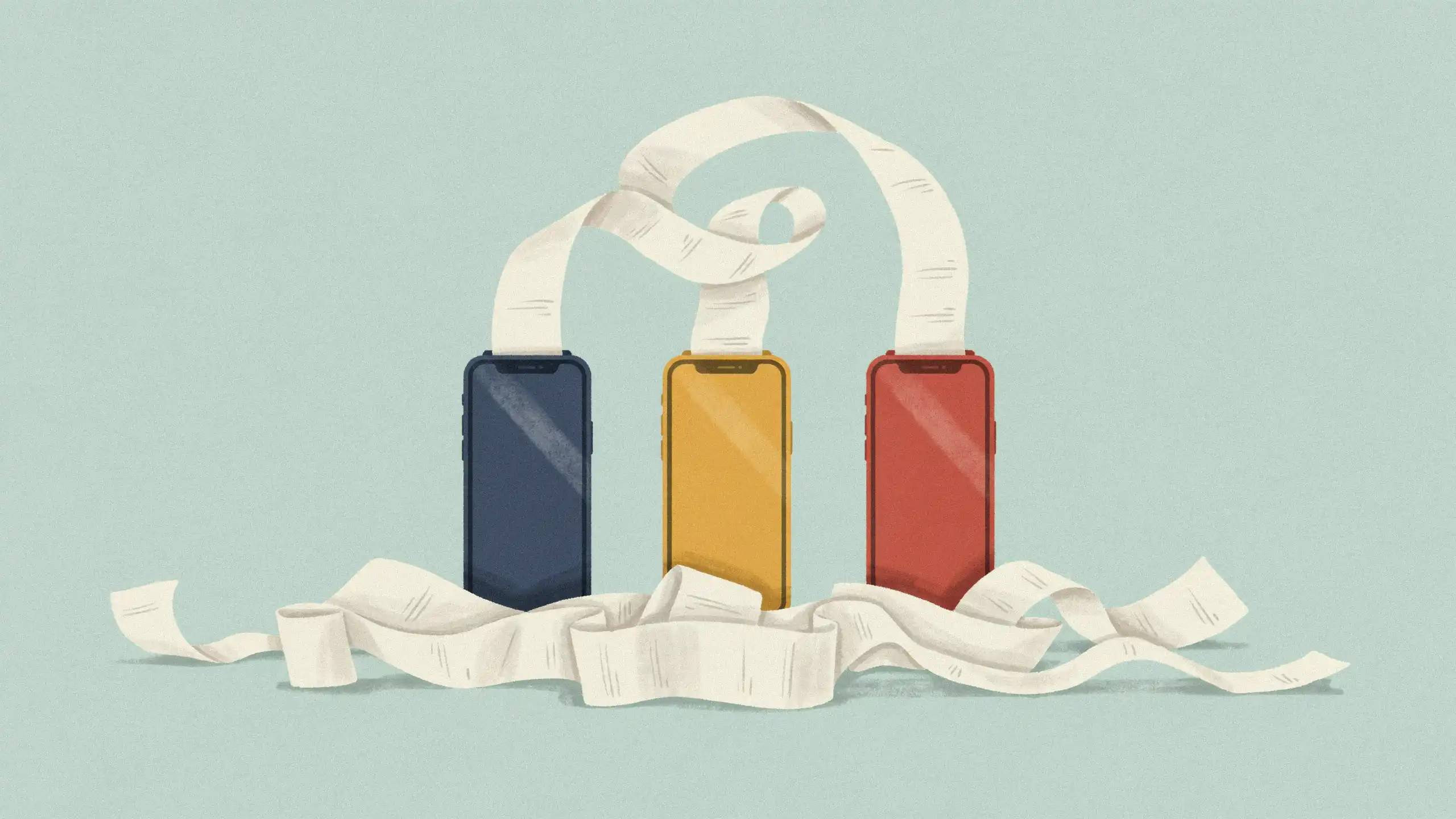

Buy now, pay later (BNPL) plans are loans, and when they’re spread across several apps, no one app shows everything you owe. Before you split another purchase, open every BNPL app you use, total what’s due in the next month, and budget that number like any other debt payment.
In the same week, split a $120 pair of sneakers, $280 headphones, and a $400 mattress into four payments each, and $200 leaves your checking account every two weeks, in three payments on dates set by three different apps.
In Consumer Financial Protection Bureau research on six major lenders, about 63% of BNPL borrowers in 2021 and 2022 held overlapping loans at some point each year, and a third had them at more than one company.
Pay-in-four usually charges no interest, so it’s easy to forget it’s borrowing, even if you’d never carry a credit card balance. Each plan is still a loan. On one credit card, those three purchases would share one statement and one due date. As BNPL plans, they’re three loans at three apps, and no app shows the other two.
Credit reporting is uneven. Affirm reports every new plan, late and missed payments included, to Experian and TransUnion, though that history doesn’t count in traditional credit scores yet. Klarna doesn’t report pay-in-four plans, and Afterpay doesn’t report to U.S. bureaus. FICO has built scores that include these loans, but FICO Score 8, the version lenders use most, isn’t one of them.
So keep the count yourself. List each remaining payment and its due date on one calendar, since every app collects on its own schedule. Then check that the account each app draws from will hold enough on every one of those dates.
Most BNPL lenders charge late fees, and an autopay that overdraws your checking account can add an overdraft fee from your bank. A return doesn’t pause the payments by itself. Afterpay keeps collecting until the store processes the refund, and Klarna pauses only once you report the return.
Your dispute rights are also weaker than a credit card’s. A card gives you a federal right to withhold payment on a disputed charge while the issuer investigates. A BNPL dispute follows the app’s own policy.
Use one rule at every checkout. If you couldn’t buy it outright today, splitting it into four doesn’t make it affordable.

Editorial & Advertiser Disclosure: The editorial content on this page is not provided, commissioned, reviewed, approved, or otherwise endorsed by any advertiser. Opinions expressed here are ours alone, not those of any advertiser. The offers that appear on this site are from companies that compensate us. That compensation may influence which products we cover and where and how they appear on a page – including the order in which they appear – but it does not influence our evaluations, ratings, or opinions. We do not include every company or offer available in the marketplace.
Related: