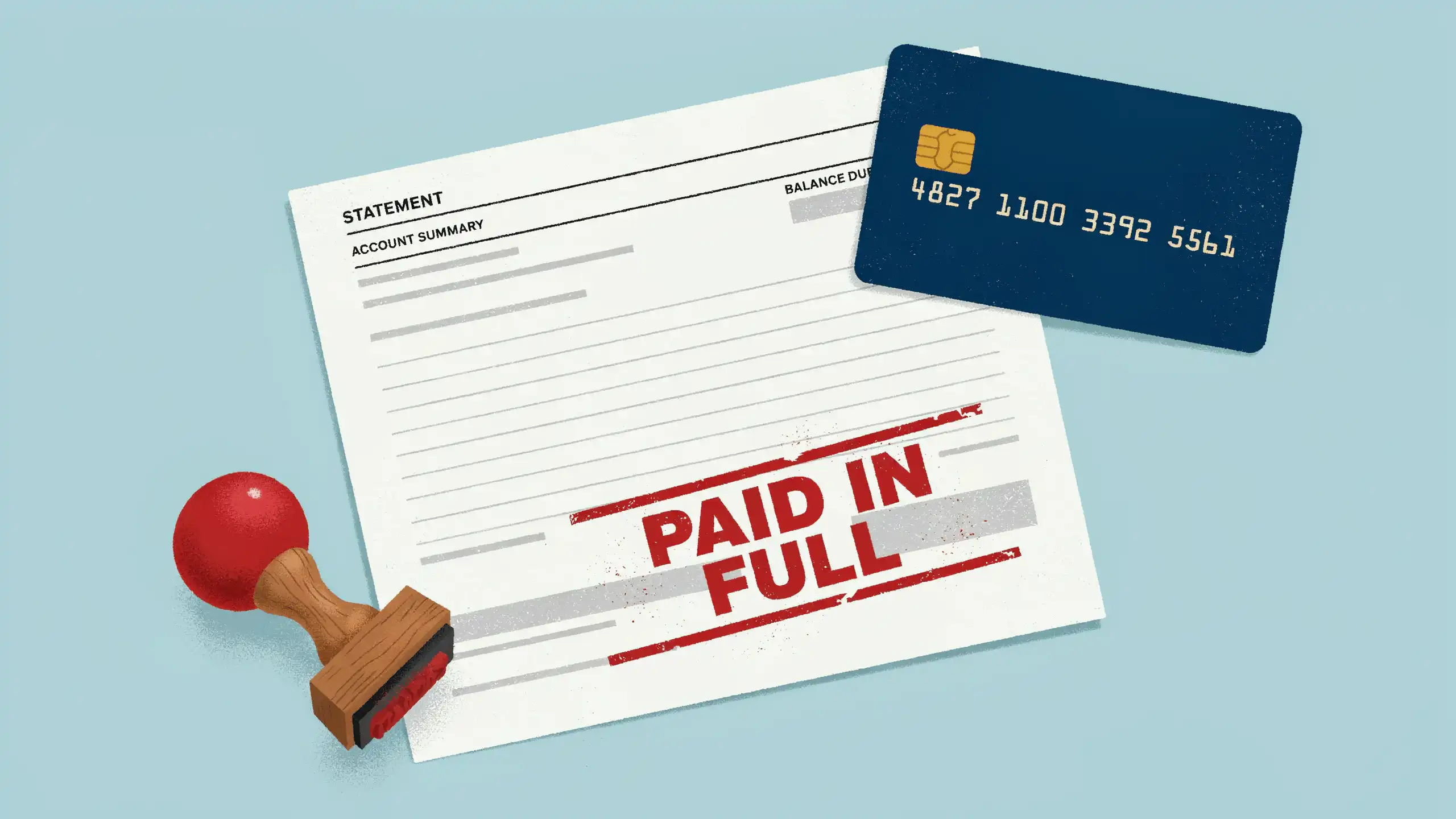

Interest and late fees are the bulk of what cardholders pay their card issuers, and on most cards you can stop both with one autopay setting. Set autopay on each card to its full statement balance, paid by the due date from an account that can always cover it.
Card issuers charged $160 billion in interest in 2024, plus $31.3 billion in fees, $17 billion of it in late fees, the Consumer Financial Protection Bureau found. Only 43% of cardholders paid their balances in full every month that year. The rules below put you in that group, cut the fees you can skip, and protect your credit score and your purchases.
If you already carry a balance, start with the ways to pay it off faster, and avoid the costly mistakes that turn a credit card into an expensive loan.
Pay no interest or fees
1. Pay off every statement in full
Interest is the one cost on this list that keeps growing while a balance stays unpaid, which makes this the habit to set up before any other.
Most credit cards charge no interest on purchases as long as you pay the full statement balance by its due date. Pay even a dollar less and the unpaid part collects interest, and new purchases can too, often at 20% a year or more. Make that full amount your payment every month, even when the minimum looks easier.
Read more: Pay the Statement Balance, Not the Minimum, and Your Card Stays Interest-Free
2. Set autopay so no payment is late
Late fees are the biggest fee card issuers charge, and this rule prevents them, along with a costlier problem a missed due date can cause.
A payment 30 days late can knock a strong credit score down 60 points or more, and the mark stays on your report for seven years. Put every card and loan on autopay for at least the minimum, then keep paying the full amount by hand. It’s there for the month you forget.
Read more: One Late Payment Can Stay on Your Credit Report for Seven Years
3. Skip the foreign transaction fee abroad
Even if you pay in full and never pay late, this fee can cost you on a trip, since it depends on the card, not on your habits.
Before you travel abroad, check your credit card for a foreign transaction fee, usually 1% to 3% of every purchase processed outside the U.S. If it has one, pack a card that charges none. The fee buys you nothing, and it adds up over a whole trip.
Read more: Pack a Card With No Foreign Transaction Fee - Others Charge Up to 3%
4. Ask to cut or drop your annual fee
Annual fees bring issuers more than any other fee except late fees, so any card that charges one is worth a second look each year when the fee posts.
Closing a credit card over its annual fee costs you its credit limit and, eventually, its history on your report. Call the issuer and ask what it will offer to keep you. If the offer falls short, ask to switch to a no-fee card from the same issuer, which keeps the account open.
Read more: Keep the Card, Lose the Annual Fee - Call for a Retention Offer or Downgrade
Protect your score and purchases
5. Keep each card's balance far under its limit
After your payment record, what you owe counts the most toward a FICO score, so this rule sets how much of your card limits to use.
Credit utilization, the share of your credit card limits you’re using, is one of the biggest factors in your credit score. Keep it under 30% on every card and overall, and aim for under 10%. Because issuers usually report your statement balance, pay your cards down a few days before each statement closes.
Read more: Your Credit Utilization Should Stay Below 30% - Ideally Below 10%
6. Make an early payment before each statement date
It matters most in the months before you apply for a mortgage or car loan, and it costs nothing, since you’d pay the same money a few weeks later anyway.
Your card issuer usually reports the balance on your statement closing date to the credit bureaus, so a card you pay in full every month can still show a big balance. Pay most of it a few days before the statement closes, and your credit report shows a fraction of what you spent.
Read more: Pay Your Card Before the Statement Closes - That's the Balance Lenders See
7. Run the numbers before you close any card
The balance rules on this list assume your credit limits stay the same, and closing a card changes that in a single call.
A zero balance doesn’t protect your credit score when you close a credit card and carry balances on your other cards. Its limit stops counting toward your available credit, so those balances take up a bigger share of it. Pay them down first, and if you’re applying for a big loan soon, wait until it’s final.
Read more: Closing a Paid-Off Credit Card Can Lower Your Score - Pay Down Other Balances First
8. Check every statement for charges worth disputing
Autopay for the full balance pays every charge on your statement, right or wrong, so this rule is how you catch the ones you shouldn’t pay.
If your credit card statement shows a charge for something that never arrived, a purchase billed twice, or the wrong amount, federal law makes your card issuer investigate. Send a written dispute early enough to arrive within 60 days of the first statement showing the charge.
Read more: Never Got What You Paid For? Dispute the Credit Card Charge Within 60 Days

Editorial & Advertiser Disclosure: The editorial content on this page is not provided, commissioned, reviewed, approved, or otherwise endorsed by any advertiser. Opinions expressed here are ours alone, not those of any advertiser. The offers that appear on this site are from companies that compensate us. That compensation may influence which products we cover and where and how they appear on a page – including the order in which they appear – but it does not influence our evaluations, ratings, or opinions. We do not include every company or offer available in the marketplace.
Related: