
Build your budget on take-home pay, the amount that lands in your account, rather than your salary. Set your savings first, list every expense from the last two or three months of bank and card statements, cut until the plan balances, and check it against your real spending once a month.
The gap between salary and take-home pay is big enough to break a budget in its first month.
Picture a single filer who takes the standard deduction, owes no state income tax, and has nothing taken out of each check for benefits. Their $60,000 salary is $5,000 a month, but federal income tax plus Social Security and Medicare taxes leave about $4,200 of it. A budget that plans to spend the full $5,000 runs about $800 a month over the $4,200 that arrives.
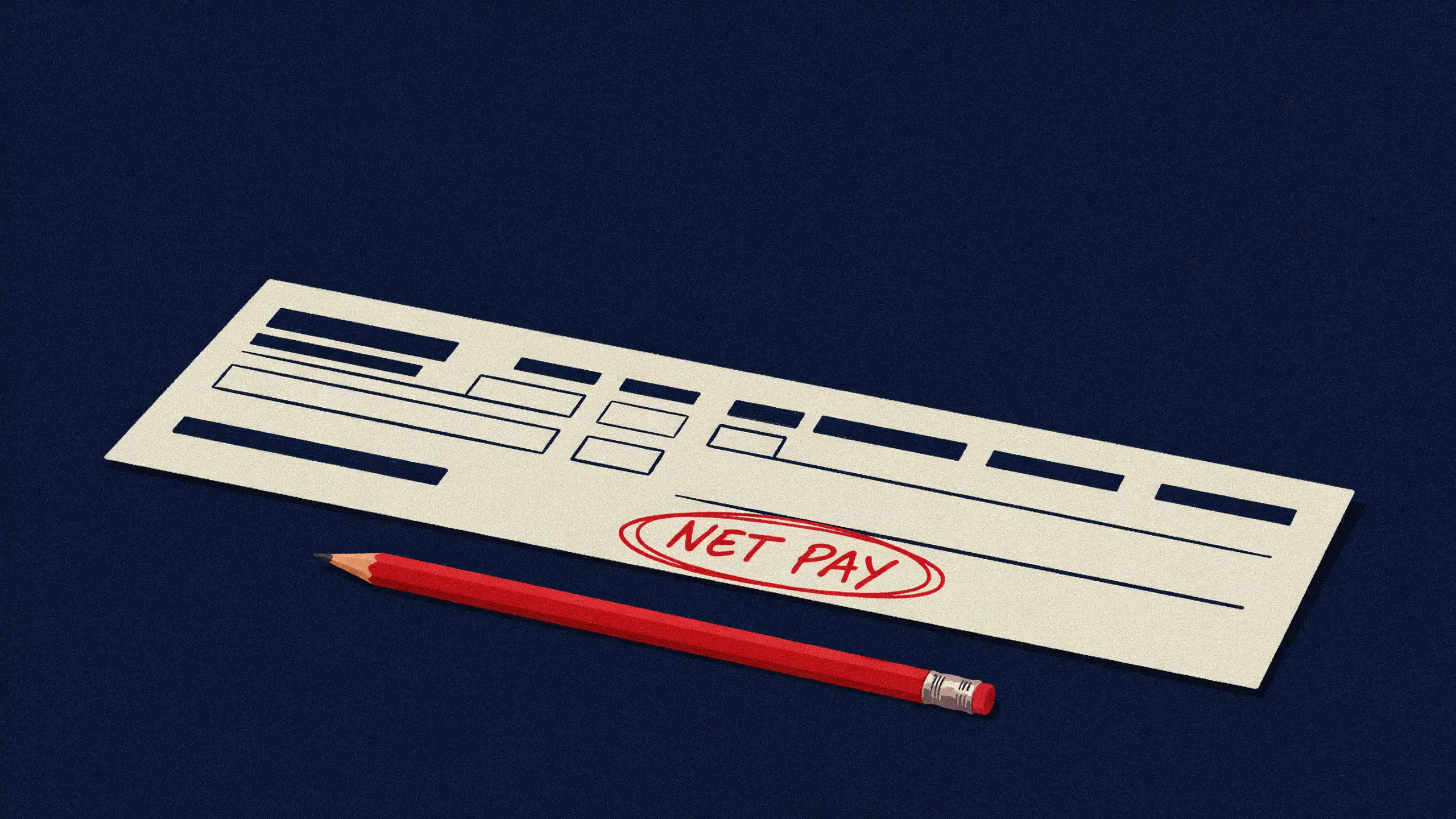
State income tax and money taken out for health insurance or a 401(k) shrink the check further, so read your take-home figure off the net pay line on your own pay stub.
Then build the budget in this order.
- Add up monthly take-home pay from every source, counting side income minus its taxes. If you’re paid every two weeks, plan on two checks a month and treat the third check that comes twice a year as extra.
- Decide what you’ll save each month and write it in first, ahead of every expense.
- List your fixed costs, like rent, and average your variable ones, like groceries, over the last two or three months of bank and card statements. Add any yearly bill that didn’t come due in those months, divided by 12.
- Subtract savings and expenses from take-home pay. If you come up short, check your spending against the 50/30/20 rule, which splits take-home pay 50% to needs, 30% to wants, and 20% to savings, and cut whichever share runs over.
- Once a month, compare what you spent in each category with the plan and adjust any category that ran over or under.
Pick the tool you’ll open every month. A spreadsheet totals the numbers you type in, a budgeting app linked to your accounts pulls in your transactions, and pen and paper needs nothing but your statements.
Download your latest pay stubs and recent bank and card statements before you start, since steps one and three are built from them.
For an app that sorts your spending before each monthly check-in, compare the best budgeting apps.


Subscribe and we'll send you 101 Essential Money Tips to get you started.
The 101 money moves that matter most, from the foundations to protecting what you’ve built.
Advertiser Disclosure: Many or all of the offers that appear on this site are from companies that compensate us, and some companies pay for sponsored content. That compensation may influence which products we cover and where and how they appear on a page, including the order in which they appear. We do not include every company or offer available in the marketplace.